
- News
- City News
- kochi News
- Stone pelting, overcrowding raise safety fears on Kerala trains
Stone pelting, overcrowding raise safety fears on Kerala trains
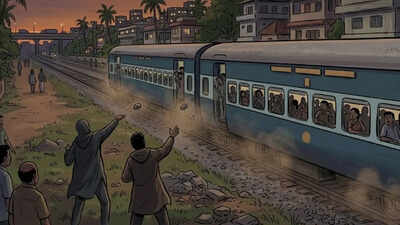
Rising stone-pelting attacks expose rail passenger safety gaps (Image used for representational purpose only).
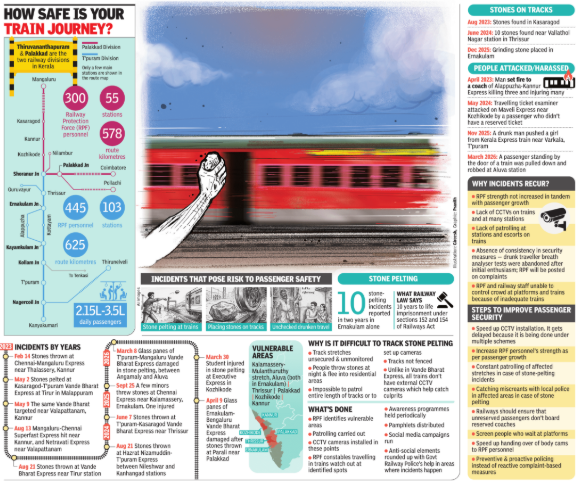
Passenger safety under scanner amid stone pelting on trains
You Can Also Check: Gold Rate in Kochi | Silver Rate in Kochi | Bank Holidays in Kochi | Public Holidays in Kochi

About the AuthorV Ayyappan
End of Article
Follow Us On Social Media
Hot Picks
Top Trending
Tired of too many ads?go ad free now
Trending Stories
In Kochi
In City
- 'Proof of failure': Rahul Gandhi targets govt over PM Modi's 'WFH, don't buy gold' appeal
- Vijay's first day as CM and a Tamil Nadu song row: What happened?
- Why the Kailash Yatra has put Nepal at odds with India and China
- The Iran draft proposal Trump called 'totally unacceptable': What was in it?
- Urvil’s six-hitting carnage: 200-6s-a-day, Dhoni’s special bat and a promise
- English rhymes ‘Johnny Johnny’, ‘Rain Rain Go Away’ promote lying, selfishness: UP mantri
- All of Pakistan & China within strike range: What is Mission Divyastra?
- Google's top scientist to EU: Our Red Team 'hacked' in less than 2 hours
- Suvendu Adhikari aide killing: 3 held as police suspect hired sharpshooters from UP, Bihar
- 'Everyone shares responsibility': Netanyahu's big admission over October 7 Hamas attack
- Son of tendu leaves collector from Chhattisgarh jungles aces Indian forest services exams
- PMC’s Aga Khan-Tadigutta road widening drags on, commuters brace for months of chaos
- Man arrested for throttling elderly relative to death and robbing jewellery
- Academicians draw CM Vijay’s attention to higher education
- NGO seeks chief minister’s intervention in proposed Maharashtra Maritime Board ad policy; cites concerns over light pollution, biodiversity loss, and visual defacement of state’s coastline
- Mother’s Day gifts shift from bouquets to easing daily stressors
- Pune rail division to start construction of permanent holding area for passengers
- AIIMS Launches Low-Cost Advanced Test to Make Epilepsy Treatment Safer
- Heat is still on: Mumbai’s daytime temperatures hover near 40°C mark for second day in row
- Amid minister’s praise for community, Parsi leaders flag problem: ‘Some in rural areas at poverty level’
Tired of too many ads?go ad free now



Explore Every Corner
Across The Globe
PM Modi WFHCBSE Result 2026Virat KohliPSEB Class 10th Result 2026Punjab Board 10th Result 2026Krunal PandyaUrvil PatelNFL Trade RumorsHow to check PSEB Result on DigilockerRCB vs MIVijayPSEB 10th Result 2026IPL Purple capTom BradyIPL Playoff Qualification ScenarioTravis KelceJEE Advanced Admit CardPM ModiIPL Orange CapStock Market TodaySuvendu AdhikariUS Iran warIPL Purple Cap WinnerToday IPL matchRahul GandhiUrvil PatelMali AL Qaeda AttackHPBOSE Class 10th official websiteWB CM announcementTN CM announcement

Hot on the Web
László BíróMother's Day WishesArbaaz KhanMatilda LedgerMothers Day 2026Mother's Day Gift Ideas 2026Hantavirus SymptomsDhurandhar 2 OTTShah Rukh KhanRajinikanthBlack MambaRam Gopal VarmaR MadhavanMothers Day MemesKaran JoharMoushumi ChatterjeeInland Taipan SnakeMulga King Brown SnakeSoha Ali KhanCelina JaitlyApple VS BananaMost Snake Population CountriesMango City Of IndiaBaby NamesSundar PichaiGauravi KumariAC Blast RiskDhurandhar 2 Box Office CollectionRaja Shivaji Box Office CollectionHoroscope TodayRare Earth MangoDasia TaylorSnakes SlitherOne Kidney VillageYellow Bellied Sea SnakeAttracts Snakes To ToiletCloudflare LayoffsJP MorganApple LawsuitNyt ConnectionsMaruti Suzuki EecoCaptions For Instagram Posts
Trending Topics
Urvil PatelDelhi Capitals vs Punjab KingsUP Double MurderNeet 2026 Paper LeakBombay High CourtSanjeev Arora ArrestCM Yogi AdityanathStock Market TodayNoida Murder CaseTVKGold Rate TodaySuvendu AdhikariTurkish Airlines incidentDonald TrumpTarique RahmanUK HantavirusTrump China visitAnil KochharRahul GandhiVijayPM ModiMichael FaradayAfghanistanNFL Trade RumorTamil Nadu RailwaysTamil Nadu Election ResultGujarat Rape NewsBijnor Husband MurderHPBOSE 10th Result 2026KMP Expressway AccidentShivon ZilisSteve JobsMark CubanMira MuratiMark ZuckerbergSundar PichaiMichael DellCanvas HackedVaibhav SooryavanshiPeroxide CodesGenshin Impact Codes
Popular Categories
HeadlinesSports NewsBusiness NewsIndia NewsWorld NewsInternational SportsHealthIndian TV ShowsTechnologyTravelEtimesAstrologyDeorhiAutoTechnology NewsGold Rate TodayWeather TodaySilver Price TodayDelhi Weather TodayPetrol Price TodayDiesel Price TodayCNG Price TodayLPG Price TodayPetrol Price MumbaiDelhi AQIIs Bank Open TodayMumbai AQI TodayIs Bank Open TomorrowPublic Holidays in MayBank Holidays in May
Trending Videos
Nitesh Rane’s Explosive Attack On Owaisi | ‘AIMIM Is A Terrorist Organisation’Why Congress Still Hasn’t Named Kerala’s Chief Minister Despite Massive VictoryKing Charles’ Response To Eugenie Baby News Sparks Fresh ‘Anti-York’ Royal Drama | WATCHIran Rejects Trump’s ‘Surrender’ Proposal, Demands Full Hormuz Control And War ReparationsIran Draws Red Line Over Strait Of Hormuz As France, UK Navy Plans Spark Fury‘DELAY, DELAY, DELAY!’: Trump ‘In Tears’ After Iran’s Response, BLAMES Obama For ‘Nuclear Mess’Hantavirus Cruise Horror: Passengers Take Selfies, Airlifted In Hazmat Gear
Latest News
Hazaribag man drowns while fishing in lake"Behen Darr Gayi!": Fans relive ‘Bhagam Bhag’ era after watching Akshay Kumar's 'Bhooth Bangla' trailerMBOSE HSLC result 2026 to release tomorrow: Check details hereIran war risk: JPMorgan CEO Jamie Dimon warns of oil shocks, sticky inflation and higher interest ratesMake your clutch last longer with these easy driving tips“Three-against-one situation”: El Rubius opens up on being “targeted” in MrBeast’s viral $1M challengeBihar BTSC lab assistant notification released for 1091 posts at btsc.bihar.gov.in; apply hereIPL craze costs techie Rs 1.46 lakh in fake RCB vs CSK ticket scamRaising “robot-proof” kids: Why creativity and curiosity matter more than everInside ‘Satguru Sharan’: Exploring Saif Ali Khan and Kareena Kapoor Khan’s Rs 100 crore Bandra homeHow selling Alaska in 1867 was a costly mistake for Russia'Hera Pheri 3 is coming': Paresh Rawal dismisses delay reports and reveals he will 'start shooting soon'US-Iran War: A daring rescue Hollywood blockbuster is on its way. Till then, pick your favourite from these 10 films on bringing someone home against all oddsKolkata team unveils fan mural at Rash Behari Avenue, celebrating city’s first loveHow US spread a lie to rescue a pilot of a jet shot down in IranNetflix unveils ‘VOID’, an AI model that can change a movie plotAI data centers are causing 'stress' not just to tech companies, but also private insurers"Trans women are.....": Clavicular’s viral moment with trans women sparks fresh conversation on internet culture
Copyright © 2026 Bennett, Coleman & Co. Ltd. All rights reserved. For reprint rights: Times Syndication Service