
- News
- Science News
- Hantavirus: Symptoms, spread, prevention — All you need to know
Hantavirus: Symptoms, spread, prevention — All you need to know
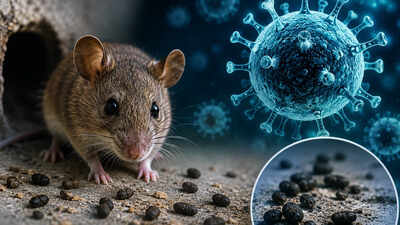
.
What is hantavirus?
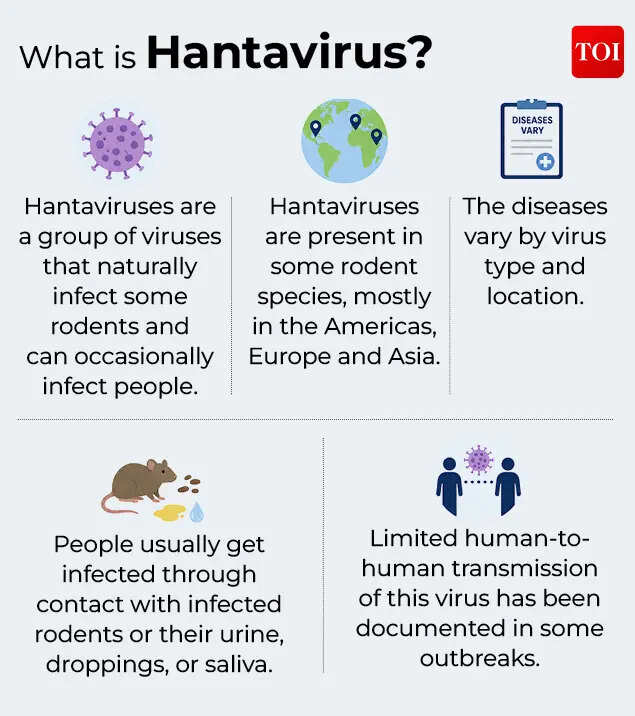
.
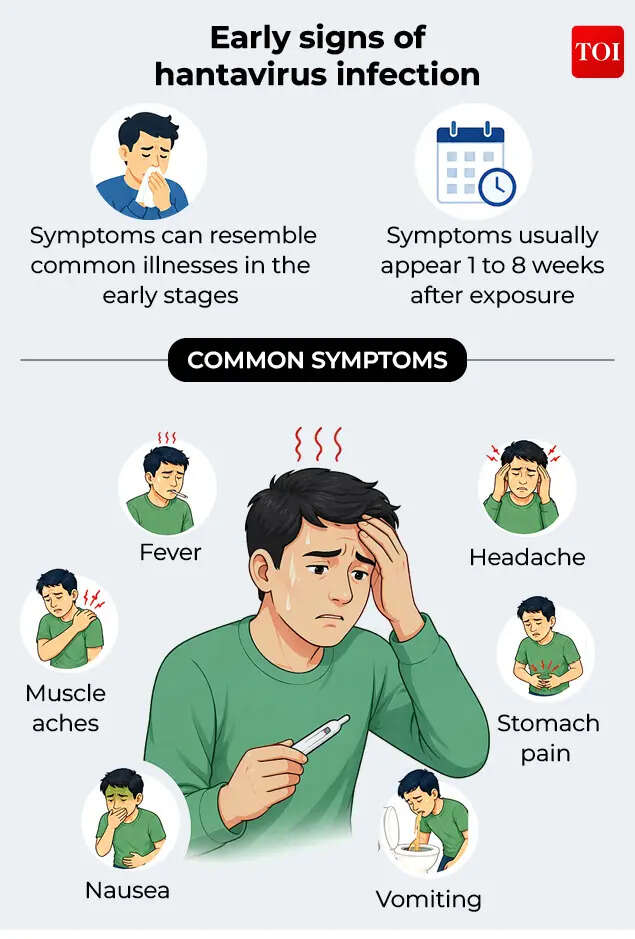
Early symptoms
.
- Fever
- Muscle aches
- Nausea
- Headache
- Stomach pain
- Vomiting
Can hantavirus become severe?
Is there a treatment or vaccine?
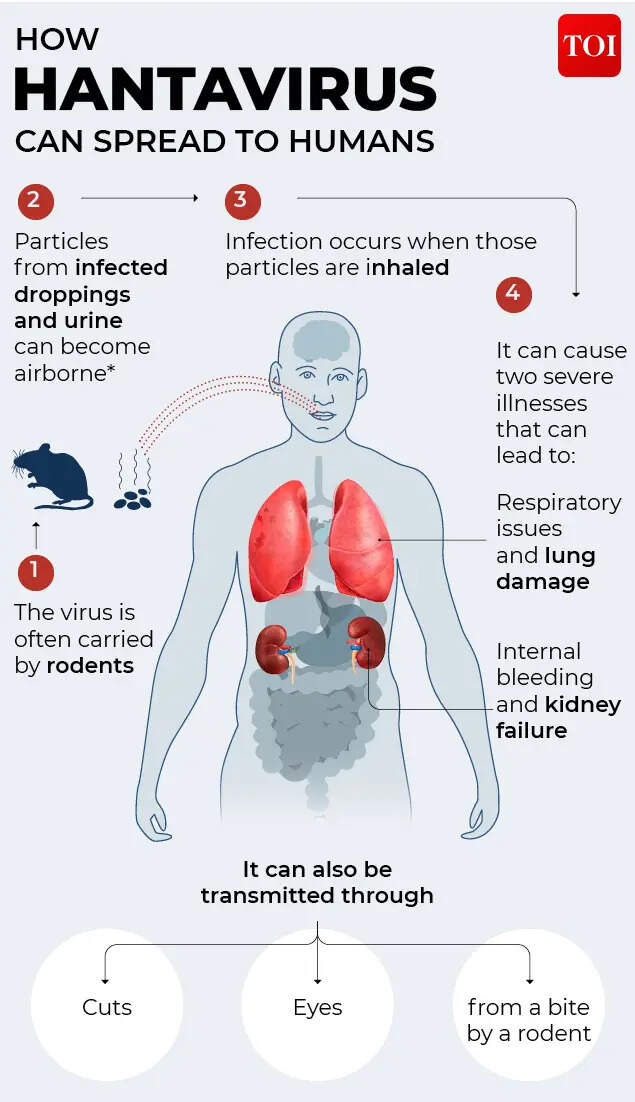
.
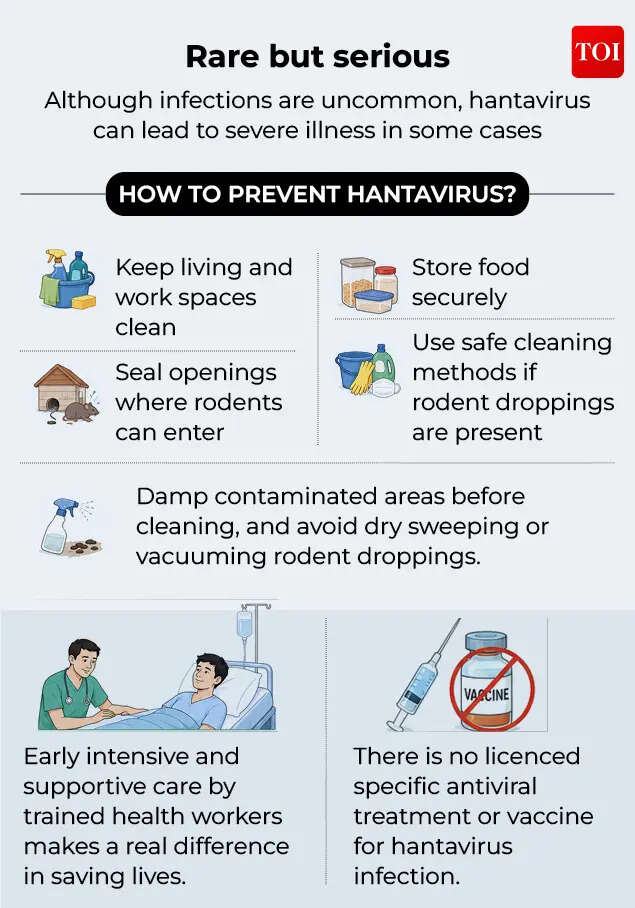
How to prevent hantavirus infection
.
- Keep living and work spaces clean
- Seal openings where rodents can enter
- Store food securely
- Use safe cleaning methods if rodent droppings are present
- Damp contaminated areas before cleaning, and avoid dry sweeping or vacuuming rodent droppings
Why awareness matters

About the AuthorTOI Science Desk
End of Article
Follow Us On Social Media

Hot Picks
Top Trending
Tired of too many ads?go ad free now
Trending Stories
In Section
Entire Website
- Rs 7,000 GPS watches for Haj pilgrims not working
- Tamil Nadu government formation: Vijay passes first political test with 118 marks - how TVK got the numbers
- West Bengal CM Announcement Live Updates: BJP picks Suvendu Adhikari for top post
- Bengal's Adhikari: Suvendu to be state's first BJP CM
- Supreme Court in no mood to condone Madhya Pradesh minister in Col Sofiya Qureshi case
- Axar Patel begins 'next year' talk as Delhi Capitals IPL playoff hopes fade after KKR loss
- Hindutva mascot, ex-TMC insider: 5 reasons why BJP chose Suvendu Adhikari as West Bengal CM
- Pooran Grabs Krunal Collar: viral IPL 2026 clip lights up social media; LSG clinch nine-run victory
- Suvendu Adhikari: Ex-Mamata loyalist, who defeated her twice, to be Bengal's 1st BJP CM
- Kerala plus one improvement result 2026 released at results.hse.kerala.gov.in: Direct link to download scorecards here
- Rs 7,000 GPS watches for Haj pilgrims not working
- Tamil Nadu government formation: Vijay passes first political test with 118 marks - how TVK got the numbers
- West Bengal CM Announcement Live Updates: BJP picks Suvendu Adhikari for top post
- Bengal's Adhikari: Suvendu to be state's first BJP CM
- Supreme Court in no mood to condone Madhya Pradesh minister in Col Sofiya Qureshi case
- Axar Patel begins 'next year' talk as Delhi Capitals IPL playoff hopes fade after KKR loss
- Hindutva mascot, ex-TMC insider: 5 reasons why BJP chose Suvendu Adhikari as West Bengal CM
- Pooran Grabs Krunal Collar: viral IPL 2026 clip lights up social media; LSG clinch nine-run victory
- Suvendu Adhikari: Ex-Mamata loyalist, who defeated her twice, to be Bengal's 1st BJP CM
- Kerala plus one improvement result 2026 released at results.hse.kerala.gov.in: Direct link to download scorecards here
Tired of too many ads?go ad free now



Explore Every Corner
Across The Globe
Mike VrabelShaun Wright PhillipsCJ UjahCBSE ResultsVijayNFL Trade RumorLucas Di GrassiSuvendu adhikariAryna SabalenkaNHL Trade RumorsMihael Penix JrDC vs KKR HighlightsIPL Toss TodayStefon DiggsLos Angeles RamsDianna RussiniShakiraIPL Orange CapSuvendu Adhikari Swearing In DateVirat KohliWB Madhyamik Result 2026Rishabh PantMason HullIPL Points TableEthan KleinBill BelichickWB CM announcementTN CM announcementIran warHPBOSE 10th Result 2026

Hot on the Web
László BíróArbaaz KhanMatilda LedgerMothers Day 2026Mother's Day Gift Ideas 2026Hantavirus SymptomsDhurandhar 2 OTTShah Rukh KhanRajinikanthBlack MambaRam Gopal VarmaR MadhavanJanhvi KapoorKaran JoharMoushumi ChatterjeeInland Taipan SnakeMulga King Brown SnakeSoha Ali KhanCelina JaitlyApple VS BananaMost Snake Population CountriesMango City Of IndiaMother's Day WishesBaby NamesSundar PichaiGauravi KumariAC Blast RiskDhurandhar 2 Box Office CollectionRaja Shivaji Box Office CollectionHoroscope TodayRare Earth MangoDasia TaylorSnakes SlitherOne Kidney VillageYellow Bellied Sea SnakeAttracts Snakes To ToiletCloudflare LayoffsJP MorganApple LawsuitNyt ConnectionsMaruti Suzuki EecoCaptions For Instagram Posts
Trending Topics
West Bengal VoilenceVirat KohliSunil GavaskarSachin TendulkarSuvendu AdhikariDelhi School Summer VacationVITEEE Result 2026KL RahulLeon DraisaitlSunil GavaskarFinn AllenNTA NCHM JEE 2026 Answer KeySuvendu AdhikariMaharashtra SSC Class 10 ResultMitchell MarshDelhi Capitals VS KKR IPL MatchMaharashtra RapeMaulana Muhammad IdreesTMC groups clash in SandeshkhaliJeffrey EpsteinTamil Nadu HSC Result 2026Michael FaradayAfghanistanNFL Trade RumorTamil Nadu RailwaysTamil Nadu Election ResultGujarat Rape NewsBijnor Husband MurderCBSE Class 12 Result 2026KMP Expressway AccidentShivon ZilisSteve JobsMark CubanMira MuratiMark ZuckerbergSundar PichaiMichael DellCanvas HackedGarena Free Fire Max Redeem CodesPeroxide CodesGenshin Impact Codes
Popular Categories
HeadlinesSports NewsBusiness NewsIndia NewsWorld NewsInternational SportsHealthIndian TV ShowsTechnologyTravelEtimesAstrologyDeorhiAutoTechnology NewsGold Rate TodayWeather TodaySilver Price TodayDelhi Weather TodayPetrol Price TodayDiesel Price TodayCNG Price TodayLPG Price TodayPetrol Price MumbaiDelhi AQIIs Bank Open TodayMumbai AQI TodayIs Bank Open TomorrowPublic Holidays in MayBank Holidays in May
Latest News
Hazaribag man drowns while fishing in lake"Behen Darr Gayi!": Fans relive ‘Bhagam Bhag’ era after watching Akshay Kumar's 'Bhooth Bangla' trailerMBOSE HSLC result 2026 to release tomorrow: Check details hereIran war risk: JPMorgan CEO Jamie Dimon warns of oil shocks, sticky inflation and higher interest ratesMake your clutch last longer with these easy driving tips“Three-against-one situation”: El Rubius opens up on being “targeted” in MrBeast’s viral $1M challengeBihar BTSC lab assistant notification released for 1091 posts at btsc.bihar.gov.in; apply hereIPL craze costs techie Rs 1.46 lakh in fake RCB vs CSK ticket scamRaising “robot-proof” kids: Why creativity and curiosity matter more than everInside ‘Satguru Sharan’: Exploring Saif Ali Khan and Kareena Kapoor Khan’s Rs 100 crore Bandra homeHow selling Alaska in 1867 was a costly mistake for Russia'Hera Pheri 3 is coming': Paresh Rawal dismisses delay reports and reveals he will 'start shooting soon'US-Iran War: A daring rescue Hollywood blockbuster is on its way. Till then, pick your favourite from these 10 films on bringing someone home against all oddsKolkata team unveils fan mural at Rash Behari Avenue, celebrating city’s first loveHow US spread a lie to rescue a pilot of a jet shot down in IranNetflix unveils ‘VOID’, an AI model that can change a movie plotAI data centers are causing 'stress' not just to tech companies, but also private insurers"Trans women are.....": Clavicular’s viral moment with trans women sparks fresh conversation on internet culture
Copyright © 2026 Bennett, Coleman & Co. Ltd. All rights reserved. For reprint rights: Times Syndication Service