
- News
- Health News
- Why your daily commute may be damaging your heart, lungs, and brain, and simple ways to reduce the risk
Why your daily commute may be damaging your heart, lungs, and brain, and simple ways to reduce the risk

Long daily commutes can take a heavy toll on our well-being. The ceaseless gridlock, coupled with toxic air and relentless noise, pumps our adrenaline and forces our minds into overdrive. This 'hidden stress factor' can lead to alarming health concerns, such as elevated blood pressure and respiratory ailments, with the drive home often being the most exhausting.
Why your commute feels more stressful than it looks
What it does to your heart
- Increased blood pressure
- Higher resting heart rate
- Greater risk of long-term cardiovascular disease
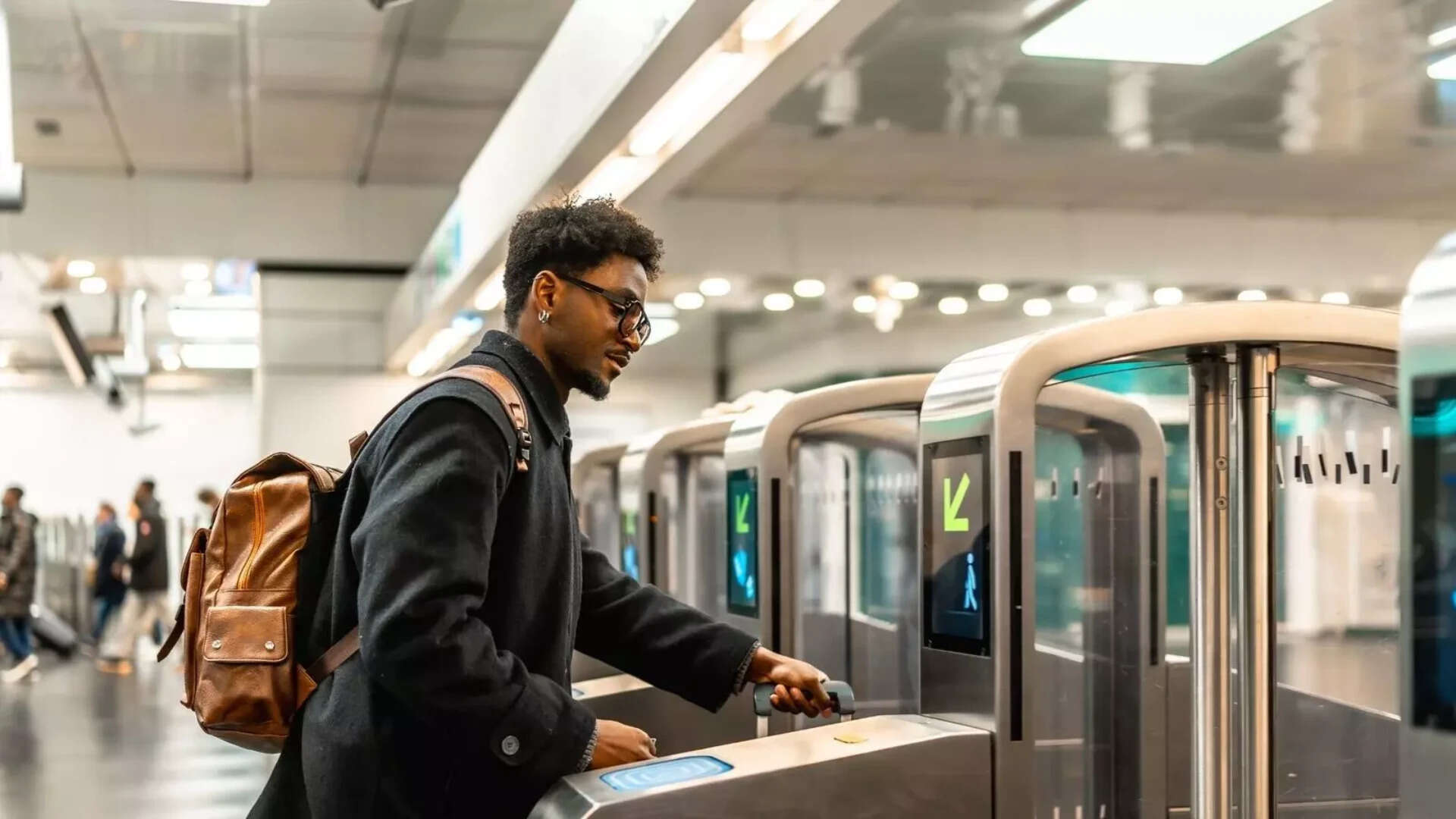
This affects the heart through increased blood pressure, harms the lungs through polluted air, and keeps the brain in a constant alert state.
Your lungs are working overtime
- Reduced lung function
- Chronic cough or breathlessness
- Increased risk of asthma and other respiratory conditions
The brain stays in a constant ‘alert mode’
- Mood and patience
- Focus and memory
- Sleep quality
The hidden cost of sitting still
- Slower metabolism
- Weight gain
- Reduced circulation
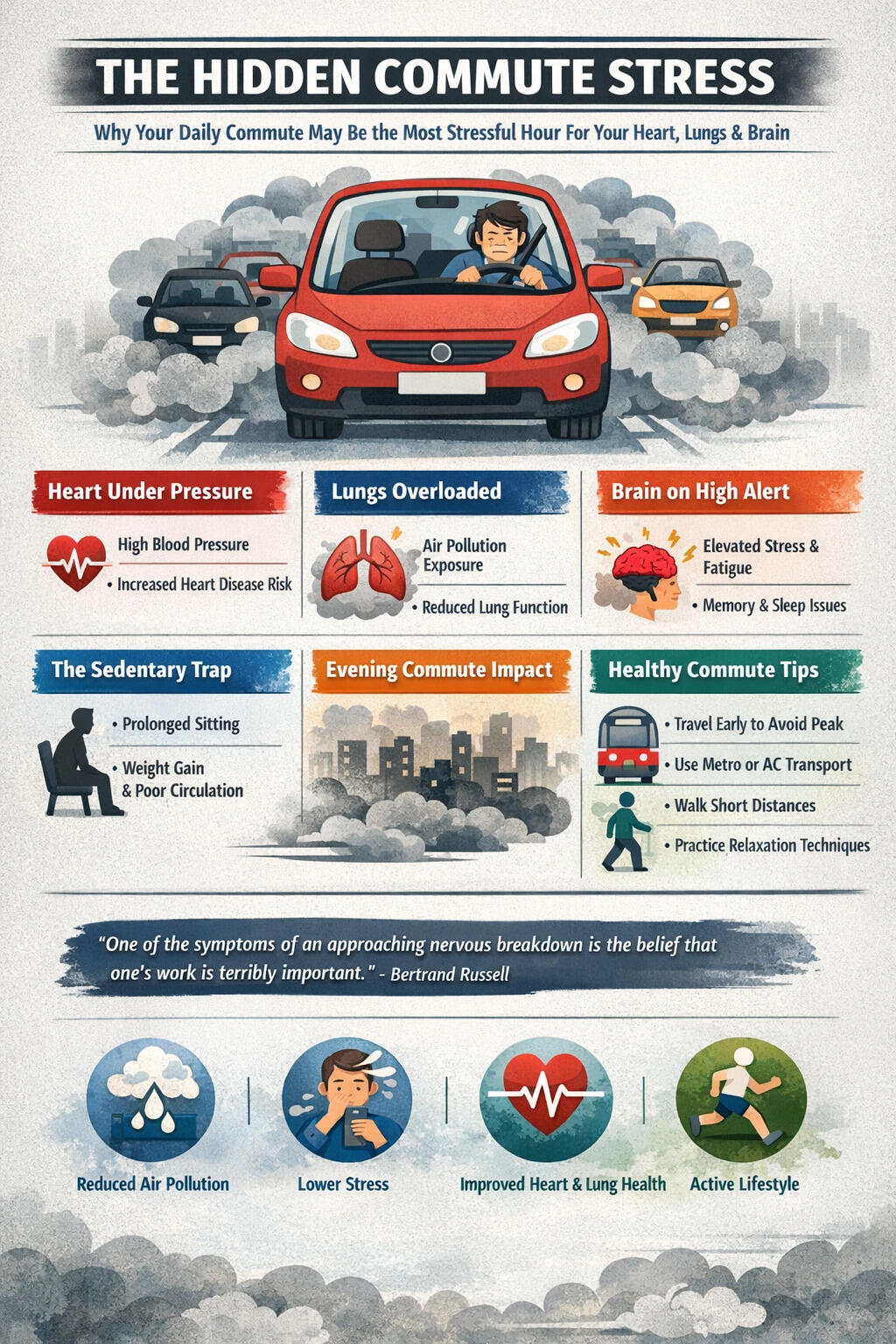
Evening commutes are often more harmful due to higher pollution and fatigue. Small lifestyle changes, such as choosing cleaner transport and adjusting travel timing, can significantly reduce these risks.
Why evening commutes feel worse
- Pollution levels are higher
- The body is already fatigued
- Blood sugar levels may be lower
- Patience is reduced
Small shifts that can protect your health
- Choose metro or AC transport when possible
- Travel earlier to avoid peak pollution
- Walk short distances before or after the commute
- Use calming audio instead of news or loud content
- Practice slow breathing during traffic pauses
- Even small adjustments can lower the daily stress load.
A thought to carry forward

About the AuthorAadya Jha
End of Article
Follow Us On Social Media
Hot Picks
Top Trending
Tired of too many ads?go ad free now
Trending Stories
In Section
Entire Website
- US-Israel-Iran War News Live Updates: Israel pounds Tehran as Iranians mark Nowruz; UAE, Kuwait defences respond to missile barrage
- 'Wasn't easy': Anaya reveals father Sanjay Bangar's role after gender-affirming surgery
- Kick streamer Clavicular faces viral moment after woman slaps him live during stream and police get involved
- Orange Alert For Eastern States: IMD warns of severe storms, heavy rain; hot, humid south persists
- The door India left ajar: Economic ties with China see a calibrated reset with easing of FDI rules - explained
- Missiles Fired Toward Diego Garcia: Iran tests long-range weapons; US rushes Marines and warships
- Centre raises LPG allocation to 50% of pre-crisis level, prioritises food and hospitality sectors
- 'Condemn attack on critical infrastructure': PM Modi speaks to Iran president, says 'shipping lanes must stay open'
- 'Inflation coming': Rahul slams Centre over weak rupee; predicts when govt will hike fuel price
- Over 20 nations issue joint statement condemning Iran's de facto closure of Hormuz Strait
- US-Israel-Iran War News Live Updates: Israel pounds Tehran as Iranians mark Nowruz; UAE, Kuwait defences respond to missile barrage
- 'Wasn't easy': Anaya reveals father Sanjay Bangar's role after gender-affirming surgery
- Kick streamer Clavicular faces viral moment after woman slaps him live during stream and police get involved
- Orange Alert For Eastern States: IMD warns of severe storms, heavy rain; hot, humid south persists
- The door India left ajar: Economic ties with China see a calibrated reset with easing of FDI rules - explained
- Missiles Fired Toward Diego Garcia: Iran tests long-range weapons; US rushes Marines and warships
- Centre raises LPG allocation to 50% of pre-crisis level, prioritises food and hospitality sectors
- 'Condemn attack on critical infrastructure': PM Modi speaks to Iran president, says 'shipping lanes must stay open'
- 'Inflation coming': Rahul slams Centre over weak rupee; predicts when govt will hike fuel price
- Over 20 nations issue joint statement condemning Iran's de facto closure of Hormuz Strait
Tired of too many ads?go ad free now



Explore Every Corner
Across The Globe
Israel Iran WarLPG Shortage IndiaPremium Petrol Price HikeNFL Free AgencyGiannis antetokounmpoMark DavisNFL Trade RumorsStrait of HormuzAir India Boeing 777Angkrish RaghuvanshiISRO space debrisJonathan BrownIndustrial diesel priceUAE weatherLuana CarolinaPew research center8th Pay CommissionOthman bin Affan MosqueICE custodyAnthony AlbaneseJames GraceyTime travel flightArtemis II missionSpring 2026Bank Holiday TodayBaby dinosaur discoveryScientific factsIPL Points TableIPL 2026IPL 2026 Schedule

Hot on the Web
Dhurandhar 2 ReviewR MadhavanEidDhurandhar 2 Box Office CollectionRanveer Singh PropertiesDhurandhar 2 ReviewRajpal YadavShobhaa DeDhurandhar 2 OTTUstaad Bhagat Singh CollectionChuck Norris DeathNota FatehiAditya DharDhurandhar 2Dhurandhar2 CollectionEid ul Fitr 2026 Hindi ShayariPanchayat Season 5Eid 2026 DateVenus Enters AriesBaby NamesMovierulzDanish IqbalYouth Box Offiec CollectionAadu 3 Box Office CollectionAamir KhanEid-Ul-Fitr 2026 MessagesAishwarya Rai Parenting LessonsHoroscope TodayNavratri Nine ColoursEid 2026 Moon Sighting TimingsToday Gold Rate in ChennaiDelhi Weather TodayDelhi AQI TodayMumbai AQI TodayMaharashtra Public Holidays 2026Aravind SrinivasJensen HuangFastag PaymentSam AltmanWorld Largest Network BotnetsSkoda Kushaq Facelift
Trending Topics
Ranchi Navy CaptainAL Fatah UniversityDelhi Weather ForecastKarnataka ZooNora FatehiUP Blue DrumDelhi Burglary NewsUP Riyadh NewsMD Gautam SinghaniaNoida RapeBengaluru Bride NewsMP Ghost TeachersOdisha MLADelhi University NewsDehradun Major ChallengeNoida Taj HotelKarnataka CET CrashHaryana Meat ShopsMalayalam Film ActressVaranasi college newsGau Rakshak NewsAligarh Rape CaseKolkata Cash SeizeFarsa wale babaBengal election newsTelangana GovtKerala Rented House CaseNASA starshipBrittany MahomesYouTube Messaging FeatureMark ZuckerbergStryker CyberattackJensen HuangSuper MicroOpenai Acquires AstralEid AI Photo Editing PromptsOppo k14Vs Oppo a6sLarry EllisonScience NewsHow to watch ICC T20 World Cup 2026 in USAIPL 2026IPL Schedule 2026
Popular Categories
HeadlinesSports NewsBusiness NewsIndia NewsWorld NewsBollywood NewsHealth+ TipsIndian TV ShowsTechnologyTravelEtimesHealth & FitnessAstrologyInternational SportsDeorhiTechnology NewsAutoWeather TodayGold Rate Today DelhiSilver Rate TodayPlatinum Rate TodayIs Bank open todayIPL 2026IPL Schedule 2026Bank HolidaysPublic HolidaysBank Holidays in MarchPublic Holidays in MarchAries HoroscopeGemini Horoscope
Trending Videos
Failed to Secure Hormuz, US Now Moves Forces Right Next To The Second Chokepoint?‘No Place Is Safe…’: Iran Tests Hidden Missile Tech During Diego Garcia Strike? Big Alert For USPKG- Russia reacts to Natanz strike-_1INS Taragiri To Commission by April 2026, Fourth Project 17A Stealth Frigate to Join In 11 Months
Latest News
Navratri Day 4, Goddess Kushmanda and the food that pleases herJiiva-starrer 'Jolliya Irrundha Oruthan's shooting wrappedDivers to search reefs for rallyistJustin Timberlake’s 2024 DWI bodycam footage surfaces: Pop star’s awkward introduction moment draws fresh scrutinyDelhi's Uttam Nagar shares Eid wishes & sevaiyan across barricades; residents shower rose petals on security personnelAgra court orders FIR against SI, others for 'electric shock torture' of employeeNations can now be weakened via cyber, economic warfare: SinghNHL Trade Rumors: Carolina Hurricanes never got serious about $36 million Jordan Binnington despite early interestKaran Johar addresses Janhvi Kapoor’s exit from his talent agency: ‘I will always wish them well’'Biggest infiltrator is PM': Mamata at Eid meetA night of chaos and comedy: Dhyan Sreenivasan's 'Bhishmar' promises thrills and laughs'If Iran doesn’t open Strait of Hormuz within 48 hrs ... ': Trump issues ultimatum to IranNFL Trade News: Jacksonville Jaguars address special teams need with $5M signing that reshapes depth chart'Kyunki Saas Bhi Kabhi Bahu Thi 2' 21st March written update: Tulsi fights for her family once again'Malfunction during routine duty': Qatari helicopter crashes amid Middle East tensions“I had no money, only determination”: Tulsi Gowda’s journey from daily wage worker to Padma Shri awardeeNumerology Predictions Today, March 22, 2026: Read your personalised forecast for numbers 1 to 9Quote of the Day by Rumi, “Everything in the universe is within you, ask..."
Copyright © 2026 Bennett, Coleman & Co. Ltd. All rights reserved. For reprint rights: Times Syndication Service