
5 luxury cars engineered to feel effortless at high speed

5 luxury cars engineered to feel effortless at high speed
Speed, in its purest luxury form, is not about drama. It is about calm. The most extraordinary high-performance luxury cars are not the ones that make speed feel aggressive or exhausting; they are the ones that almost hide it. At 200 km/h, conversation continues in whispers, steering feels intuitive rather than demanding, and the outside world blurs without entering the cabin’s emotional space. True automotive luxury today lies in effortlessness: engineering so refined that velocity feels natural, even serene. These five luxury machines represent that philosophy, cars designed not merely to go fast, but to make speed feel almost weightless. Scroll down to read more.

Rolls-Royce Spectre
Electric power has changed the definition of high-speed comfort, and the Rolls-Royce Spectre may be its most convincing argument. Rather than chasing aggressive acceleration figures, Rolls-Royce engineered the Spectre around “waftability”, the brand’s term for uninterrupted motion.
The electric drivetrain delivers instant torque without gear shifts or engine vibration, creating a seamless surge forward. At highway speeds, the cabin remains astonishingly quiet, aided by extensive sound insulation and carefully tuned suspension that reads the road ahead using cameras and sensors.
What makes the Spectre remarkable is how little effort it demands from the driver. Steering inputs feel deliberate yet light, and the car settles into high-speed cruising with the composure of a private jet reaching altitude. Speed exists, but urgency disappears.

Bentley Continental GT Speed
Few cars balance performance and indulgence as elegantly as the Bentley Continental GT Speed. Beneath its sculpted exterior lies a machine engineered for sustained, high-speed travel across continents, exactly what grand touring was meant to be.
Its W12 engine delivers immense power, but Bentley’s genius lies in refinement rather than aggression. Adaptive air suspension, active anti-roll systems, and rear-wheel steering work quietly in the background, keeping the car stable and composed even when speeds climb rapidly.
Inside, thick glass insulation and meticulously crafted interiors create a cocoon that isolates passengers from wind and road noise. The result is a car that feels equally relaxed at 80 km/h or 240 km/h, a rare quality that turns long-distance driving into an almost meditative experience.

Mercedes-Benz S-Class
The Mercedes-Benz S-Class has long defined automotive comfort, but its latest generation pushes effortlessness into technological territory. High-speed stability here is not just mechanical, it is computational.
E-Active Body Control suspension scans road surfaces and adjusts each wheel independently, smoothing imperfections before occupants even feel them. Rear-axle steering reduces driver workload, making a large luxury sedan feel unexpectedly agile at speed.
Perhaps most impressive is how the S-Class reduces fatigue. Advanced driver assistance systems subtly manage lane positioning, braking inputs, and acceleration patterns. Over long highway journeys, the car feels less like something you control constantly and more like a highly intelligent partner sharing the task.

BMW 7 Series
BMW’s philosophy has always centred on driver engagement, yet the modern 7 Series demonstrates how precision can coexist with relaxation. High-speed confidence here comes from balance rather than brute force.
The chassis blends adaptive air suspension with advanced damping systems that keep body movement minimal without sacrificing ride comfort. Steering remains accurate and communicative, but never heavy or tiring during extended drives.
What stands out is composure. Even as speed increases, the cabin atmosphere remains calm, thanks to acoustic glass, carefully tuned aerodynamics, and seats designed to reduce long-distance fatigue. The 7 Series proves that effortlessness does not require detachment; it simply requires engineering restraint.
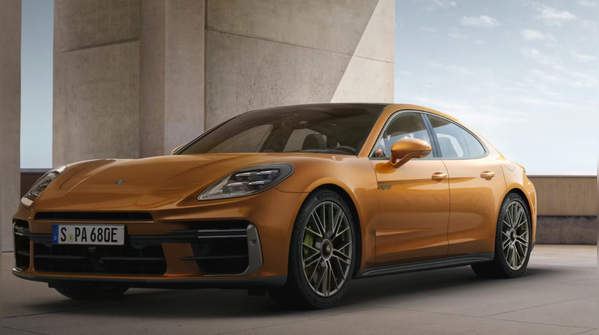
Porsche Panamera Turbo E-Hybrid
Porsche is rarely associated with softness, yet the Panamera Turbo E-Hybrid demonstrates how performance engineering can create ease rather than intensity. Its hybrid system blends electric immediacy with combustion power, delivering acceleration that feels continuous instead of explosive.
At high speeds, Porsche’s adaptive air suspension and active aerodynamics stabilise the car with remarkable subtlety. The vehicle feels planted, predictable, and reassuring, qualities that matter far more than raw horsepower numbers during fast cruising.
Unlike traditional performance sedans that constantly remind drivers of their capability, the Panamera smooths its own sharp edges. It encourages confidence rather than adrenaline, allowing speed to feel controlled and almost effortless.
Featured In Auto

