
- News
- lifestyle
- fashion
- style-guide
- The origins of Batik in India and why it still matters today
The origins of Batik in India and why it still matters today
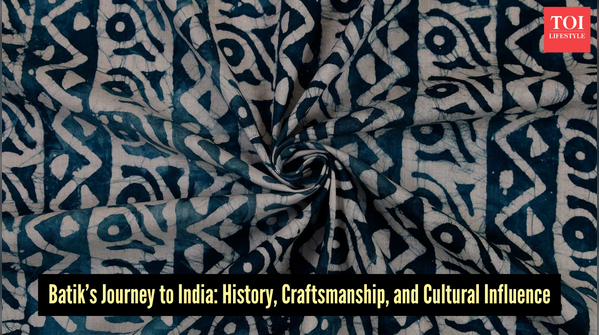
The Fascinating History of Batik
If you open up your closet right now, there is a very good chance you’ll find at least one piece of Batik. Maybe it’s a crackled indigo dupatta, a breezy summer shirt, or a vintage saree tucked away at the back. It is arguably one of the most recognizable textile patterns in the world. But when we think of Batik, our minds almost immediately jump to Indonesia. And fair enough—Java is universally considered the global heartland of this intricate wax-resist craft. So, how exactly did it become such an inseparable part of the Indian ethnic weave aesthetic? The answer is a fascinating mix of ancient trade, maritime adventures, and a lot of cultural borrowing.
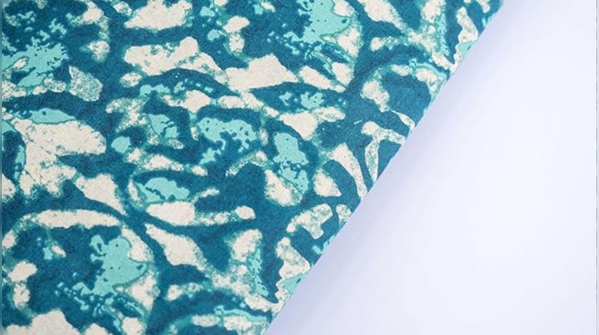
Wait, didn't it start here?
Yes and no. The truth is, Indian artisans have been playing around with resist-dyeing for over two millennia. There is solid evidence that basic resist-printing on cotton was happening here right around the 1st century AD. If you want visual proof, look no further than the breathtaking frescoes of the Ajanta and Ellora caves.
You’ll spot figures draped in garments featuring those distinct, crackled, geometric patterns. Unfortunately, our tropical climate is notoriously harsh on delicate fabrics. Because of the heat and humidity, zero ancient cotton pieces have survived to tell the tale. But the art lived on. Back then, India had a massive upper hand globally because of our high-quality cotton and vibrant natural dyes—especially the deep indigo blues and the rich alizarine reds sourced from madder roots.(Image Credits: Pinterest)
The Javanese connection
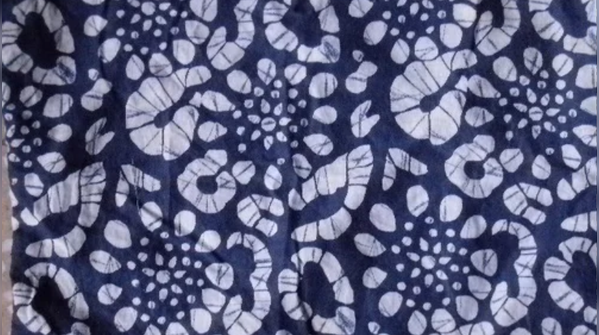
Things really shifted when Indian merchants started taking to the seas. They exported fine silks and beautifully dyed cottons all across Southeast Asia, hitting spots like Sumatra, China, and of course, Java. During these long voyages, Indian traders saw what the Javanese were doing. While Indian artisans were mostly using slightly chunkier mud or sand resists (a local technique known as Dabu), the Indonesian craftsmen were operating on a whole different level of precision.
They were using molten wax and a highly specialized, pen-like tool called a Tjanting. Recognizing a game-changer when they saw one, the merchants brought this refined wax-resist technique back home. The Khatri merchant communities along the Gujarat trade routes were some of the first to adopt it, seamlessly blending the Indonesian wax methods with their already booming textile businesses.
(Image Credits: Pinterest)

Making it our own
Once the wax technique hit Indian soil, it didn't stay Indonesian for long. Javanese Batik was deeply ceremonial, heavily featuring royal emblems and cosmic symmetry. Indian artisans, however, completely rewrote the rulebook. Different regions gave the craft their own local spin.Take Ujjain in Madhya Pradesh, for example.
It practically exploded into a massive production hub. Local craftsmen started trading their older, chunkier mud-resist Dabu methods for smooth wax. The result? These incredibly striking, earthy pieces dripping with local tribal motifs, flora, and fauna. Meanwhile, over on the western coast, the artisans of Kutch in Gujarat took the technique and entirely made it their own. They married the fluid wax process with their absolute obsession for razor-sharp, highly intricate geometric patterns. Meanwhile, artists in Andhra Pradesh and Telangana went in a completely different direction, using the wax to paint elaborate mythological tales and vivid scenes of village life.
(Image Credits: Pinterest)
The great modern revival
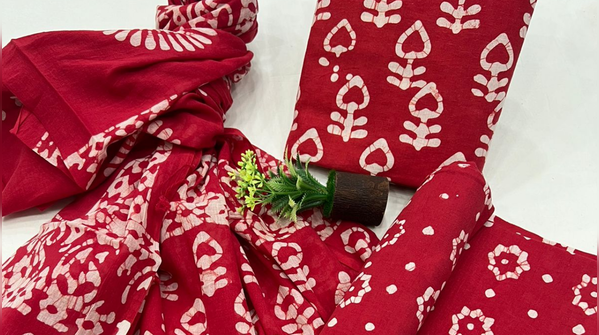
Like many heritage crafts, Batik took a massive hit during the Industrial Revolution. Cheap, mass-produced fabrics and synthetic dyes almost wiped it out entirely. But then came the 20th century. Rabindranath Tagore played a massive role in pulling Batik back from the brink. He introduced it as a formal subject at the art school in his Visva-Bharati University in Shantiniketan, West Bengal. This elevated the craft from a struggling village trade to a highly respected fine art. The artisans there even invented leather Batik—which is why those gorgeous, hand-painted leather bags and wallets are so iconic today.
Later, in the 1960s, the Madras School of Arts heavily pushed the medium. "Madras Batik" exploded onto the global scene, becoming the unofficial uniform of the Western counterculture movement. So, the next time you throw on a piece of Batik, take a closer look at those tiny, beautiful cracks in the dye. You aren't just wearing a print. You're wearing centuries of maritime trade, cultural exchange, and an artistic legacy that spans across oceans.
(Image Credits: Pinterest)
Featured In lifestyle

MORE FROM ETIMES
life & style