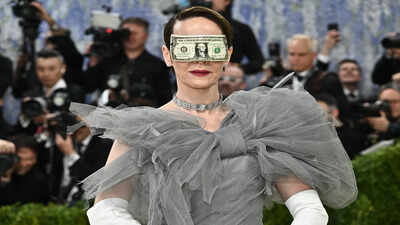
The Met Gala is, on paper, simple: the first Monday in May, New York’s Metropolitan Museum of Art’s Costume Institute holds a fundraiser. Tickets fund the department for the year.
Anna Wintour co-chairs this event. Every year since she took over as editor of Vogue in 1988 (she’s retired this year, but still holds the Met-head position). Designers dress celebrities to match an exhibit theme (this year it was “costume art”). The cameras turn on at 6 p.m. on the steps. The rest is lore.
In 2026 though, this lore curdled.
By March, the headlines were already bleeding. Ukraine’s third winter of drone strikes. A new front in Sudan. Gaza’s aid corridors throttled again. At home, Amazon, Google, and three media conglomerates announced “strategic realignments.” Translation: 42,000 layoffs in one quarter. TikTok fed two streams into every phone: bombed bakeries and $75,000 table gifts. The juxtaposition told the most telling tale of our times – the widening socio-economic gap in our world. The rage against layoffs and the billionaire culture that’s got prominence in the last two decades.
And the sheer exhaustion and exasperation of people everywhere in the world.
Watch
Karan Johar Makes Historic Met Gala Debut In Manish Malhotra Look Inspired By Indian Art

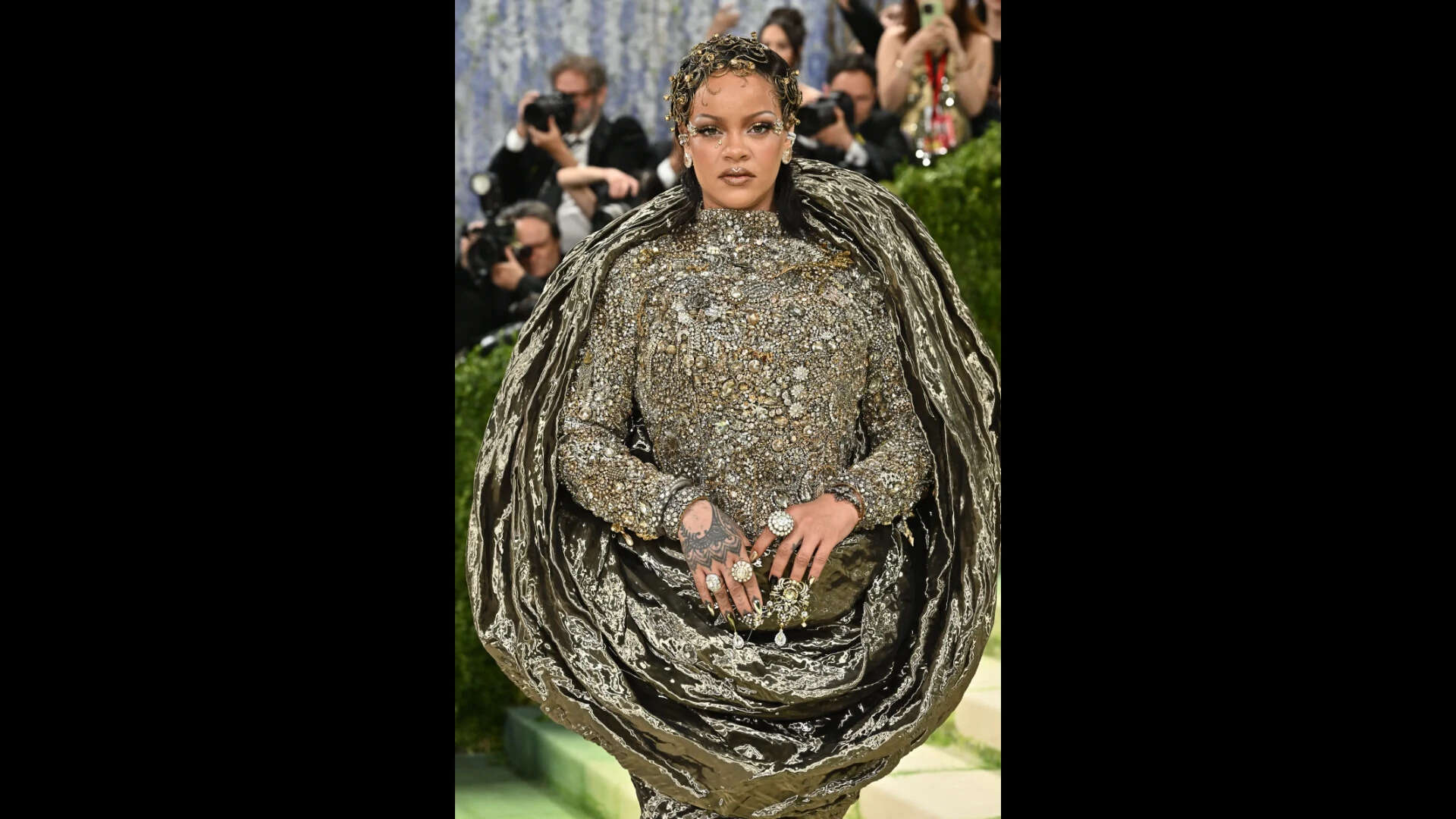
The Met Gala is, on paper, simple: the first Monday in May, New York’s Metropolitan Museum of Art’s Costume Institute holds a fundraiser. Tickets fund the department for the year. In 2026 though, this lore curdled. (In pic. Rihanna at the red carpet)
That’s when Vogue did something it hadn’t done in 25 years. It cut the ticket price.
An internal memo leaked: “In recognition of the global climate, individual tickets for Met Gala 2026 will be reduced from $75,000 to $50,000. Tables from $350,000 to $250,000.”
In the theatre of the absurd, I’m guessing, the subject line could be something like: Adjusting to the Moment. From here on, I’ll blend reality with fiction. Because fiction has been beaten to a pulp by the absurdity of real life – in 2026. Just look at the last few Truth Social Post of Donnie.
The Met Gala is a fundraiser for a museum department. It’s also the most photographed concentration of wealth in America. In 2026, that second part drowned out the first. The backlash wasn’t about art. It was about timing.
Anyway, coming to the absurdity of the Gala, the internet said: We’ve had enough!
“$50k is the new bread,” @LaborStitch posted, above a photo of a garment worker holding a pay slip for $212 a month. The tweet hit 3 million views before Vogue’s comms team finished their coffee.
Inside Condé Nast, the move was meant as a gesture. Outside, it was chum. The “anti-billionaire” current that had been building since 2022 — Amazon union drives, private jet trackers, “eat the rich” Halloween costumes — found a fresh symbol. The Met steps looked less like a fundraiser and more like a fossil.
Anna Wintour didn’t see it that way. At the April press preview for the Costume Institute’s exhibit, Labour & Loom: The Hand That Sews History, a reporter asked the question bluntly: “Why have a Met Gala at all this year?”
Wintour adjusted her sunglasses. “I cannot understand why there is a Met Gala backlash this time around,” she said. “The Institute is self-funding. This night pays for curators, conservators, educators. We’ve had a Gala during wars before. During recessions. After 9/11. Beauty and scholarship are not paused by hardship. If anything, they’re more necessary.”
The clip ran on every network. By midnight it had its own sound on TikTok. Young creators stitched it with footage of layoff emails and drone footage. The caption trend was simple: “more necessary”.
Jeff Bezos wasn’t at the red carpet. He was inside in the cocktail room, as his wife Lauren Sanchez walked the red carpet. But he didn’t need to be on the red carpet. His name was already in the room. Blue Origin had just laid off 1,400 people in February. The next week, a Page Six blind item said he’d bought a table for “Blue Moon” — a space-themed after-party. It wasn’t true. But truth had stopped mattering. Long ago. “Bezos at the Met” became shorthand for the whole complaint: that the people least touched by war and job loss were still throwing the most televised party on earth.
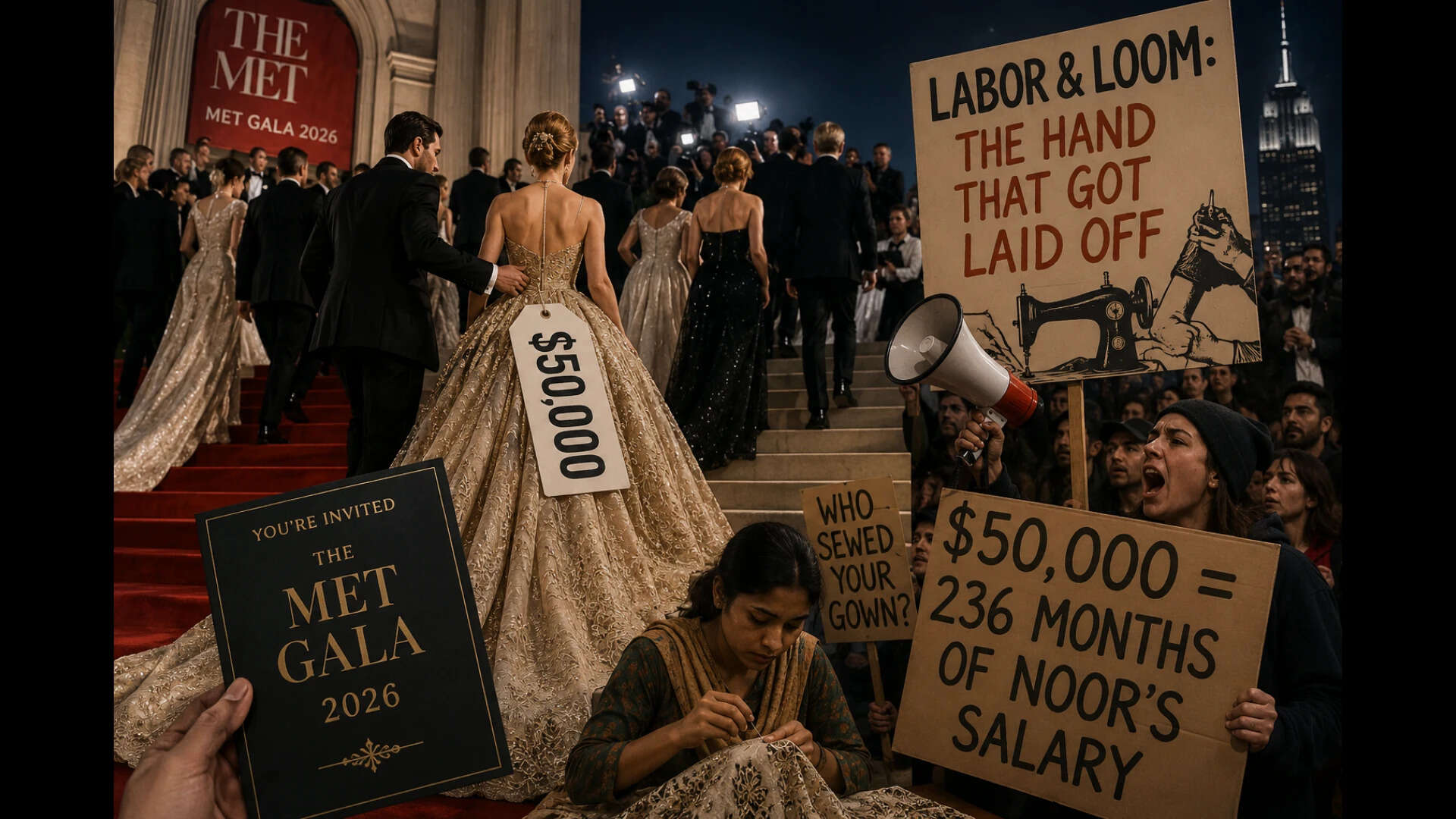
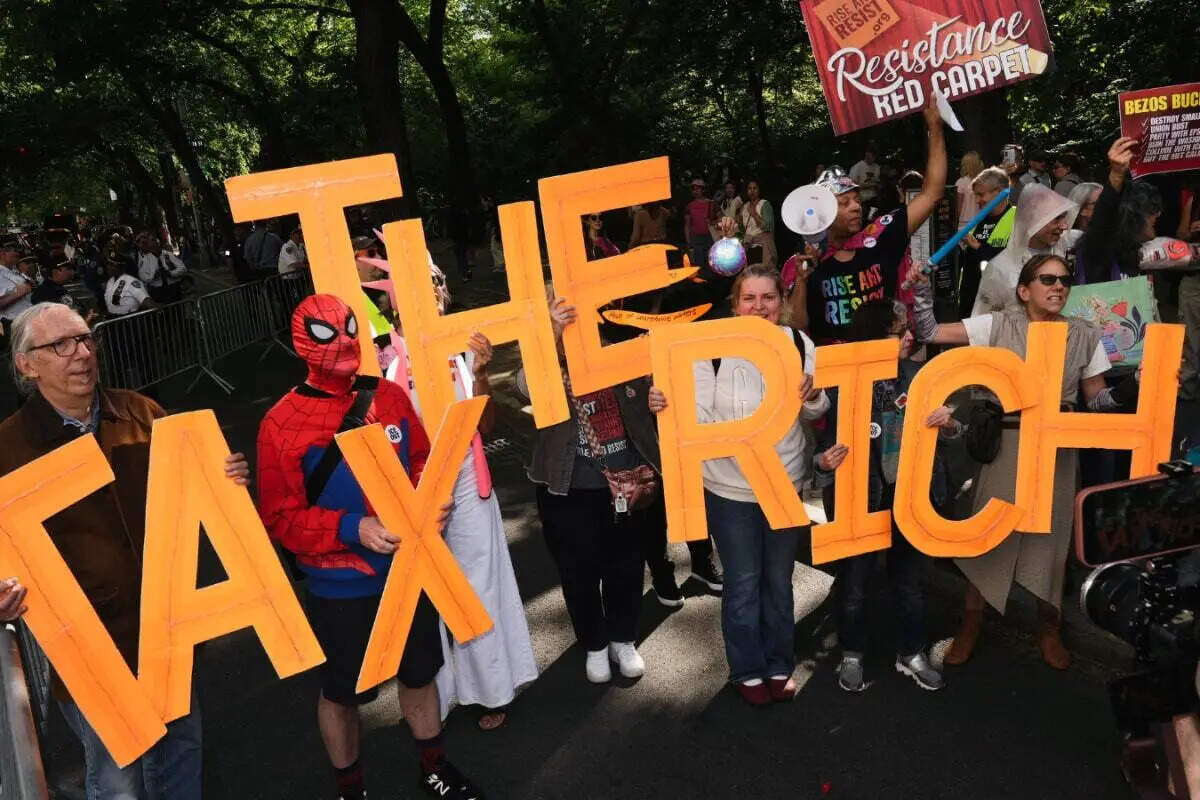
Protest plans solidified. The Debt Collective, a union of garment workers, and a coalition of ex-tech employees called @ResetTheTable announced a “People’s Gala” in Bryant Park the same night. Their flyer was a spoof of the Vogue cover: Labour & Loom: The Hand That Got Laid Off.
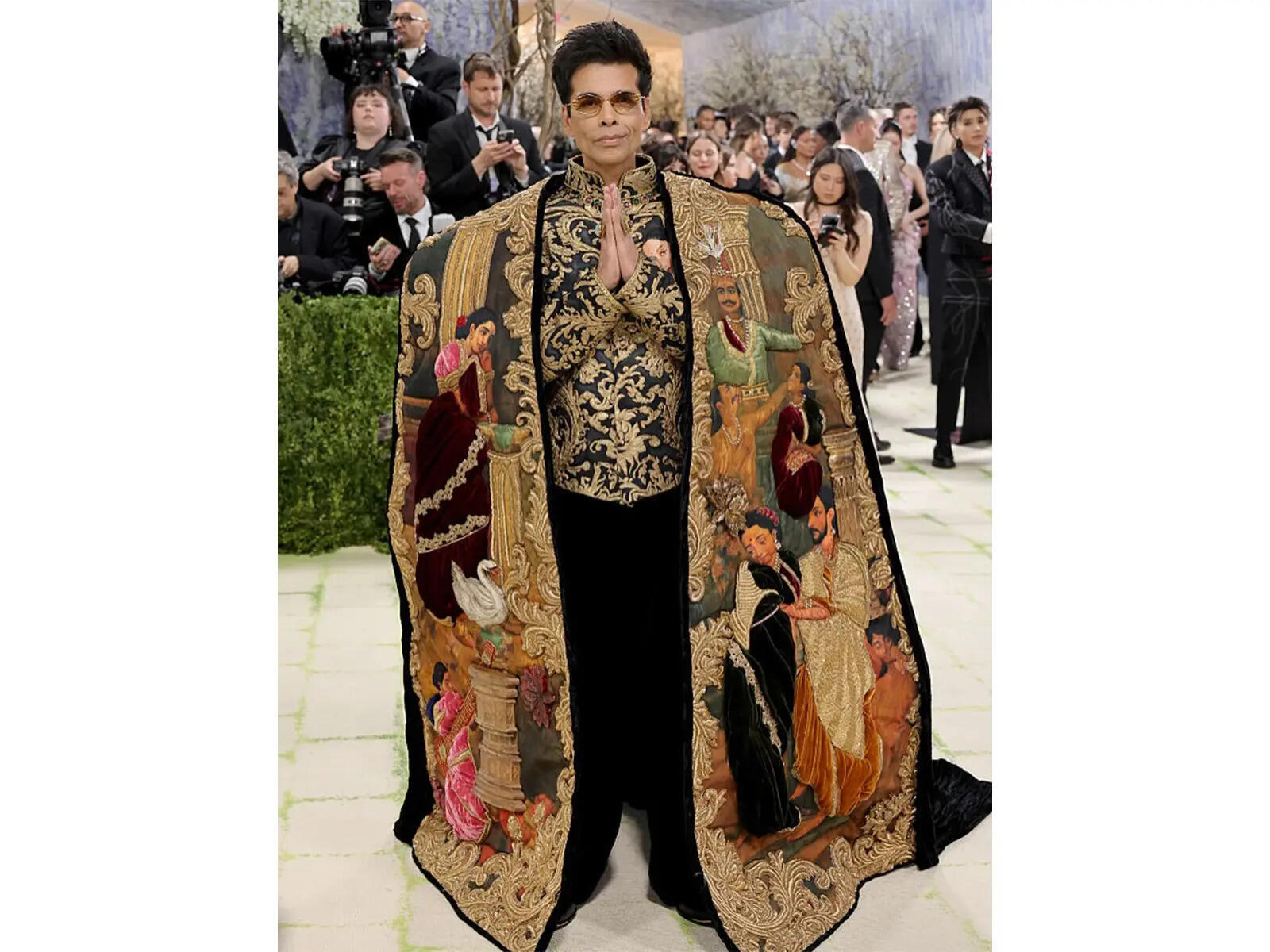
Inside the Met, the contradictions multiplied. The 2026 exhibit was genuinely radical. Labour & Loom traced the handwork behind fashion — from 18th-century lace makers to 2024 Dhaka seamstresses. The museum had commissioned pieces from seven independent ateliers that survived mass layoffs. One was in Khatauli, Uttar Pradesh. Five women there had hand-embroidered a coat for a French house. The coat would walk the carpet on a Bollywood star. The women watched rehearsals on a cracked Infinix phone.
“We are proud,” said Noor, 24, the lead karigar. “But madam, will this give us next month’s work?” The French house had paused orders in January.
Karan Johar reflects on "full circle" moment at Met Gala 2026, calls himself "wide-eyed dreamer"
On the Friday before the Gala, Anna did a walk-through. She stopped at the Khatauli coat. “This is why we do it,” she told the curator. “To show the hand.” An assistant whispered that @ResetTheTable had just projected “$50,000 = 236 months of Noor’s salary” onto the Met’s facade. Anna didn’t flinch. “We’ve been criticized since 1948,” she said. “The alternative is to close the doors.”
The Gala night arrived warm and wet. 68 degrees. Rain threatened. The NYPD had barricaded Fifth Avenue farther back than usual. Bryant Park was already chanting. On the steps, the calculus was different.
The first arrivals played it quiet. “Re-wear” was the word of the night. A senator wore a 2012 gown, taken in. A tech founder wore a plain black suit and a pin from a Sudanese designer. No one said “quiet luxury” aloud, but everyone wore it. The $50,000 ticket had not made the room less rich. It had made it more self-conscious.
Halfway up the steps, a streamer slipped past the barrier. She wore a dress of printed layoff emails — real ones, names redacted. Security took 22 seconds to reach her. In that time she shouted, “Who sewed your gown?” The clip went live before she hit the pavement.
Inside, the cocktails were tense. The Khatauli coat appeared at 8:17 p.m. The Bollywood star who wore it had asked Vogue if Noor could attend. The answer was no. “Security,” they said. Instead, the star carried a small projector in her clutch. On the bathroom mirror, between photos, she played a 10-second video of Noor stitching. It reached Twitter in four minutes.
Bezos may not have come. His table was taken by a group of climate scientists, paid for by a foundation. They wore deadstock. One told a reporter, “We’re here because the museum invited us. The optics are bad. The funding for artifacts is worse.”
Anna stood at the top of the stairs for the receiving line. She’d heard the criticism for a month. She’d read the memos about “reading the room.” She still didn’t agree with the premise. In the donor lounge, over a glass of water, she said it again to a trustee, not knowing a waiter was recording: “I cannot understand why there is a Met Gala backlash this time around. We employ thousands tonight. We keep the lights on. If we cancel out of guilt, the lights go off for good. Is that better?”
The waiter posted it at 10:04 p.m. By 10:11 it was on the screens at the People’s Gala. The crowd in Bryant Park didn’t boo. They laughed. Then they chanted, “Lights off.”
The next morning, two things were true. The Met announced $18.3 million raised, down from $22M last year but enough to fund the Costume Institute and save three conservation jobs slated for cuts. And #AbolishTheMet trended for 16 hours.
The anti-billionaire stance didn’t start in 2026. But the Gala gave it a face, a staircase, and a $50,000 price tag that used to be $75,000. The reduction wasn’t read as empathy. It was read as fear. Proof that the pressure was working. Union leaders called it “the first crack.” Fox News called it “a cave.”
Noor saw the photos on Tuesday. Her coat, under the museum lights. Her name wasn’t in the caption. But the comments were. “Who made this?” “Pay her.” “Say her name.”
She forwarded the best one to her sister: It’s only going to get more powerful from here.
She didn’t mean the Gala. She meant the question.
The Met Gala, for all its sequins, is a fundraiser for a museum department. It’s a costume party that funds scholarships. It’s also, once a year, the most photographed concentration of wealth in America. In 2026, that second part drowned out the first. The backlash wasn’t about art. It was about timing. About who gets a seat when wars rage and layoffs roll. About whether “more necessary” is a reason, or an excuse.
Anna Wintour still thinks it’s a reason. The crowd in Bryant Park thinks it’s an excuse.
The lights stays on at the Met. For now. And 50,000 dollars still bought a smile. It was just a smaller one. And it didn’t last as long as Wintour & Party imagined.
(Some or all characters in this article may or may not be fictitious)