
Do restaurants keep veg and non-veg ladles separate? Chef Sanjeev Kapoor reveals the truth
The truth behind veg and non-veg ladles of restaurants
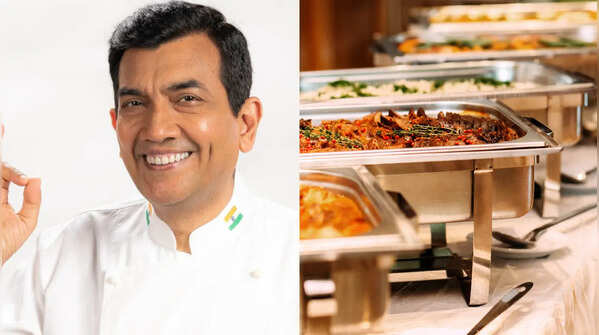
For many of us, eating at restaurants is not a matter of necessity but a privilege or a way to break the monotony of eating the same home-cooked food. Restaurants in India are categorized as pure-vegetarian, non-vegetarian, or those that serve both. When it comes to those serving both, people often doubt the sanity and hygiene of kitchens that prepare both vegetarian and non-vegetarian food. To a large extent, this doubt is practical. While most of the places claim to have separate stoves, utensils, chopping boards, and more, the truth is sometimes beyond imaginaton. In a recent podcast, when celebrity chef Sanjeev Kapoor was asked, "Do restaurants keep veg and non-veg ladles separate?" This is what he said...

What did chef Sanjeev Kapoor say?
In the podcast session with ANI, Chef Sanjeev Kapoor said, "Not always, not all places." He further added, "Some places do keep the ladles separate, but some places don't." This truth has surely raised concerns over the hygiene issues in restaurants, and when he was asked how can one trust, he said, "Choice is yours." According to chef, it all depends on the setup and the rulebook a particular restaurant follows. Some of them are very strict with the guidelines, while some are liberal and easy going.

Rules for restaurants by FSSAI
According to the Food Safety and Standards Authority of India (FSSAI), one of the very basics for keeping vegetarian and non-vegetarian foods is to use colour-defined chopping boards for cutting and chopping. Green board is for fruits and vegetables, blue is for raw seafood and fish, red is for raw meat, yellow for poultry, white for dairy products, brown for cooked meat, and purple for allergen-free food preparation. Apart from that vegetarian food must carry a green filled circle inside a green square outline, this indicates the product contains only plant-based ingredients and ingredients of vegetarian origin, including milk and dairy products. For non-veg, a brown filled triangle inside a brown square outline is mandatory, it applies if the food contains meat, fish, eggs and more.
What else did Chef Sanjeev say?
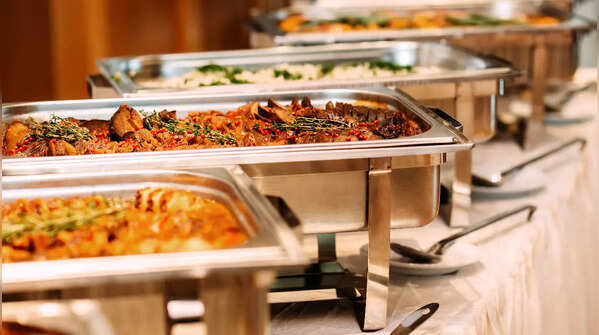
He was asked if buffets serve leftovers from the previous day. The chef stressed that the rules followed in household kitchens are also practised in hotel kitchens. “No, I want to clear this misunderstanding. People often ask, ‘What do you do with the food that is left over?’ People in a hotel do exactly what you do with the leftovers at home,” he answered. He stressed that restaurants repurpose the food the same way we do at home. He added, “So, what exactly is the fault of the poor hotel owners? For starters, they don't actually make that much extra food. Right! You do that at home… [it's just that] they have better science, they are trained, they know all the technicalities, and they know what they are doing. Meanwhile, what you simply discard at home, they discard there as well—it is exactly the same.”
Featured In Food

MORE FROM ETIMES
life & style