
- News
- Health News
- Drinking beer helps remove kidney stones? What doctors say about this viral trend
Drinking beer helps remove kidney stones? What doctors say about this viral trend
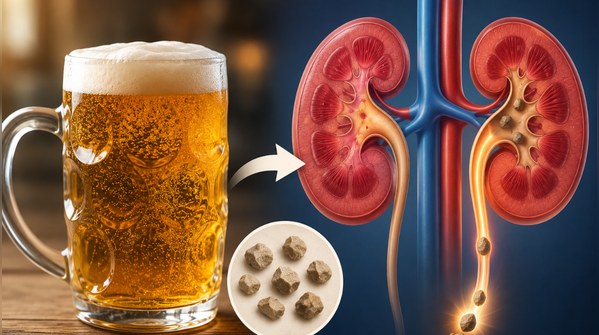
Have you ever come across this claim?
If you've spent any time scrolling through health TikTok or reading Reddit threads about kidney stones, you've probably seen it: the claim that beer can help you pass kidney stones. The theory gets passed around like gospel. Someone says their cousin had a stone and drank beer and it worked. A friend's friend swears by it. Pretty soon, you're convinced that cracking open a cold one might just be the solution to excruciating kidney stone pain.
Except it's completely wrong. And not just wrong, potentially dangerous.
"Beer does not help in decreasing the risk of kidney stones. So it is a complete myth," says Dr. Atul D. Sajgure, Consultant Nephrologist at Sahyadri Super Speciality Hospital in Pune. He's blunt about it because he sees patients all the time who've bought into this misconception. "In fact, alcohol can dehydrate the body and increase your long term risk of developing kidney stones."
This is where things get interesting, because beer is technically a liquid
So how could a liquid, something we normally think of as hydrating, actually make kidney stones worse? The answer lies in how alcohol works in your body.
Dr. Jatin Kothari, Consultant Nephrologist at P.D. Hinduja Hospital and Medical Research Centre in Mumbai, explains the mechanism. "Many people think that beer is a good remedy for passing kidney stones, but the truth is that drinking it excessively can aggravate stone disease," he says. "Dehydration is one of the biggest risks of drinking too much beer. Although beer is a liquid, the alcohol has a diuretic effect that causes the body to lose more fluid."
When you drink alcohol, your body doesn't hold onto it the way it holds onto water. Instead, alcohol actually makes you lose more fluid through increased urination. So if you're sitting there with a kidney stone thinking beer is going to help, what you're actually doing is making yourself more dehydrated while fooling yourself into thinking you're hydrating.
"So, if someone is drinking a lot of beer and not enough water, it can lead to serious dehydration. This not only concentrates the minerals in the urine but also increases the chances of stone formation," Dr. Kothari explains.
Problems with beer and kidney stones don't stop at dehydration
There's another layer to this that most people don't realize. Beer actively changes your body's chemistry in ways that promote stone formation.
"Beer is known to increase uric acid levels in the body," Dr. Kothari says. "High uric acid in the urine is a major factor that leads to uric acid stone formation." So you're not just concentrating the minerals that were already going to be a problem. You're literally creating new conditions in your body that favor stone development. It's like you're actively building the stone yourself.
Then there's the weight gain factor. "What's more, drinking beer on a regular basis or in large quantities may cause one to put on weight, thereby increasing the risk of developing metabolic syndrome. These two conditions are linked to an increased risk of kidney stones over time," Dr. Kothari adds. So now you've got dehydration, increased uric acid, and metabolic issues all stacking on top of each other.
"Another issue many people have is their tendency to replace water with beer, thinking that beer will help 'flush' the kidneys. Actually, swapping water for beer can not only cancel out any benefit but also increase the risk even further," Kothari warns.
So what actually works?
Both doctors point to the same solution, and it's not glamorous or interesting or the kind of thing that trends on social media.
"If you want to take steps to prevent or manage kidney stones, the best thing you can do is drink sufficient amounts of water (8-12 cups per day) to dilute your urine," Dr. Sajgure says. "This dilution will also decrease the concentration of any minerals that may produce kidney stones in your urine."
Water. Just regular, boring water. Eight to twelve cups a day. That's the science. That's what actually works.
Dr. Kothari goes further with practical prevention strategies. "The primary recommendation for preventing kidney stones is to keep up a high water intake to have a urine output of more than 2-2.5 liters per day." Beyond just drinking water, he emphasizes other dietary factors. "Besides, decreasing salt intake is crucial since elevated sodium levels lead to an increase in urinary calcium. Eating a well-balanced diet with a normal amount of calcium, a moderate level of oxalate-rich foods, and a limited amount of excessive animal protein is advisable."
Adding something else to water works
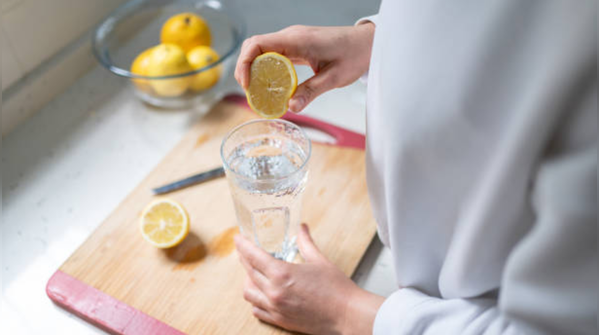
And here's something interesting that actually could have some benefit: lemon water. "Besides, increasing citrate intake can also be of great help; for instance, drinking lemon water can raise urinary citrate which is a natural inhibitor of kidney stone formation," Kothari says. So if you want a beverage recommendation that goes beyond plain water, lemon water is actually backed by science. Lemon juice increases citrate in your urine, and citrate naturally prevents stones from forming. That's a real mechanism, not a myth.
What Dr. Sajgure really wants people to understand is that kidney stones aren't simple. "It is important for patients to realize that kidney stones are the result of many different factors such as diet, hydration habits, excessive salt intake, metabolic disorders, and genetic predisposition. Management of kidney stones will vary according to the size and type of stone present within the urinary tract."
Small stones might pass on their own with increased fluids and medication. Larger ones need medical intervention. But whatever size or type you're dealing with, beer isn't the answer.
"Patients should try to refrain from using myths (i.e. drinking beer will help) and instead concentrate on drinking enough water every day, following a well-balanced diet, and obtaining appropriate medical attention when necessary to effectively help avoid or treat kidney stones," Dr. Sajgure says.
The bottom line is straightforward: the internet got this one completely backwards. Beer makes kidney stones worse, not better. Water, dietary changes, and actual medical care are what work. Skip the mythology. Drink the water.
Featured In Health

