
- News
- etimes
- animals-pets
- Bobcat vs lynx: Can you actually tell the difference between two similar-looking cats?
Bobcat vs lynx: Can you actually tell the difference between two similar-looking cats?
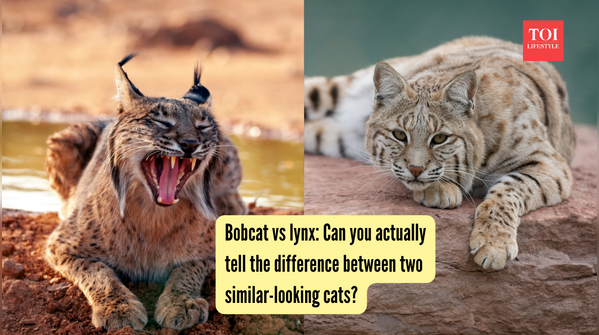
Bobcat vs lynx Can you actually tell the difference between two similar-looking cats
Creatures from the cat family are an intriguing topic of discussion, whether large or small; each one is unique in its traits, characteristics, functions, and hunting style, yet surprisingly, they share a similar appearance despite belonging to different species.
Similarly, at first glance, bobcats and lynxes, belonging to the cat family, look almost identical. Both are wild cats with short tails, pointed ears, thick fur, and sharp hunting instincts. It is easy to see why so many people confuse them, especially in photos or quick wildlife encounters.
The confusion is common because bobcats actually belong to the lynx genus, meaning they are closely related animals rather than completely separate cats.
Still, there are clear differences once you know what to look for. Some differences are subtle, while others become obvious when the animals are seen side by side.
If you have ever looked at a photo and wondered which cat you were seeing, here are a few traits that set them apart.
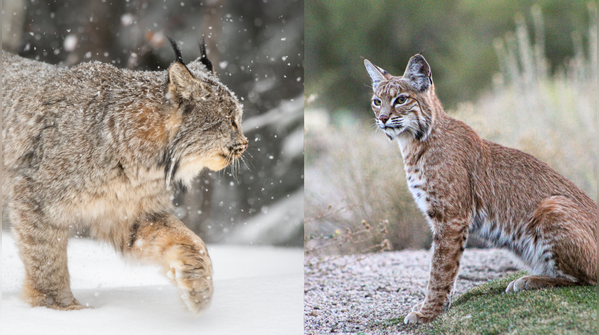
Their size and body shape are different
One of the easiest ways to separate a bobcat from a lynx is by looking at the overall body shape. Bobcats are usually smaller, heavier, and more muscular. Lynxes tend to appear taller with longer legs and a leaner frame.
The Canada lynx especially has a high-legged look that makes it seem larger than it actually is. Lynxes also move with a lighter, softer stride because of their long legs and oversized paws. Bobcats, in comparison, look more compact and powerful.
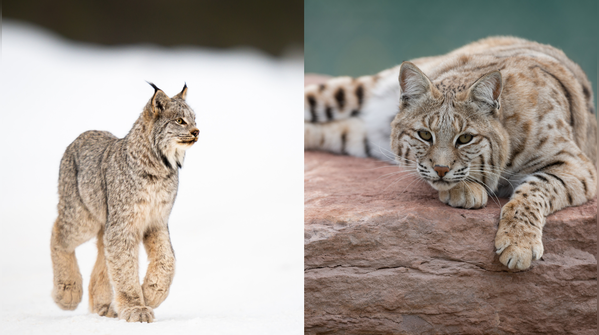
The paws give the biggest clue
One of the most standout features that help separate the two is their unique paws. Lynxes have extremely large, furry feet that work almost like snowshoes. These oversized paws help them walk across deep snow without sinking.
Bobcats have much smaller paws because they usually live in areas with less snow. A lynx track in snow often looks surprisingly huge compared to its body size. This adaptation is one reason lynxes thrive in cold northern forests. Bobcats, on the other hand, are more adaptable and can live in deserts, forests, and scrublands without needing oversized feet for survival.
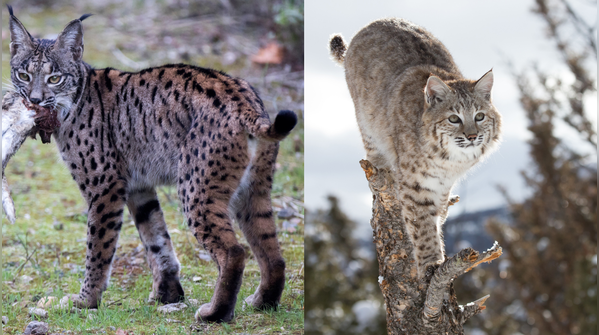
Tails and ears help to separate them from each other
The tail is another reliable way to identify these wild cats. Bobcats have a short “bobbed” tail with black mainly on the upper side and a lighter underside. Lynxes usually have a fully black-tipped tail that looks darker all around. This small detail is one of the quickest identification tricks used by wildlife observers.
Ear tufts also help. Lynxes have longer and more visible ear tufts, while bobcat tufts are shorter and less noticeable.
Their fur and colour patterns are not the same
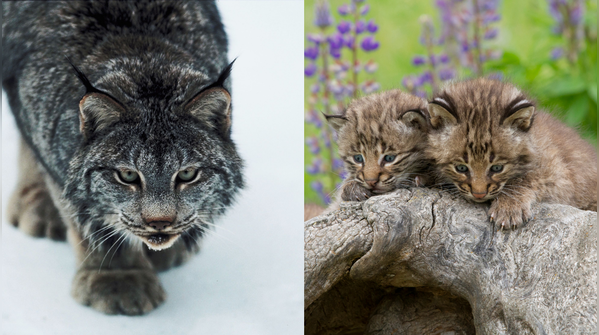
Bobcats usually have coats with stronger spots and stripes. Their fur often appears reddish-brown or warm-toned, especially in summer. Lynxes generally have thicker and lighter fur with softer markings that may look faded from a distance. Because lynxes live in colder climates, their dense coat helps them stay warm during harsh winters. Some lynxes can appear almost gray in snowy regions. Bobcats depend more on camouflage for their survival, so their spotted coat helps them blend into forests, rocks, and dry grasslands.
Habitat often gives the answer
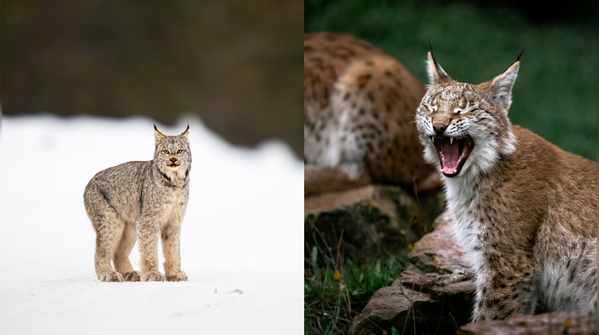
Where you spot the animal can provide a strong hint about whether it is a bobcat or lynx. Bobcats are highly adaptable and live across many environments, including deserts, swamps, forests, and rocky areas. Lynxes prefer colder northern habitats with deep snow and dense forests.
Featured In etimes

