
- News
- World News
- Europe News
- France unrest: 'Block everything' protests turn violent; nearly 300 arrested - in pics
France unrest: 'Block everything' protests turn violent; nearly 300 arrested - in pics
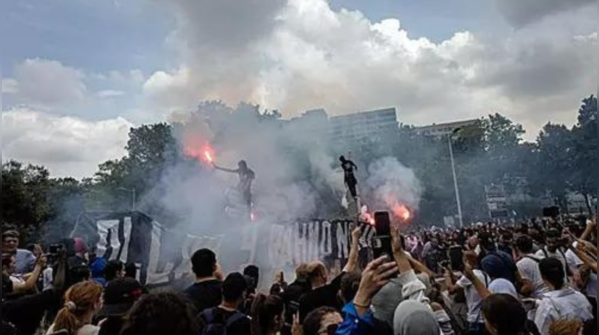
Protests break out in France
President Emmanuel Macron is under pressure as he appointed a new prime minister, which caused a "block everything" rally in France. Macron faced an immediate challenge from the protestors as he was appointing Sébastien Lecornu as his new prime minister on Tuesday.
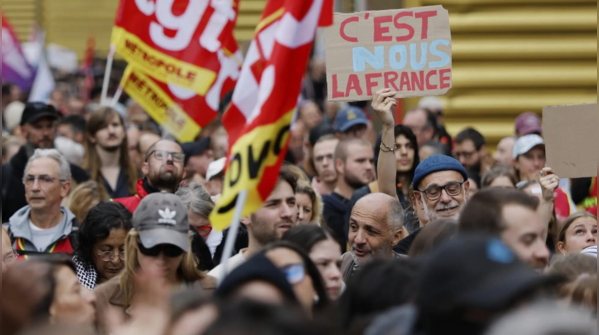
Riot police arrest 300 people
In the early hours of a planned day of nationwide protests against Macron, budget cuts, and other grievances, the government's interior ministry confirmed 300 arrests. Despite not achieving its stated goal of "Blocking Everything," the protest movement disobeyed an extraordinary police presence of 80,000 officers who quickly dismantled barricades and made arrests.
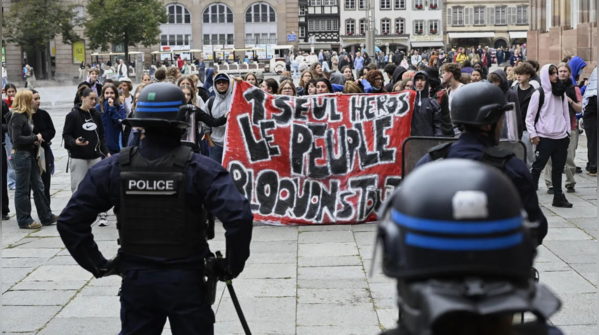
Buses burned, trains halted
In Paris and other parts of France, protesters blocked highways, set fires, and were attacked with tear gas on Wednesday. In the western city of Rennes, a bus was set on fire. According to federal transportation officials, fire damage to electrical lines in the southwest halted train operation on one line and caused traffic disruptions on another.
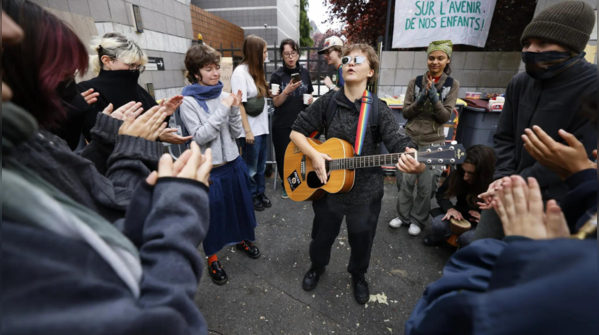
The reason behind the protest
In order to control France's mounting deficit and trillions of debt, Bayrou was drafting proposals to drastically cut public spending by 44 billion euros ($51 billion) as the protests broke out. Additionally, he suggested removing two official holidays from the country's yearly calendar, a move that was met with extreme opposition.
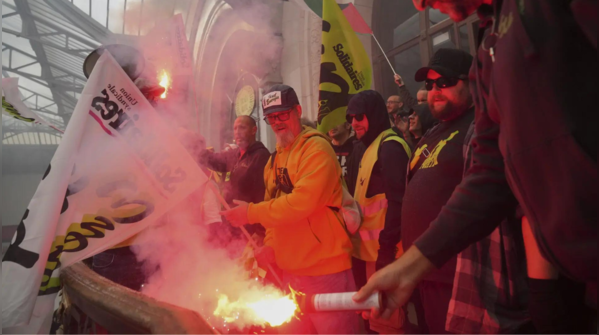
How it began
Over the summer, the "Block Everything" or "Bloquons Tout" campaign gained traction on social media and in encrypted chats. It's a demand for a day of protests, boycotts, blockades, strikes, and other actions.
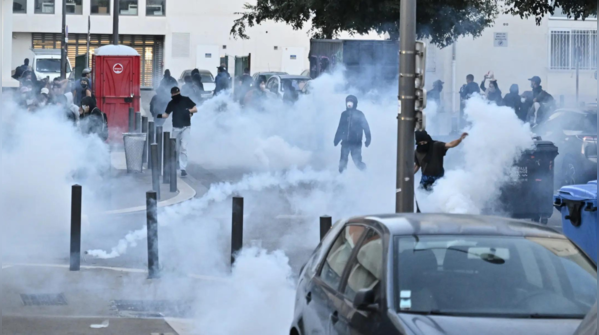
Protesters throw objects; police retaliate with tear gas
Police used tear gas to disperse demonstrators who attempted to block the Paris beltway on multiple occasions during the morning rush hour. Demonstrators threw objects at police officers and stacked garbage cans in other parts of the capital. Throughout the morning, 159 arrests were reported by Paris police.
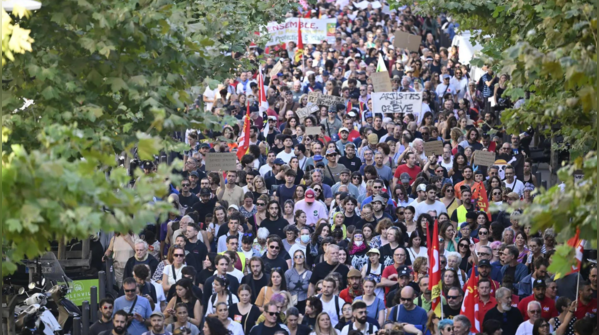
Traffic halted as roads were taken over
From the port city of Marseille in the south to Lille and Caen in the north, Nantes and Rennes in the west, and Grenoble and Lyon in the southeast, there were numerous protests, including road blockades and traffic slowdowns.
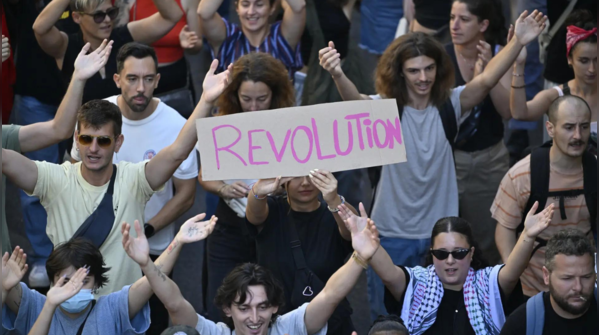
Not the first time Macron has faced backlash
Compared to earlier episodes of unrest that have periodically shaken Macron throughout his first and current second term as president, the protests seem to be less severe thus far. During 2018–2019, he was met with months of yellow vest protests against economic injustice across the country. Macron faced it due to his unpopular pension measure after he was reelected in 2022, and he saw widespread unrest and riots in 2023 following the fatal police shooting of a teenager on the outskirts of Paris.
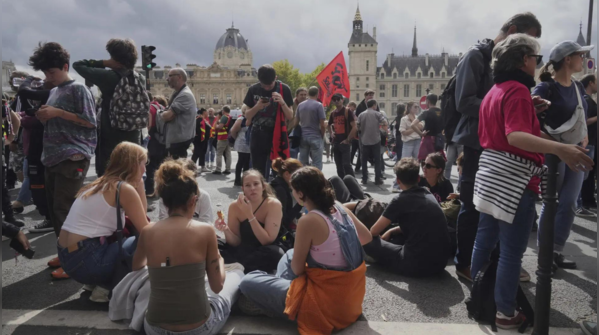
Crisis hit after the government's collapse
Demonstrations and sporadic clashes with riot police in Paris and elsewhere on Wednesday added to a sense of crisis that has again gripped France following its latest government collapse on Monday, when Prime Minister François Bayrou lost a parliamentary confidence vote.
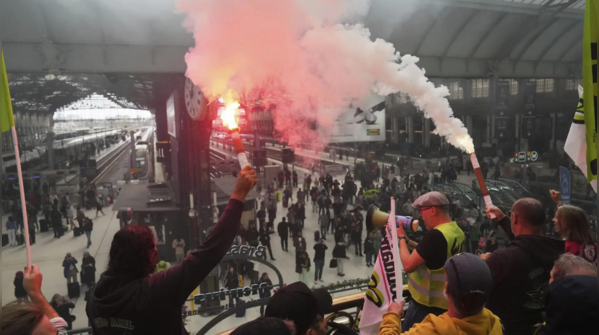
Prolonged cycle of instability
Macron's governments have been on particularly shaky ground since he dissolved the National Assembly last year, triggering an unscheduled legislative election that stacked the lower house of parliament with opponents of the French president. This has gripped France with a prolonged cycle of instability.
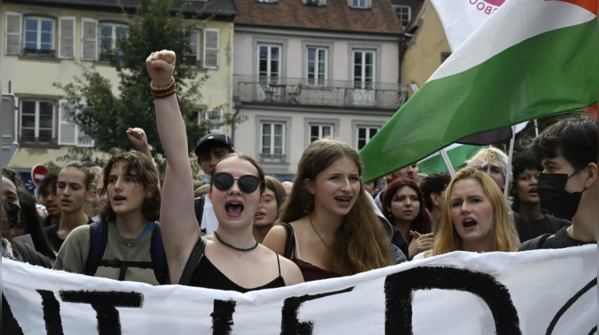
Pressure mounting on the new prime minister
As the next prime minister and former defense minister, Lecornu must deal with France's budgetary issues while dealing with the same political unrest and anti-Macron sentiment that ultimately led to Bayrou's downfall.
Featured In World

