
- News
- Science News
- 10 mind-blowing facts about the blue planet, Earth
10 mind-blowing facts about the blue planet, Earth
10 mind-blowing facts about the blue planet, Earth
The ground below us seems so steady and also unvarying; however, the Earth is a chaotic, bustling work of art. It may have diminishing oceans, and its moon may be drifting at a snail's pace, but all the while, our planet is under the influence of geological and astronomical forces that are constantly altering the planet. For instance, the fact that we are bombarded annually by 1,000 tons of space dust and that our days are actually getting longer demonstrates the intricacies of the third rock from the sun. Let's take a closer look at some facts about the planet we believed we already understood through the use of NASA and other scientific authorities.
Long days ahead
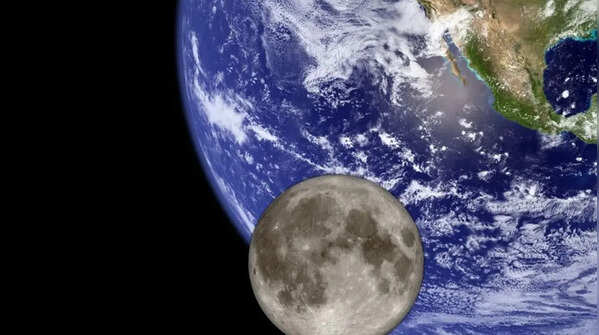
NASA states that the Moon migrates away from the Earth slowly at around 3.8 centimetres per annum. This celestial movement creates tidal friction, acting as a physical brake on our rotating planet and slowing down our daily rotation. Due to this, our Earth's rotation is slowing by an estimated 1.8 milliseconds per century.
PC: NASA Science
How old is the Earth
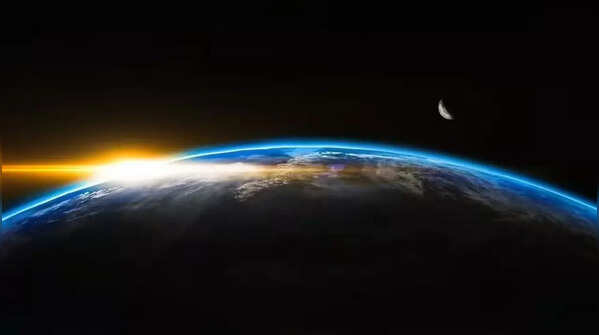
The Earth is approximately 4.54 billion years old. Scientists calculated this number using radiometric dating on the Earth’s oldest known terrestrial rocks and ‘primitive’ meteorites, primarily from space. These meteorites were created alongside the rest of the Solar System, so they can serve as a reliable ‘birth certificate’ for the Earth. This age has provided a great deal of information for geologists who are studying the history of the Earth's evolution over its lengthy geological time frame.
Salt of the Earth
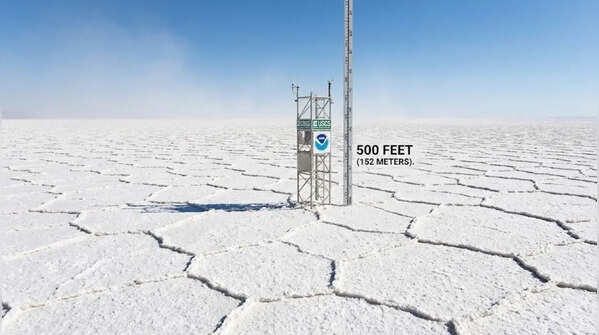
If the oceans evaporated completely, the remaining salt that would cover the entire land area of the planet would create a very large salinity layer over the surface of the Earth. Created over the entire surface of the Earth, this salt crust would be about 500 feet thick (about 152 meters). At this thickness, it would be equivalent to a 40-story high-rise building. This salt is primarily created when rocks erode on land and are washed into the ocean through rivers.
PC: Google Gemini
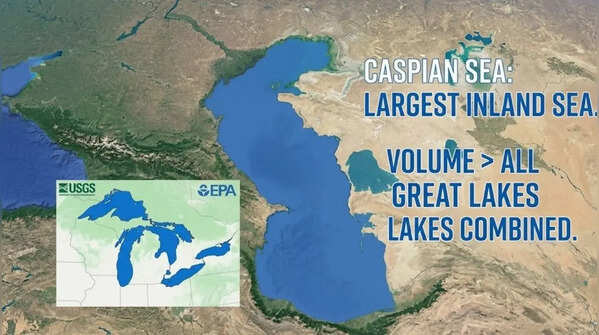
Largest inland sea
The Caspian Sea is regarded as the largest inland (non-oceanic) body of water on the planet. Covering an estimated 143,000 sq mi (371,000 sq km) surface area, it has more water than all the Great Lakes of North America combined. While it is a lake due to a lack of oceanic connection, it has been referred to as a sea because of its ancient name and slightly higher salinity.
PC: Google Gemini
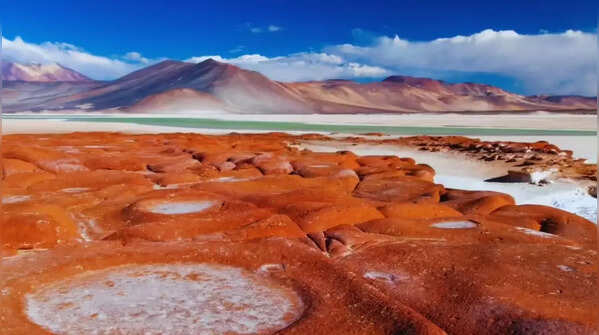
Driest place on Earth
One of the most significant features of the Atacama Desert of Chile is that it has been declared the driest place on Earth (non-polar) with an average annual rainfall of only 0.03 inches (0.8 millimetres). Some weather stations in this area have never reported rainfall in recorded history; therefore, its extreme conditions are comparable to those of the Martian surface. NASA frequently utilises the Atacama Desert as a location for testing rovers and technologies that could be used to detect potential life forms.
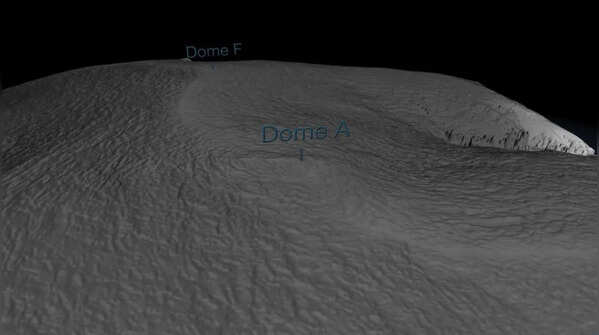
Coldest place on Earth
Antarctica is officially recognised as the coldest location on Earth, with temperatures that can dip to nearly -144 degrees Fahrenheit (-98 degrees Celsius) on the East Antarctic Plateau in isolated pockets of extreme cold; the presence of very dry air along with clear skies during winter contributes to the ability of the air to reach these exceptionally low temperatures. Even on the coast in the ‘warmer’ areas, wind chills can make it much more dangerous to survive in such a life-sustaining environment.
PC: NASA Scientific Visualization Studio
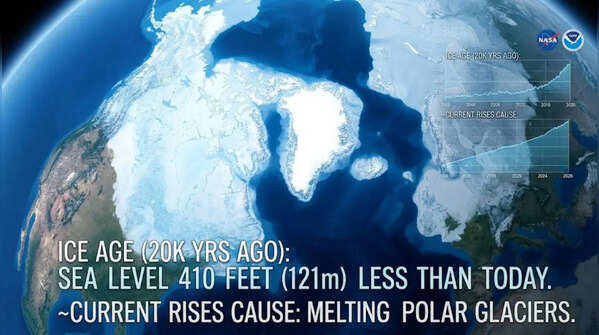
Sea level fluctuation
Sea level fluctuations around the globe have been extreme; about 20 thousand years ago, there was so much water briefly trapped in great ice masses that the sea level was 410 feet (121 meters) less than today's sea level. With the end of the last Glacial Period and the melting of glaciers, the oceans rose to their current elevations. Now, the realisation of climate change and melting polar glaciers is again causing sea levels to be raised more quickly and dangerously than previously observed.
PC: Google Gemini
End of the world as we know it
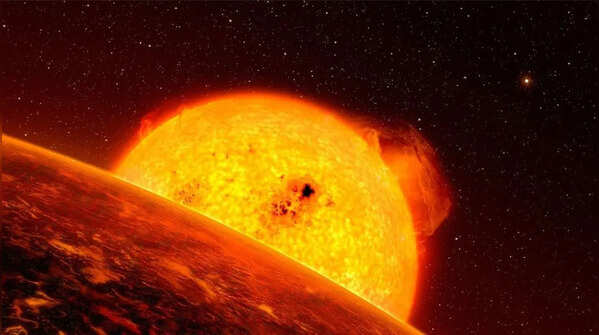
Approximately 5 billion years from now, our Sun will completely utilise its hydrogen fuel and change to burn helium, forming a gigantic Red Giant star. While this transition will result in a significant change to our Sun and the dwarfing of the entire Earth with an increase in brightness by 2000%, current predictions indicate that it will likely boil Earth’s oceans in 1 to 1.5 billion years as the Sun grows 10% brighter. While the final 'vaporisation' is 5 billion years away, the planet will become uninhabitable for complex life long before the Sun officially becomes a Red Giant.
PC: NASA Science
Two moon scenario
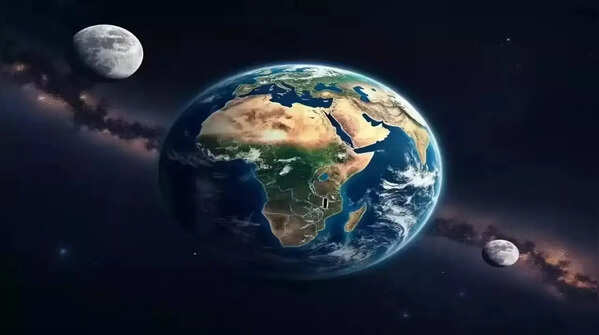
The ’Big Splat’ theory posits that Earth had a secondary moon (a significantly smaller moon) that was destroyed through periodic catastrophic collisions with the primary moon that exists today. This collision Theory attempts to explain the disparity between the crustal thickness of the Moon’s mountainous ‘far side’ and the lower, volcanic plains of the ‘near side’ that faces Earth.
Cosmic dust
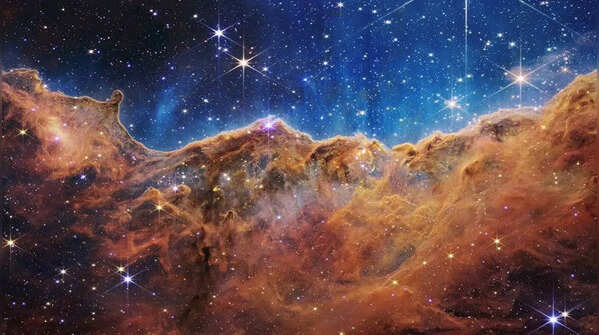
According to the United States Geological Survey, there are approximately 100 tons of cosmic dust falling to Earth every single day, while thousands of larger, man-made 'space junk' pieces re-enter the atmosphere annually. The European Space Agency estimates that there are thousands of larger, detectable pieces of ‘space junk’ entering the Earth's atmosphere on an annual basis. The vast majority of that material consists of microscopic particles that incinerate entirely before reaching ground level.
PC: NASA Science
Featured In Science

