
- News
- Relationships News
- Love quote of the day by Maya Angelou: "First best is falling in love, second best is..."
Love quote of the day by Maya Angelou: "First best is falling in love, second best is..."
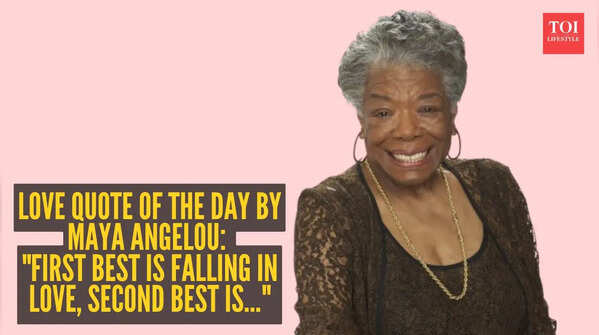
Maya Angelou's love quote
“First best is falling in love. Second best is being in love. Least best is falling out of love. But any of it is better than never having been in love.”— Maya Angelou
Maya Angelou’s words here are simple, yet they carry the quiet wisdom of someone who’s tasted both the sweetness and the ache of love. She doesn’t glorify romance in a fairy‑tale way; instead, she names the different stages of love with honesty and tenderness. Falling in love, being in love, and falling out of love are all part of the same emotional journey—and all of them, in her view, are richer than the alternative: a life untouched by love at all.
This quote invites us to see love as a spectrum, not a single moment. It’s not just about grand beginnings or tragic endings; it’s about the entire arc of connection, including the parts that feel tender, messy, or unresolved.

First best
“First best is falling in love.”
That initial spark—the butterflies, the excitement, the feeling that someone’s voice or glance can stop your world for a moment—is one of the most electrifying experiences life offers. Falling in love feels like discovery: you see parts of yourself you didn’t know existed, and you see someone else as if through a new lens.
There’s a kind of innocence in this stage. You imagine possibilities, you idealize small habits, and you often feel like time slows down when you’re together. Angelou calls this “first best” not because it’s the most mature or stable, but because it’s the purest surge of hope. Even when it turns out to be fleeting, the memory of having fallen in love at all can stay with you, softening your heart long after the moment has passed.

Second best
“Second best is being in love.”
Once the initial intensity begins to settle, you move into the quieter, deeper realm of being in love. This is where love starts to show its real character. The butterflies may have calmed, but in their place grows something steadier: trust, familiarity, and the comfort of knowing someone—and being known in return.
Being in love is what happens when the talk turns from “What if?” to “What now?” It’s choosing to stay curious about each other, to show up on ordinary days, and to keep saying yes to small moments: a shared cup of tea, a quiet walk, a disagreement turned into a conversation. In this stage, love feels less like a rush and more like a rhythm. It’s in these day‑to‑day decisions that love proves its depth and resilience.

Least best
“Least best is falling out of love.”
Angelou doesn’t romanticize heartbreak; she simply names it as the least desirable part of the cycle. Falling out of love can feel like a slow unraveling or a sudden collapse—it’s losing the closeness you once relied on, the plans that once felt secure, and sometimes, even the version of yourself that existed in that relationship.
Yet even here, Angelou’s wisdom holds: she still calls it “least best,” not “worst,” implying that even the pain of disconnection has value. Heartbreak carves space for growth, self‑awareness, and a clearer understanding of what you truly need and deserve. The sting of falling out of love often prepares you to love in a wiser way next time, not a more guarded one.

Any of it is better than never having been in love
“But any of it is better than never having been in love.”
This final line is the heart of the quote. Angelou doesn’t let fear or past pain convince us that love is not worth the risk. For her, the entire experience—beginning, middle, and even the messy end—is richer than the safety of staying untouched.
To have loved, even briefly, is to have felt life at a higher intensity. It’s to have known joy, vulnerability, and the courage it takes to open your heart. Angelou’s message is not just for the happily in‑love; it’s also for those who’ve been hurt, those who’ve lost, and those who wonder if they’ll ever feel that way again. She reminds us that the alternative—not loving at all— would be the true loss.
In that quiet, yet powerful way, Maya Angelou’s words invite us to keep choosing love, again and again, not because it’s guaranteed to last, but because it’s guaranteed to matter.
Featured In Relationships

