
- News
- Relationships News
- 5 situations where staying silent is powerful
5 situations where staying silent is powerful
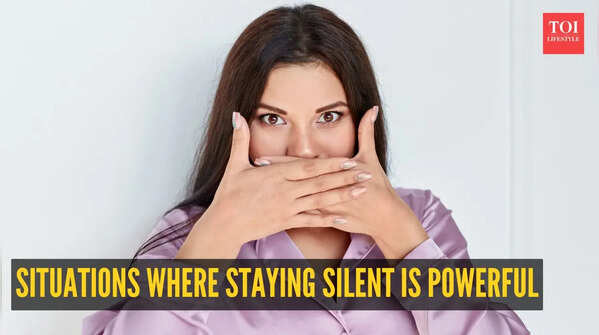
Situations when one should stay silent
We live in a world that’s obsessed with "hot takes," instant replies, and who can shout the loudest on social media. In that kind of environment, silence often gets a bad rap—people think it means you’re weak, uninterested, or that you’ve got nothing to say.
But honestly? Choosing to stay quiet is often the ultimate power move. It’s not about being passive; it’s about being tactical with your energy. Knowing when to hit the "mute" button on yourself can save your relationships, your reputation, and your sanity.
Here are five times when saying absolutely nothing is the smartest thing you can do.

When you’re out of your depth
We’ve all been there: a conversation turns to a topic you know nothing about, but you feel the urge to weigh in anyway. Don’t. Jumping in with half-baked opinions or "facts" you heard once on a podcast is a quick way to lose credibility.
Staying silent here isn't embarrassing; it’s smart. It gives you the chance to actually listen and learn something. Plus, people generally respect someone who can admit, "I don't know enough about this to have an opinion yet." It makes your words carry way more weight when you do eventually speak.

When your "Emotional Brain" is driving
If your heart is racing, your face is hot, or you’re feeling incredibly overwhelmed, your logic has likely left the building. Responding in this state is like trying to drive a car through a fog bank at 90 mph—you’re probably going to crash.
Silence acts as a circuit breaker. It gives your nervous system a chance to chill out so you don't say something "unfiltered" that you’ll have to apologize for for the next three weeks. Think of it as putting the conversation on ice until you're actually yourself again.

When you’re seeing red (The Anger Rule)
Anger is like a highlighter; it makes everything look bigger and more permanent than it actually is. When you're furious, your brain wants to win at any cost, which usually involves saying the meanest thing possible.
The problem? You can’t un-ring that bell. Choosing silence when you're angry isn't about "losing" the fight; it’s about preventing a permanent scar over a temporary feeling. Walk away, breathe, or go for a run. Address the issue when you can use a scalpel instead of a sledgehammer.

When the "Win" isn't worth the cost
In a lot of arguments—especially with partners or family—you have to ask yourself: Do I want to be right, or do I want to be happy? Sometimes, proving your point or getting the last word in just escalates a situation that didn't need to be that deep. Staying silent can be a way of saying, "I value our peace more than this petty argument." It’s about picking your battles. If the "win" is going to leave the other person feeling small or resentful, maybe just let it go.

When someone just needs to be heard
This is the big one. When a friend is going through it, our instinct is to jump in with "I totally get it," or "Here’s what you should do." But most of the time, advice feels like noise.
What people actually need is a safe harbor. By staying silent and just listening—not waiting for your turn to speak, but actually absorbing what they’re saying—you’re giving them a huge gift. Your quiet presence tells them they aren't alone. Sometimes, the most helpful thing you can say is nothing at all.
Featured In Relationships

