
How to differentiate between a cowlick and bald spot
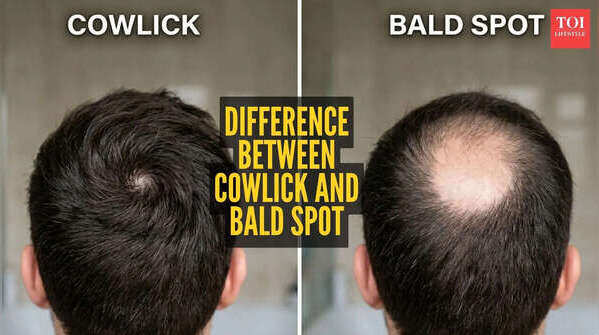
This is how you can differentiate between a cowlick and bald spot
Let’s be real for a second - very few things trigger an instant, cold spike of panic quite like catching a weird-looking patch on your scalp in the bathroom mirror. You’re just minding your business, brushing your hair, and suddenly there it is: a section that looks… thin. Or empty. Or just off.
Immediately, your brain goes to the dark place. Is this it? Am I balding? Before you fall down a Google Images rabbit hole of worst-case scenarios, take a deep breath. Not every unusual hair pattern is a red flag for hair loss. In fact, a huge number of people lose sleep over perfectly normal "cowlicks," thinking they’re seeing the early stages of a bald spot. The good news? Once you know what to actually look for, telling the two apart is pretty straightforward.
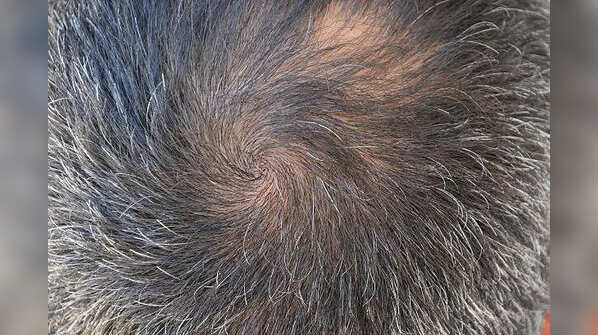
What exactly is a Cowlick?
Think of a cowlick as a rebellious streak. It’s a section of hair that simply refuses to grow in the same direction as the rest of your mane. It’s caused by the natural way your follicles are angled in your scalp, often forming a little swirl or a spiral—most famously at the crown (the very top-back) of your head.
No matter how much pomade or hairspray you throw at it, that patch just won't sit flat. That’s a classic cowlick. It isn't damage, and it definitely isn't thinning; it’s just your DNA doing its thing.
A cowlick usually looks like this:
It’s been there since you were a kid (if you look at old photos, it’s likely there).
It’s usually right at the crown or along your hairline.
It fights you every time you try to style it.
It looks way more dramatic when your hair is short or soaking wet.
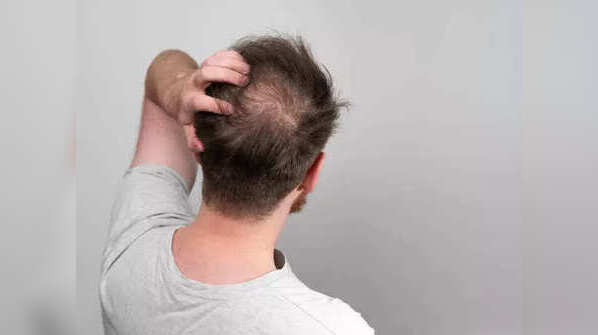
What is an actual bald spot?
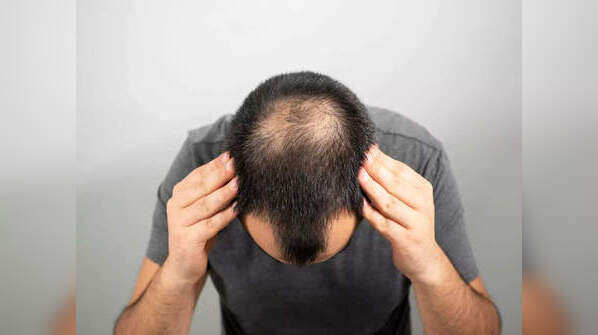
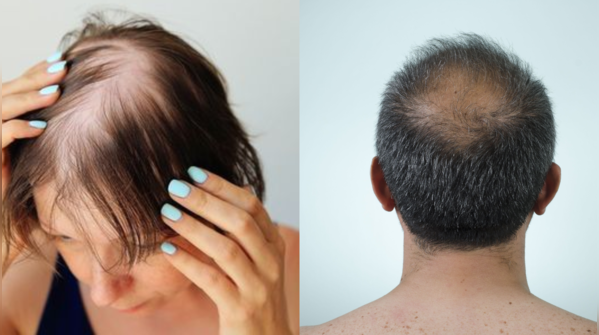
A bald spot is different. It’s a patch where the hair is actively thinning out or has disappeared entirely. This isn't about the direction of growth; it’s about the amount of hair. Usually, this is down to genetics (pattern baldness), but it can also be kicked off by high stress, hormonal shifts, or even wearing your hair in super tight styles for too long.
Red flags for a bald spot include:
A gradual "widening" of the area over a few months.
You can see much more of your scalp than you used to.
You’re noticing way more hair than usual in the shower drain or on your pillow.
The hair in that specific area feels "fuzzy" or finer than the rest of your head.
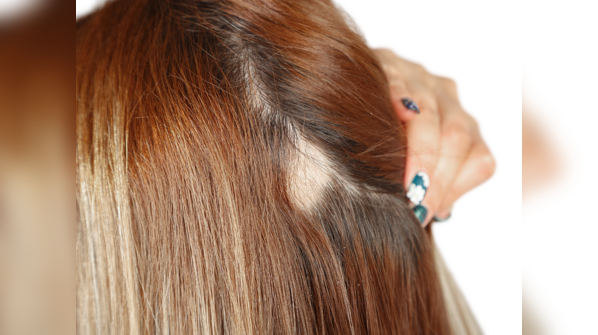
Why the crown causes so much confusion
The crown of the head is the "danger zone" for confusion because it’s the most common spot for both a natural swirl and the start of male/female pattern hair loss. Under a bright bathroom light, that natural spiral can expose a bit of skin, making you wonder, "Wait... has that always been that visible?" If you’ve never really scrutinized your crown before, seeing it for the first time can feel like a sudden discovery, even if it hasn't changed since you were five years old.
5 easy ways to tell the difference
If you’re currently staring at the back of your head with a hand mirror, look for these specific clues:
1. The Timeline
A cowlick is a lifelong companion. It stays the same size forever. A bald spot, however, is a "mover." It tends to grow or become more obvious over weeks or months.
2. Hair Density
Look closely at the skin. In a cowlick, the hair is all there—it’s just leaning away from the center of the swirl. In a bald spot, the actual number of hairs is lower, or the skin is completely smooth.
3. The "Shedding" Factor
Are you losing more hair than usual? If you’re seeing extra strands everywhere and you see a spot, it’s more likely to be thinning. A cowlick doesn't cause shedding.
4. Scalp Visibility
Both can show skin, but with a cowlick, the "bald" look usually disappears if you move the hair or style it differently. With a real bald spot, the scalp stays visible no matter which way you comb it.
5. Texture Changes
Rub your fingers over the area. Does the hair feel wispy or thin compared to the sides of your head? If the texture is consistent across your whole head, it’s likely just a cowlick.

Lighting and the "Wet Hair" trap
Don't judge your hair right after a shower. Wet hair clumps together into "spikes," which naturally exposes the scalp—especially at the crown. If the spot "vanishes" once your hair is dry and fluffy again, you’re almost certainly looking at a cowlick.
Also, be wary of harsh overhead LEDs. Those bright bathroom lights are designed to be clinical, not flattering. They can make even the thickest head of hair look a little sparse. Try checking your hair in natural, indirect light before you panic.
When should you actually worry?
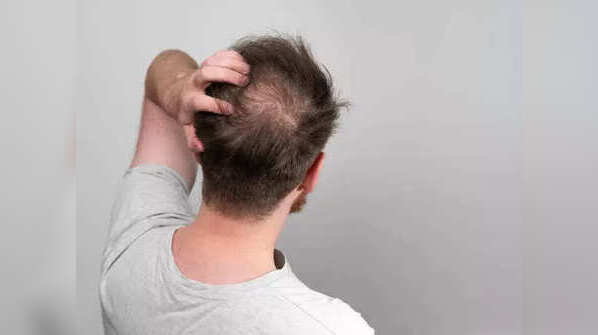
It’s worth talking to a pro (a dermatologist or a trichologist) if:
The patch is visibly getting larger.
Your hairline is also starting to creep backward.
The skin in that area feels itchy, red, or irritated.
You can see "miniature" hairs that look much shorter and thinner than the rest.
Stop stressing
It is totally normal to be protective of your hair. But remember: your hair doesn't just vanish overnight. If you aren't seeing massive amounts of shedding and the spot hasn't changed in months, it’s probably just that same stubborn swirl you’ve always had.
The best thing you can do? Take a clear photo of it today, put the phone away, and check again in two months. If it looks exactly the same, you can officially stop stressing.
Featured In lifestyle

