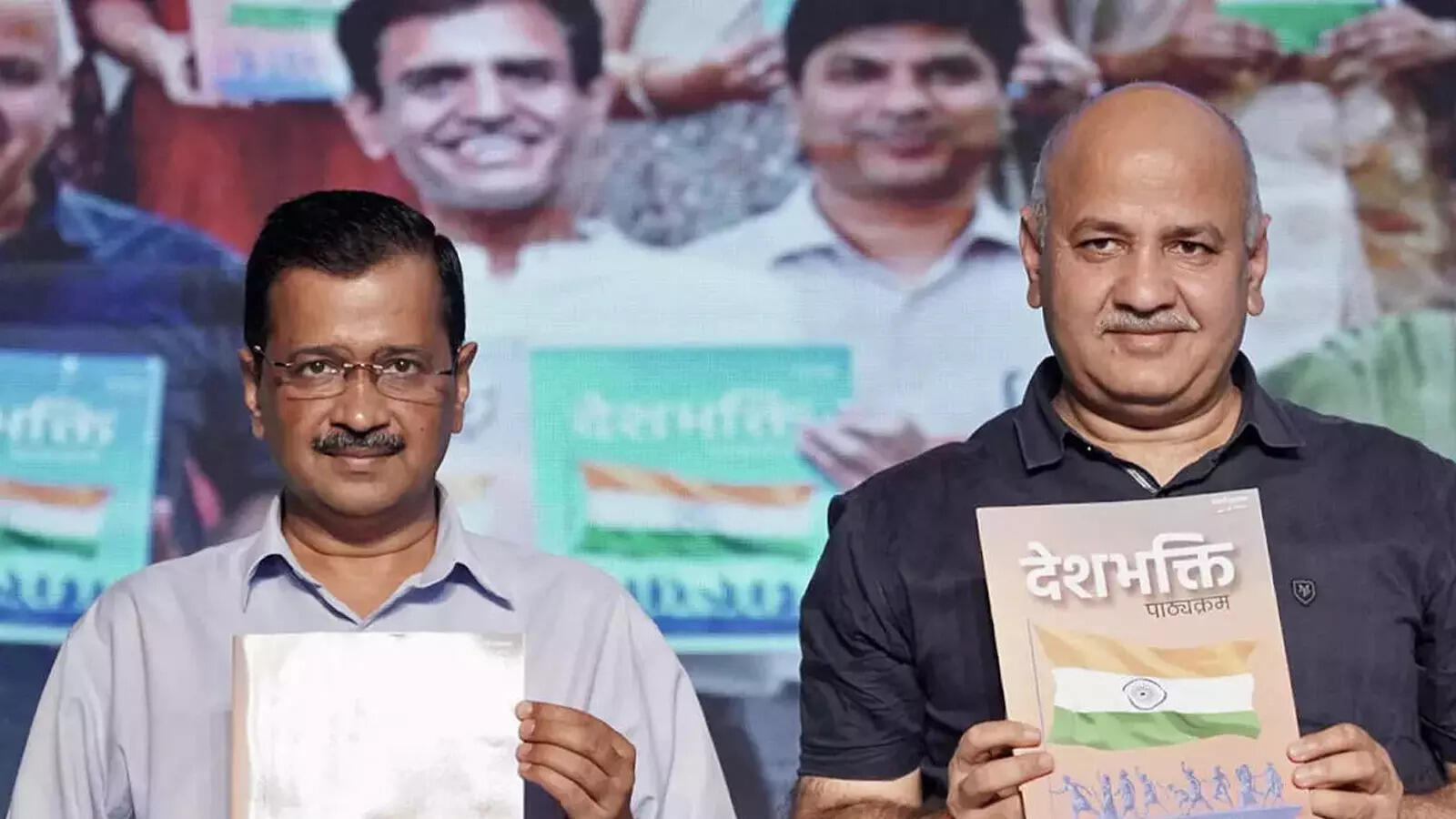
The 40-minute class will start with students practising mindfulness for five minutes, then a pledge, an expression of gratitude towards freedom fighters, a remembrance and finally discussions. Students will take back homework which asks them to talk to two people outside their homes for answers.
The new curriculum introduced by the Delhi government in schools it runs aims to inculcate patriotism in students from nursery to class 12. It will also pose questions for children to deal with.The curriculum
was promised by the Aam Aadmi Party (AAP) in its manifesto ahead of the 2020 state polls.
While launching the curriculum, Delhi Chief Minister Arvind Kejriwal said patriotism shouldn’t be something that comes only while performing acts like singing the national anthem or raising the national flag.
"In the last 74 years, we taught physics, chemistry and maths in our schools but did not teach
'deshbhakti' to the children. Patriotism is within all of us, but it needs a push,” he said.
Professor Anita Rampal, Delhi University says that the Delhi government isn’t trying to pitch for
deshbhakti, but “
kattar deshbhakti (radical patriotism)” which, she says, can be damaging.
“We do not talk of fundamental patriotism in education. We refer to the Mudaliar Education Commission of 1952 so that our teachers can question and understand what patriotism really means, how can
deshprem (love for one's country) be different from
deshbhakti, which can be distorted through jingoism,” she says.
Rampal, who was involved in the creation of the National Curriculum Framework in 2005 and has been chairperson of NCERT Primary Textbook Development Teams, is one of the few critical voices against the curriculum. Many experts have been wary of speaking against a curriculum that deals with subjects like patriotism.There has been little political opposition to the introduction of the new course by the AAP government.
What’s wrong with teaching patriotism as a course? One expert says the introduction of the course is merely a political move. Read the full article