
- News
- Health News
- Vaping vs cigarettes: Why cancer doctors say young adults should stop believing the “safer alternative” myth
Vaping vs cigarettes: Why cancer doctors say young adults should stop believing the “safer alternative” myth

Vaping vs smoking truth
A cigarette burns tobacco. A vape heats liquid. That difference has led many young people to believe one is “cleaner” and the other is dangerous. But cancer specialists say the reality is more complicated, and far more worrying than social media trends make it look.
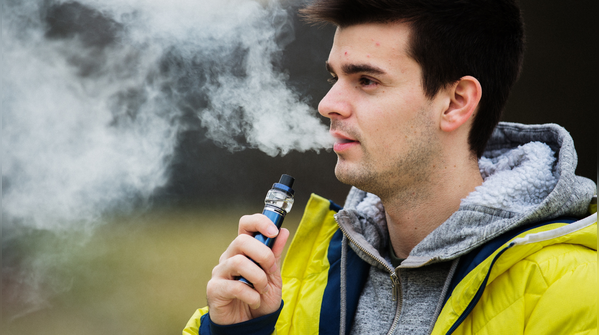
Over the last decade, vaping has quietly entered classrooms, college campuses, cafés, music festivals, and even gym locker rooms. It arrived wrapped in fruity flavours, sleek devices, and the promise of being a “safer choice.” For many teenagers and young adults, it did not even feel like smoking. It felt modern.
But doctors who treat cancer patients every day are now asking young adults to pause and look beyond the packaging.
According to Dr Pushpinder Gulia, Director - Surgical Oncology, CK Birla Hospital, Gurugram, the biggest concern is not just what vaping does today, but what it may do years later. “Scientists believe that vaping is not a safer alternative to smoking, and we have yet to see the cancer dangers in the future,” he says.
The warning matters because many diseases linked to tobacco take decades to appear. By the time symptoms arrive, the damage is often deep and difficult to reverse.

Why vaping became so popular among young adults
There was a time when cigarettes carried a visible stigma. They smelled strong, stained fingers, and were openly associated with cancer. Vapes changed that image almost overnight.
Devices became smaller. Flavours became sweeter. Marketing became smarter.
Dr Gulia explains, “Being promoted as a cool and trendy replacement to cigarettes and marketed as healthier alternatives, e-cigarettes can be found across the globe, even among schoolchildren and college students.”
That shift worries oncologists because vaping often enters young lives quietly. There is no ashtray. No lingering smoke. No obvious sign. A teenager can carry a vape in a pocket that looks like a USB device.
The problem is that “less visible” does not mean harmless.
According to the US Centers for Disease Control and Prevention, e-cigarette aerosols can contain cancer-causing chemicals, heavy metals like lead and nickel, and substances linked to lung disease.
For many young users, vaping starts casually. Then it becomes routine. Then it becomes dependence.

So, which is more harmful: cigarettes or vapes?
This is where experts become extremely careful with their words.
Traditional cigarettes remain one of the deadliest consumer products ever created. Tobacco smoke contains more than 7,000 chemicals, many of them toxic and cancer-causing. Smoking is strongly linked to lung cancer, throat cancer, bladder cancer, oral cancer, heart disease, stroke, and chronic lung illness.
Vapes do not burn tobacco, so they may expose users to fewer toxic chemicals than conventional cigarettes. But cancer specialists say this should never be misunderstood as “safe.”
“Although e-cigarettes may not combust tobacco but rather heat vape juice to form an aerosol, they are far from being safe to use,” says Dr Gulia.
He adds that vape liquids may contain formaldehyde, acrolein, and metals such as lead and nickel, substances that can damage the lungs and raise long-term health risks.
The CDC also notes that no tobacco product, including e-cigarettes, is safe.
So the honest answer is this: cigarettes currently have stronger long-term evidence proving they cause cancer, because they have existed for much longer. But vaping is increasingly showing warning signs that deeply concern cancer researchers.
That uncertainty itself is part of the danger.
Young users today are effectively becoming part of a long-term public health experiment whose final outcome is still unfolding.

What researchers are discovering about vaping and cancer risk
One of the biggest misunderstandings around vaping is the belief that nicotine alone is the issue. In reality, researchers are studying the broader chemical exposure that happens when vape liquids are heated and inhaled repeatedly over years.
Dr Gulia explains, “The chemical components of vape aerosols have been shown to cause DNA damage. This damage is a crucial contributor to cancer growth.”
That point matters because cancer often begins when DNA inside cells becomes damaged over time.
Several emerging studies have found biological changes in vape users that resemble changes seen in smokers. Research discussed widely in scientific communities has pointed toward altered DNA patterns, inflammation, and cellular stress linked to carcinogen exposure.
The CDC also states that e-cigarette aerosol can contain cancer-causing chemicals and harmful particles inhaled deep into the lungs.
Doctors are particularly worried because cancer linked to inhaled toxins often develops slowly. Lung cancer, throat cancer, and oral cancers may take years or even decades to appear.
That means today’s vaping generation may not fully understand the consequences until much later in life.

The addiction trap many young users do not see coming
Cancer specialists are especially alarmed by how quickly vaping can hook young users.
“Numerous vaping devices have much higher amounts of nicotine per puff compared to regular cigarettes,” says Dr Gulia.
Many teenagers begin vaping socially without realizing how concentrated nicotine exposure can become. Some devices deliver nicotine so smoothly that users inhale more frequently than they would smoke a cigarette.
That repeated exposure changes the brain.
According to the CDC, nicotine addiction can develop rapidly in adolescents and young adults, even before regular daily use begins.
Doctors are also seeing another troubling pattern: dual use.
Some young adults vape in places where smoking is restricted, then continue smoking cigarettes separately. Instead of replacing tobacco, vaping becomes an added source of chemical exposure.
Dr Gulia warns, “Studies have found that dual users may ultimately consume more harmful substances compared to non-vaping cigarette users.”
This combination can increase toxic exposure rather than reduce it.
There is also the emotional side of addiction that often gets ignored. Many young users start vaping during stress, loneliness, exam pressure, or social anxiety. Over time, nicotine begins to feel like emotional support. Then the body starts demanding it.
That cycle can quietly shape daily life before a person even notices dependence forming.

What cancer specialists want young adults to remember now
Doctors are not asking young adults to panic. They are asking them to stay informed before habits become permanent.
Dr Gulia says, “The decisions you make about your tobacco and nicotine intake today can influence your future health for decades.”
That sentence carries weight because oncologists witness the end-stage reality most people never see on advertisements or social media reels.
They see patients struggling to breathe. They see families sitting silently in hospital corridors. They see people wishing they had stopped earlier.
The strongest advice from specialists remains straightforward:
Avoid both cigarettes and vaping whenever possible.
Do not assume fruity flavours make vaping harmless.
Be cautious of social media trends that normalise nicotine use.
Seek medical guidance if quitting feels difficult.
Never ignore persistent cough, breathlessness, chest pain, or throat irritation.
For those already addicted, experts say seeking help early matters. Nicotine dependence is treatable, and quitting at a younger age significantly lowers future health risks.
Government-backed public health agencies continue to warn that no tobacco product is safe for youth and young adults.
Medical experts consulted
This article includes expert inputs shared with TOI Health by:
Dr Pushpinder Gulia, Director - Surgical Oncology, CK Birla Hospital, Gurugram.
Inputs were used to explain why cancer specialists are warning young adults against believing that vaping is a safer alternative to cigarettes, and how both habits may carry serious long-term health and addiction risks.
Featured In Health

