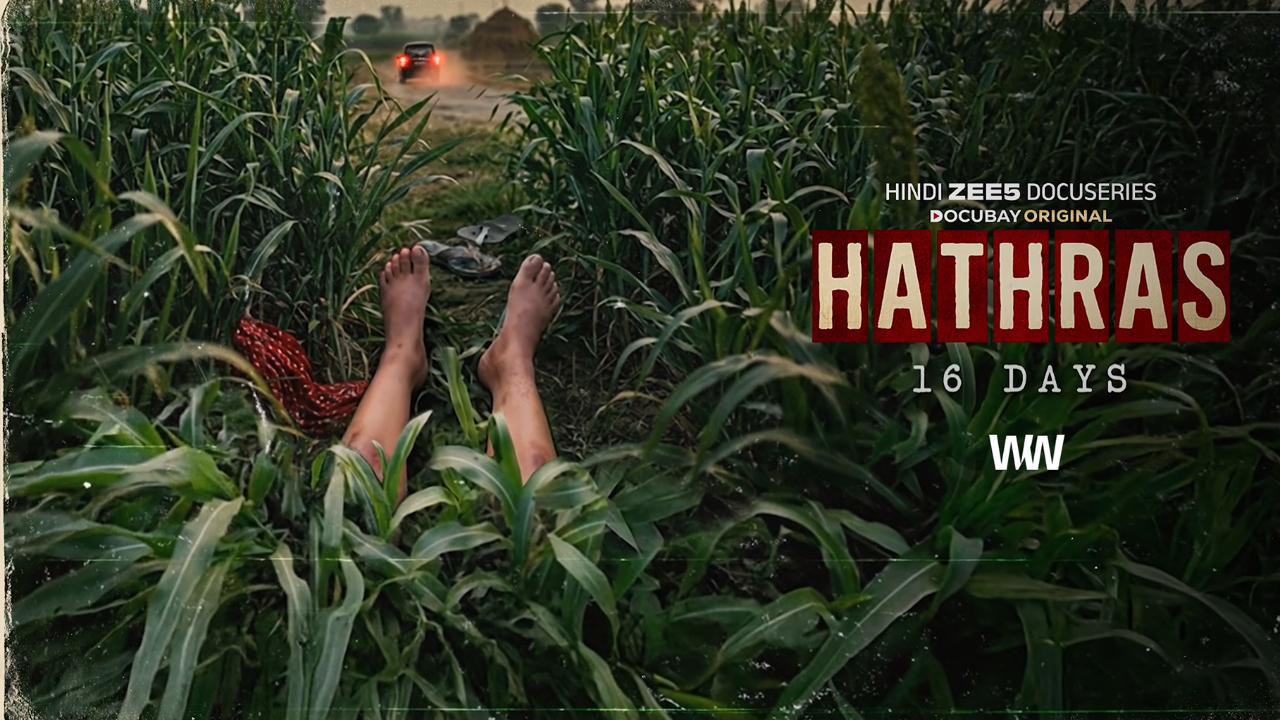
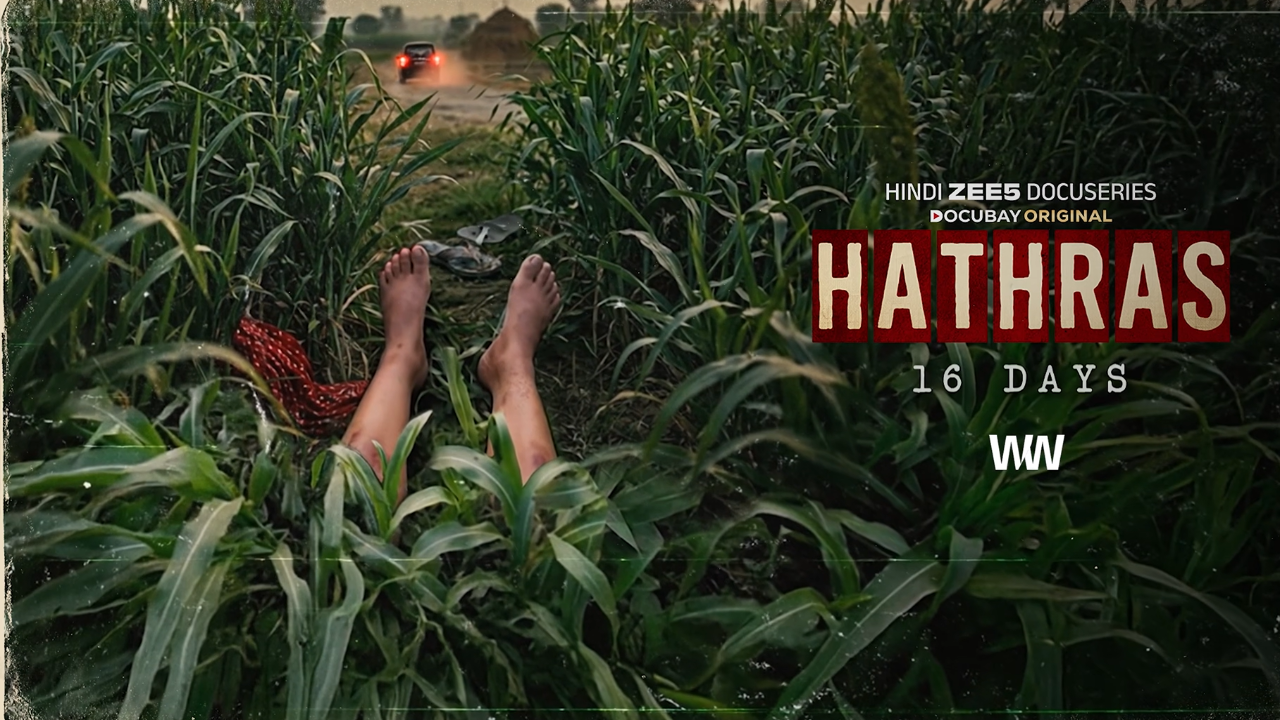
Story: A retelling of the 2020 gang rape and murder of a young Dalit woman in Uttar Pradesh’s Hathras, this docu-series is a compilation of first-person accounts from the victim’s recorded interviews, her family, authorities probing the case, and journalists who covered it.
Review: It was yet another case that shook the nation. On 14 September 2020, the gang rape of a 19-year-old woman was reported in Hathras district, Uttar Pradesh. Four men from the upper caste, living next door to the victim, were accused of the crime. She died two weeks later in a Delhi hospital. The case hit national headlines when the sordid details of the crime came to light, even as the police and the local administration allegedly tried to play it down.
The narrative of this documentary is dominated by the interview of journalist Tanushree Pandey, whose video was reposted by Congress leader Rahul Gandhi on Twitter (now X), making her the face of the coverage. While the case was in the media spotlight primarily because of the rape and murder, it also exposed the widespread inequality in rural India, where caste continues to be a deciding factor in how people live and how they are treated.
Director Patrick Graham sticks to a linear flow, essentially retelling the entire Hathras case from the beginning to the present day, while also questioning whether justice was ever truly served. The documentary revisits the events that led to the incident and its aftermath in the lives of the victim’s family, but it doesn’t go much deeper than that. We never really see the true connection or the history of the relationship between the accused and the victim, who, we are told, continue to remain neighbours to this day. There is a brief mention of this, but it is not explored further.
Also, there is perhaps too much dependence on journalist Tanushree Pandey’s account, which at times makes the documentary feel monotone. While her firsthand reporting undeniably adds credibility and immediacy, there are moments when the narrative begins to feel overly centred on her personal journey as a journalist — her anxieties, challenges, and professional victories, rather than remaining fully focused on the case itself. This occasionally makes the series feel more like a personal journal than a wider, more balanced investigation into the tragedy. It would have helped uncover more truths than those already in the public domain had the makers dug deeper into the social and emotional fabric not just of this case, but of life in the interiors of Uttar Pradesh. There is also little attempt to get voices from higher up in the political hierarchy, given the fact that Congress leaders Rahul and Priyanka Gandhi were at the forefront of pushing this case nationally, often being accused by critics of politicising a tragedy for political gain.
What the docu-series does get right is its intent and its near-perfect retelling of the timeline before and immediately after the crime. It certainly exposes the shameless cover-up, the coercion of the victim’s family, and the apathy of a system that has repeatedly been called out for exactly these failings in such cases. Graham also follows it up with the present-day reality and leaves us with uncomfortable questions that continue to linger, almost six years after the crime.
While the series does uncover the many layers of caste, gender, authority, and narrative control, one only wishes it had a more layered execution — one that went deeper into the lives and emotions of the people most impacted by this horrific crime.























































 Patrick GrahamDirector
 Amil BhatnagarActor




0/5