
- News
- Relationships News
- 5 crucial questions every couple must ask before marriage, according to Ankur Warikoo
5 crucial questions every couple must ask before marriage, according to Ankur Warikoo
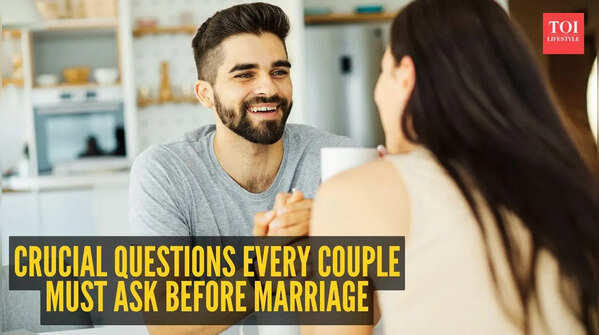
Questions every couple should ask before getting married
Marriage is more than a big wedding, matching outfits and finally making nosy relatives happy. It’s one of the biggest decisions you’ll make and it can affect your emotional wellbeing, finances, career, family and future dreams. When it comes down to it, there’s more to a relationship than love and chemistry. What really keeps a couple together is compatibility, communication, shared values and a willingness to grow together over time. That’s why asking yourself the right questions before you say “yes forever” is so important.
Entrepreneur, author, and digital creator Ankur Warikoo recently shared a powerful video on Instagram where he spoke about 5 important questions every individual—and every couple—should reflect on before getting married. His words don’t come from theory alone. Warikoo has been married to his wife, Ruchi, for several years and is a father to two children, Vidur and Uzma. Their journey started when he was just 19; they dated for nearly seven years before marrying at 27, giving him a long runway of real-life relationship experience to learn from. Drawing from that lived reality, he offers practical, grounded guidance instead of fairy-tale advice.
Here’s a humanised look at the five key areas he says couples must explore before marriage.

Define your version of happiness
One of the first questions Warikoo urges people to ask themselves is: What does a happy life actually look like—for me? Not for your parents, not for society, not for Instagram. Many people walk into marriage on autopilot, chasing someone else’s idea of success: a certain salary, a particular city, kids by a certain age.
He suggests reflecting deeply on what you genuinely want. Do you crave stability or are you energized by risk and change? Would you rather build a life rooted in one city, close to family, or are you excited by the idea of moving often for work or experiences? Does your heart prioritise career ambition, entrepreneurship, and growth—or is a slower, family-focused life your true version of happiness? The more honest you are with yourself, the easier it becomes to choose a partner whose vision of happiness doesn’t clash with yours every few years.

Understand your definition of love
Warikoo also talks about how our idea of love doesn’t appear out of nowhere—it is often shaped quietly by our childhood, our parents’ marriage, and the relationships we saw growing up. If you watched constant fights, cold silences, or emotional distance at home, you might unknowingly start to think, This is just how love is.
He invites people to ask: What did I learn about love as a child? Was love shown through care and communication, or through control, guilt, and sacrifice? Do you equate love with drama and intensity, or with safety and respect? When you understand your personal definition of love, you become more aware of the patterns you’re carrying into your relationship. That awareness helps you choose better—and consciously build new, healthier patterns instead of repeating old ones on autopilot.

Discuss family expectations
Another crucial area Warikoo highlights is family involvement and future planning. Marriage, especially in cultures like ours, is rarely just about two people; it often includes parents, siblings, relatives, and expectations from all sides. That’s why couples need to ask: How involved do we want our families to be in our married life?
Do you expect to live with parents or separately? How often will family opinions influence major decisions—finances, parenting, moving cities? Warikoo also nudges couples to talk honestly about whether they want children, and if yes, what kind of parenting styles and family life they imagine. These conversations may be uncomfortable, but they help prevent shock, resentment, or mismatched assumptions later. Clarity now saves conflict later.

Learn how each of you handles conflict
Every relationship will face disagreements; the difference between a healthy and unhealthy marriage is how those conflicts are handled. Warikoo encourages people to honestly examine their own conflict style. When you’re upset, do you shout, shut down, walk away, become sarcastic, or over-explain? Do you hold grudges, or are you able to talk things through after cooling down?
He suggests that couples observe each other during small arguments or stressful moments before marriage. Do they listen, or do they always need to be right? Do they apologise, or do they deflect and blame? Do you feel safe expressing hurt, or do you end up silencing yourself to “keep the peace”? Learning how each person reacts in tough moments is more valuable than seeing how they behave only on dates, trips, and celebrations.

Recognise habits and behaviour patterns
Lastly, Warikoo emphasises the importance of everyday habits and patterns. Grand romantic gestures may look great on social media, but what truly builds or breaks a marriage are the small, repeated behaviours: how you speak to each other, how you manage money, how you handle stress, how housework is shared, how you treat each other on ordinary days.
He encourages people to pay attention to both the good and the not-so-good patterns—emotional reactions, communication styles, routines, and coping mechanisms. A habit of shutting down during conflict, scrolling endlessly instead of connecting, or avoiding responsibilities doesn’t disappear after the wedding; in fact, it often gets amplified. The more honest you are about your own patterns, the more consciously you can work on them, instead of expecting love alone to magically fix everything.
Marriage will always involve some uncertainty—no list of questions can guarantee a perfect future. But asking these five questions, as Ankur Warikoo suggests, helps you step into that commitment with open eyes and a clearer heart. It shifts the focus from “How grand will the wedding be?” to “How strong will the partnership be?”
Featured In Relationships

