
- News
- NRI News
- Citizen Journalists News
- London hosts seminar on contemporary India and its socio-political challenges
This story is from May 27, 2015
London hosts seminar on contemporary India and its socio-political challenges
A panel discussion on contemporary India and its challenges was organized by Dr Virander Paul, deputy high commissioner of India on Friday, 22nd May 2015 at India House, Aldwych, London.

Eminent personalities participating in the event included Richard Heald, chief executive officer of the UK-India Business Council (UKIBC), Shri SY Quraishi, former chief election commissioner (CEC) of India, Dr Mukulika Banerjee from London School of Economics and Prof.Sunil Khilnani, director of King's India Institute.
The Idea of India with its rich civilizational heritage, its well-entrenched democracy and diversity, its ethos for tolerance and above all its ability emerge from any challenges continue to thrive in contemporary India.
The panel discussion was aimed to discuss and reflect how far India has travelled in the last 68 years since independence and how India evolved since then.
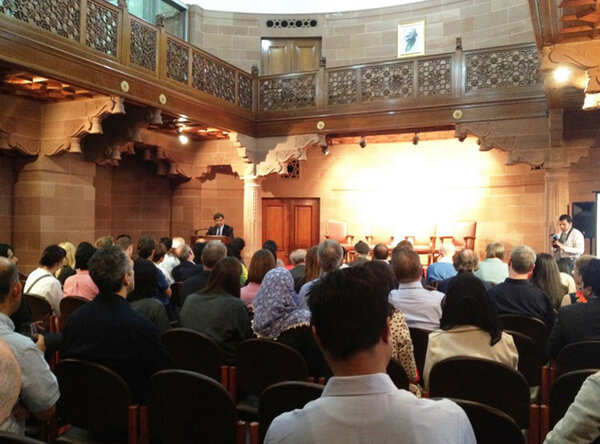
He also explained his experience as an election observer in the UK as elections are quite peaceful in the UK and voters are trusted and almost no agent from any political parties are present at the poll booth. He cited the cordial and friendly scenario in Indian politics where current PM Modi, after winning the election, went to meet former Indian PM Manmohan Singh with a bouquet of flowers.
In the last general elections in India, 150 million young Indians aged between 18 and 23 years became eligible to vote for the first time – which is the approximate. equivalent of voters in several European countries and close to the number of registered voters in the 2012 US Presidential elections.
Dr Mukulika Banerjee, who is also the author of the book “Why India Votes”, shared her colourful presentation comparing the Indian elections to a large political carnival.
She also appreciated the levels of enthusiasm of Indian electorate and the participation by the lower income strata. She pointed to the startling fact that the turnout for local panchayats elections is almost 100% in India. The size of Indian constituency is almost more than 20 times bigger than constituencies in the UK, she added.
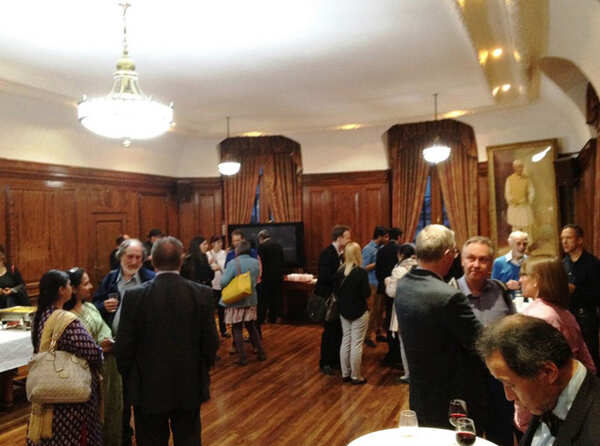
Many views and ideas were shared both during presentation and the question-answer session including the need for certitude for foreign business organisation in India, the ‘Make in India’ concept, retrospective taxation, the recent HSBC downgrading of India and the UK being the largest investor in India among the G-20 nations.
India with its credentials as the world’s largest democracy is also home to the 2nd largest population of the world of which more than 50% is below the age of 25 and over 65% is below the age of 35, with the expectation that in 2020, the average age of an Indian will be only 29 years.
The speakers also discussed how the government of India seeks to transform the country into a major global power through rapid economic development adopting new and creative initiatives and greater self-reliance. The event was supported by the UCL Grand Challenge of Intercultural Interaction.
End of Article
FOLLOW US ON SOCIAL MEDIA
Photostories

Hot Picks
TOP TRENDING
Popular Categories
Hot on the Web
Top Trends
AUS vs SA Live ScoreRohit SharmaLiam PayneUGC Net June ResultSL vs WI Live ScoreIND vs NZ HighlightsUGC NET ResultInfosys Q2 ResultHaryana Cabinet Ministers ListJustin TrudeauFlights Bomb ThreatJharkhand Election ScheduleMaharashtra Election 2024US Presidential Election 2024Maharashtra Election ScheduleJharkhand Election ScheduleLive Cricket Score
Trending Topics
Diwali WishesDhanteras 2024Fake PaneerLiam PayneVettaiyan CollectionVicky Vidya Ka Woh Wala Video CollectionLawrence BishnoiJigra OTT ReleaseCow GheeBigg Boss 18Salman KhanShraddha KapoorRenukaswamys WifeSharad Purnima Moonrise TimeSwatantrya Veer SavarkarSharad Purnima 2024Top Load Washing MachinesBest Premium LaptopsIntel LayoffsWordle Answer
Living and entertainment
Latest News
Drake's pigtails spark an online debate; netizens are divided over bold fashion move and midlife crisisInjury scare for Team India as Rishabh Pant hobbles off the fieldHappy Dhanteras 2023: Images, Quotes, Wishes, Messages, Cards, Greetings, Pictures and GIFsRaima Sen on playing iconic Suchitra Sen: It would be an honourBigg Boss Tamil 8 Preview: Emotional turmoil as housemates tease Dharsha Gupta over her cookingCitizenship under Assam accord: 4:1 SC verdict upholds validity of Section 6A; dissenting judge says provision 'has become more prone to abuse'Kartik Maas 2024 Start and End Date: Time, Puja Rituals and Significance'Love Rohit Sharma's honesty': Sanjay Manjrekar calls India captain 'top man''Secret service needs reform': Independent probe panel on Trump's assassinationBreast cancer fighter Hina Khan shares a video of people who have inspired her during her journey; watchWWE Superstar Seth Rollins confirms date and occasion for in-ring returnAt 25,007 weekly departures, 5% more domestic flights this winter: DGCAUGC NET Result 2024 OUT: Direct link to check subject/category wise cut-offSolo, but never alone! Embrace Abu Dhabi’s unique experiences for independent adventurersKaveri Theerthodbhava 2024: A spiritual gathering at TalakaveriWatch: Rohit Sharma's reaction as KL Rahul drops a sitter against New ZealandWomen with Higher Education Are Less Likely to Quit Jobs After Marriage: A Look at India’s Gender Divide in Education and the WorkforceIn a breakthrough, Indian scientists develop unique method to treat brain tuberculosis
Copyright © 2024 Bennett, Coleman & Co. Ltd. All rights reserved. For reprint rights: Times Syndication Service