
- News
- Cinema as Agent of Change
This story is from November 29, 2015
Cinema as Agent of Change
The four panelists – writers Gautam Chintamani, Jai Arjun Singh, Maithili Rao and Fahad Samar – spoke of the “seduction of Bollywood”.
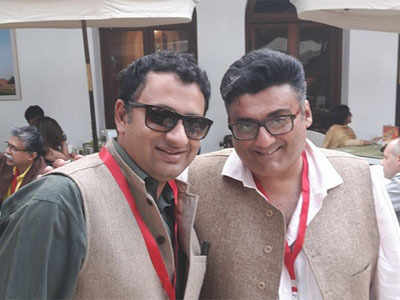
The four panelists – writers Gautam Chintamani, Jai Arjun Singh, Maithili Rao and Fahad Samar – spoke of the “seduction of Bollywood”.
The four panelists – writers Gautam Chintamani, Jai Arjun Singh, Maithili Rao and Fahad Samar – spoke of the “seduction of Bollywood”, and the ways in which mainstream and art movies have kept up (or not) with the times, taking into account the enormous social and economic changes that time has wrought on India in the last 25 years.
The session was moderated by Srijana Mitra Das.
Samar believed that a film-maker can be a populist, or can capture the zeitgeist. “Either films are capturing the zeitgeist or informing the zeitgeist.” Singh gave the example of ‘Oye Lucky! Lucky Oye!’ to prove that cinema can both enlighten and amuse. “This is a film that’s entertaining but it also comments on the nature of aspiration in contemporary India.”
Rao, author of a recent biography on Smita Patil, described the world of 1970s art cinema as “claustrophobic”, what with the likes of Patil, Deepti Naval and Shabana Azmi occupying the same space, maybe also eyeing the same roles. But each of these three also looked to find a niche in mainstream cinema. “Their thinking was that if we act in mainstream cinema, we can bring that audience to parallel cinema,” said Rao.
There was, however, no escaping the intolerance question. “You can only go so far, and no further,” rued Samar, adding that artistes were imposing too many restrictions on their art. “Writers are curtailing themselves.”
Rao said that it’s next to impossible to question the “relevance” of faith and religion in our times. Yet despite the desire of many to avoid tackling taboo subjects like religion, a few are still more than willing to make thought-provoking cinema. A film like PK, Samar felt, “holds up a mirror to society, is not afraid to ask uncomfortable questions – it is interesting and engaging cinema.”
Chintamani labelled many of today’s filmmakers “lazy”, thinking much of their work formulaic. “Cinema is packaged today, you know what is going to happen.” In fact, an argument could be made – as Rao did – that the best films being made can be found in regional cinema. “I find the Marathi films brilliant, and they show up the banality of the rest,” she said.
On whether the portrayal of women has changed in India’s cinema, Rao’s answer was yes. But that didn’t mean the change was positive. The female form has gone from predominantly voluptuous to now size-zero, an “acceptable” figure for the on-screen woman. “We have been victims of Brahmanical puritanism and Victorian morality, to the point where heroines have been desexualized,” she lamented.
However, films like ‘Queen’ and ‘Cocktail’, she felt, have tried to combat the stereotypes, happy to accept a woman on her own terms.
Should films carry a message? Singh felt that in a country like India, with its myriad social problems, one where cinema is a powerful medium, a case can be made for social realism in films. “But it is a complex question.”
Chintamani believed there has to be some “take-away” from a work of art. “The filmmaker has to be true to his environment.” On a completely different note, Samar, asked if cinema and morality can coexist, replied with a quizzical “Why?!”
End of Article
FOLLOW US ON SOCIAL MEDIA
Photostories

Hot Picks
TOP TRENDING
Popular Categories
Hot on the Web
Top Trends
AUS vs SA Live ScoreRohit SharmaLiam PayneUGC Net June ResultSL vs WI Live ScoreIND vs NZ HighlightsUGC NET ResultInfosys Q2 ResultHaryana Cabinet Ministers ListJustin TrudeauFlights Bomb ThreatJharkhand Election ScheduleMaharashtra Election 2024US Presidential Election 2024Maharashtra Election ScheduleJharkhand Election ScheduleLive Cricket Score
Trending Topics
Diwali WishesDhanteras 2024Fake PaneerLiam PayneVettaiyan CollectionVicky Vidya Ka Woh Wala Video CollectionLawrence BishnoiJigra OTT ReleaseCow GheeBigg Boss 18Salman KhanShraddha KapoorRenukaswamys WifeSharad Purnima Moonrise TimeSwatantrya Veer SavarkarSharad Purnima 2024Top Load Washing MachinesBest Premium LaptopsIntel LayoffsWordle Answer
Living and entertainment
Latest News
Fox on the Run: 3 times Kamala Harris stumbled during interviewDrake's pigtails spark an online debate; netizens are divided over bold fashion move and midlife crisis"For me, it was to build my family": Cameron Diaz on why she took break from actingInjury scare for Team India as Rishabh Pant hobbles off the fieldVijay’s TVK to conduct seminar, training session near Salem on FridayIs Kamala Harris stuck in an interview doom loop?D’LIFE launches its 26th showroom in Hinjawadi, PuneGemini, Daily Horoscope Today, October 18, 2024: Prioritize mental well-beingHow this 46-year-old Indian-origin founder made 400 of his employees millionaires'We are all on the same team now': Senate minority leader Mitch McConnell defends past remarks on Donald TrumpCATS YouTube codes for October 17, 2024: Enhance your gameplay and know how to redeem the codes"I don't even sleep in my bedroom": Selena Gomez opens up about mental health strugglesCitizenship under Assam accord: 4:1 SC verdict upholds validity of Section 6A; dissenting judge says provision 'has become more prone to abuse'Bengaluru trekker helped CEC spend night at uninhabited houseStudent kills self in Kota, 15th this yr'Love Rohit Sharma's honesty': Sanjay Manjrekar calls India captain 'top man''Secret service needs reform': Independent probe panel on Trump's assassinationBreast cancer fighter Hina Khan shares a video of people who have inspired her during her journey; watch
Copyright © 2024 Bennett, Coleman & Co. Ltd. All rights reserved. For reprint rights: Times Syndication Service