
5 earless animals with extraordinary hearing abilities
5 earless animals with extraordinary hearing abilities
In the natural world, visible ears are not the only path to perception. While there are some animals that do not have visible means of receiving auditory perception due to the absence of ears, others have different means to detect and process the vibrations of sound. These are all significant examples that highlight the power of the natural world to create other means to sense and process sound.

Snakes
Snakes have no external ears or eardrums, yet they are highly sensitive to vibrations. Ground movements travel through their jawbone and reach the inner ear via a small bone called the columella, allowing them to interpret sound-like signals. They also respond to certain low-frequency airborne sounds, proving their hearing is limited but functional and crucial for detecting prey or danger.

Spiders
Spiders lack ears entirely, but their bodies function like vibration sensors. Tiny, specialised hairs on their legs detect minute air movements and surface vibrations, enabling them to sense approaching prey or predators. Some species even interpret airborne sound waves through these hairs, meaning their whole body effectively substitutes for ears and provides extraordinary environmental awareness.
Salamanders
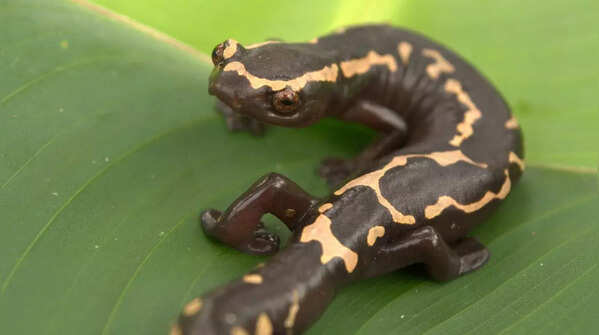
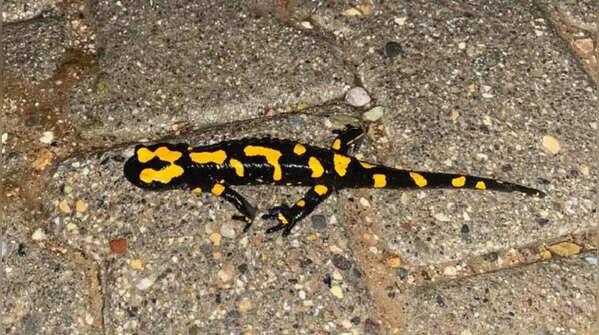
Salamanders do not possess external ears, yet they can still perceive sound. Instead of ear openings, they detect vibrations through their skin and skull bones, helping them locate prey and remain alert in dark, moist habitats. This subtle vibration-based sensing compensates for the absence of visible ears and supports survival in environments where visual cues are limited.

Earless Lizards
True to their name, earless lizards lack external ear openings, an adaptation that likely prevents sand from entering while they burrow. Despite this absence, they remain capable of hearing through internal auditory structures. Their hidden hearing ability demonstrates that visible ears are not essential for sound perception when internal mechanisms can perform the same role effectively.
Fish
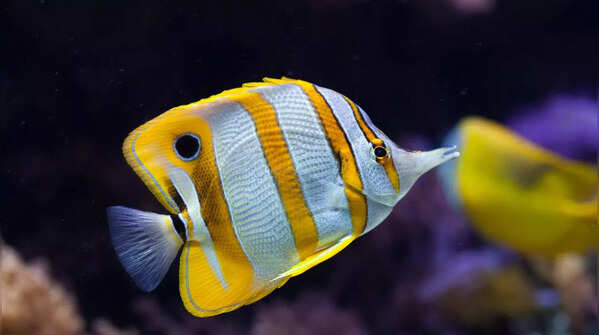
Most fish species have no external ear, yet they are still able to perceive sound in their environment as they have developed other sophisticated systems to sense sound waves in water, such as the lateral line. Through such systems, they are able to navigate their environment, communicate effectively, etc., as they couldn't detect airborne sounds.
The existence of earless animals shows us that hearing is much more diverse than human anatomy suggests. Beginning with the snakes’ ability to sense the vibrations of the earth, then the spiders’ sensing of vibrations through the air, and the fish's sense of vibrations in the water, evolution has developed countless means to sense sounds without ears.
Image Credits: Canva
Featured In lifestyle

MORE FROM ETIMES
life & style