
- News
- lifestyle
- health-fitness
- health-news
- 6 ankle strengthening exercises to improve balance and prevent sprains
6 ankle strengthening exercises to improve balance and prevent sprains

6 ankle strengthening exercises to improve balance and prevent sprains
Ankles take a real beating from everyday hustle, especially navigating India's pothole-filled streets, crowded trains--and sudden stairs. They handle your full body weight with every step, twist, or stop, so building strength here keeps you steady, slashes sprain chances--and supports knees and hips too. These foundational no-equipment exercises come straight from trusted spots like Cleveland Clinic and orthopedic guides. They hit plantarflexors i.e- (calf muscles), dorsiflexors (shin front), invertors and evertors (sides), plus that all-important proprioception for balance sense. Do them 3 times a week, 2-3 sets of 10-20 reps or holds--always with rest days to let muscles recover--and grow stronger.

Exercise 1: Calf Raises
Start with feet hip-width apart, arms loose at your sides for balance. Rise up onto your toes by squeezing your calves tight, hold that peak squeeze for a full 2 seconds to really feel the burn, then lower back down super slowly over 3 full seconds, letting your heels drop just below level for a deep stretch. Once this feels solid after a couple weeks, switch to single-leg version: stand on one foot with the other knee bent and foot off the ground behind you, repeat the raise --and lower. This powerhouse move strengthens the gastrocnemius and soleus muscles in your calves, which are crucial for pushing off when you walk or run and for safely absorbing shock when landing. Cleveland Clinic recommends it as a go-to for anyone with weak or wobbly ankles.

Exercise 2: Resisted dorsiflexion
Sit down on the floor or a chair with your legs stretched straight out in front of you. Take your hands and place them over the top of your foot (the dorsum), then actively pull your toes back toward your shin while pushing against your own hand resistance, holding that pull for a solid 5 seconds before relaxing. Do 10-12 reps per foot. For a standing twist, face a wall, put one foot back with your knee straight--and heel planted flat on the ground, then lean your body forward gently until you feel a strong stretch in the front of your shin. This builds up the tibialis anterior muscle on the outer shin front, helping prevent common issues like shin splints from running or walking long distances--and fixing that front-to-back instability.
Exercise 3: Heel and toe walks
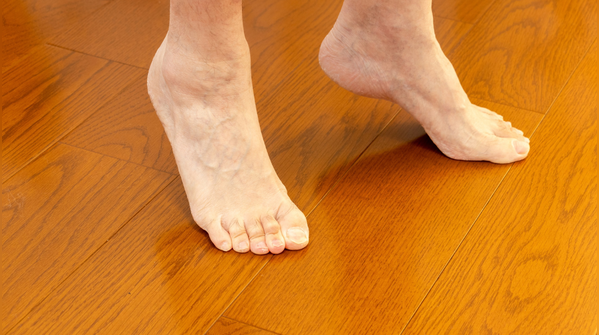
Find a clear hallway or room space about 10-20 feet long. For heel walking, lift your forefoot so you're balancing on your heels with toes pointing straight up to the sky, arms out wide like airplane wings for balance, and take 20 slow steps forward. Catch your breath, then flip it for toe walking: rise up high on your toes with heels off the ground, and cover the same distance. Keep going back--and forth for sets. This alternates between your calf muscles and shin muscles, firing up agonist and antagonist pairs to create smooth, dynamic stability that matches real-life walking demands on uneven paths.

Exercise 4: Ankle alphabet tracing
Grab a chair, sit comfortably--and lift one foot off the ground so it's hovering in the air. Now, using your big toe as the "pen," slowly trace out every uppercase letter of the alphabet, making big, deliberate strokes that move your ankle through its full natural range in all directions: up--and down, side to side, even slight twists. Go A through Z on one foot, shake it out, then repeat on the other. This clever drill sharpens neuromuscular control--and joint proprioception, training tiny stabilizer muscles that keep you from rolling over on curbs or slopes.

Exercise 5: Single-Leg balance progression
Stand tall on a firm, flat surface with your weight on one leg, bending the opposite hip to 90 degrees so the knee is up like a flamingo pose, hands on hips to challenge yourself more. Hold steady for 30 to 60 seconds without wobbling. Build from there: close your eyes to amp up the difficulty, extend the opposite arm or leg out sideways, or drop into a partial squat with the standing knee bending slightly. Switch sides after each hold. Solid evidence shows this cuts recurrent sprain rates by up to 40 percent by rewiring your brain's balance feedback.
Exercise 6: Tandem stance and walk
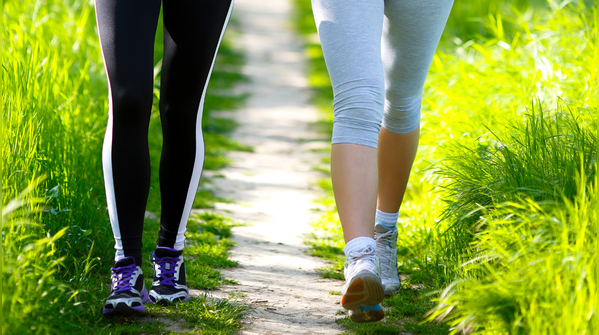
Begin in a heel-to-toe stance where the front foot's heel touches the back foot's toes, like standing on a narrow beam--and hold that narrow base for 30 seconds on each side. Ready for more? Step forward into a straight line walk, placing each heel precisely in front of the opposite toe for 10 steps, then turn and come back. Keep arms outstretched for counterbalance. This boosts postural equilibrium--and integrates your inner ear's balance system with ankle feedback.
Remember to understand you body's limits before incorporating these exercises.
Featured In lifestyle

