
The Goldsmiths Prize 2020 shortlist
The Goldsmiths Prize 2020 shortlist
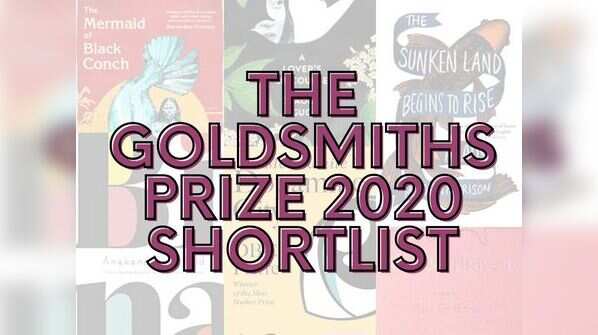
The Goldsmiths Prize 2020 aims to "to celebrate the qualities of creative daring associated with the University and to reward fiction that breaks the mould or extends the possibilities of the novel form". It's an annual award that was set up in 2013 and is applicable to books in the English Language written by authors who are citizens of the United Kingdom.
They just announced their shortlist for 2020 and will declare the winner on November 11th.
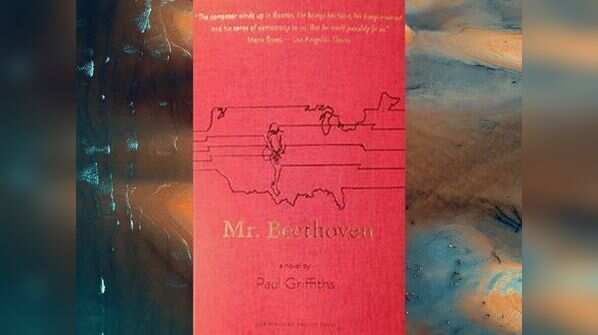
Mr. Beethoven by Paul Griffiths
This book is about Beethoven, when he received a commission to write a biblical oratorio in the United States. Set in 1823 we follow Beethoven as he fights with his muse, his librettist Rev. Ballou, and we see him get close to two women.
Member of the jury, Will Eaves described by saying, "What would Beethoven have done with another seven years of life, and where, in the 1830s, might he have gone? The answer, in this audacious but exacting extension of the composer’s late period, is America, where an oratorio, Job, is completed (and performed) in Boston. Suffering and revelation are the subject-matter, but in Paul Griffiths’ hands, the Biblical sorrow undergoes a lasting modulation into a new key of delight in friendship, communication, and creativity."
Photo: gold.ac.uk/goldsmiths-prize
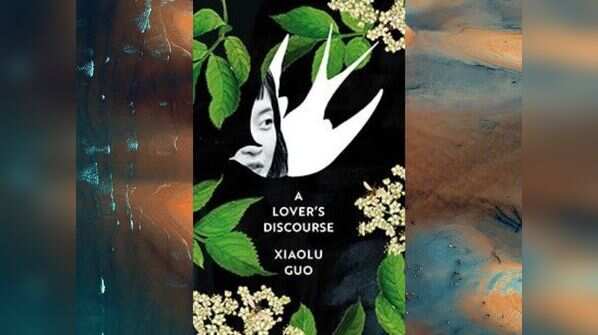
A Lover’s Discourse by Xiaolu Guo
The story follows a Chinese woman who moves to London. She finds love and we read a romance told through fragments of conversations between the two lovers.
Chris Power from the jury described it as, "A novelistic essay, Xiaolu Guo’s book of the same name is an essayistic novel. In short chapters, and with hypnotically measured language, Guo studies the relationship between two lovers as a union and an alliance, yes, but also as a confrontation, an argument, and a struggle. The book charts the evolution of a love affair between a nameless film student, who has moved to London from China, and a half-German, half-Australian landscape architect. Brexit looms large, as does isolation, as Guo describes the emotional and psychological landscape navigated by immigrants to Britain. Most impressive of all is the close attention she pays to a country’s language – not just the literal meaning of words, but also the moods they impart. Doing so, she makes the texture of daily life appear strange and new."
Photo: gold.ac.uk/goldsmiths-prize
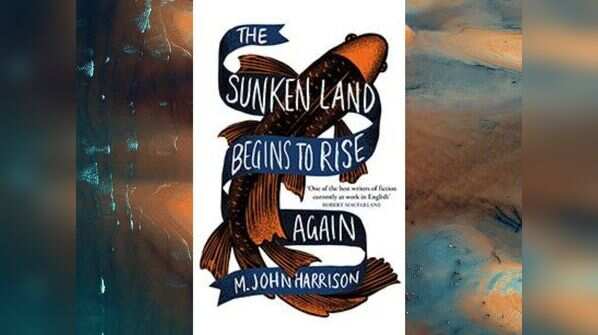
The Sunken Land Begins to Rise Again by John Harrison
Written by a renowned Sci-fi writer the book is set in modern London. Will Eaves from the jury said the book, "Fifty-something Shaw gets involved with a crazy website about evolutionary biology. His girlfriend, Victoria, drifts westwards to a town on the Severn, where the inhabitants are sinking into ponds, reading The Water Babies, and changing for ever. The Sunken Land Begins to Rise Again is a brilliant realist fantasy about love in middle-age and the dissolution of the post-war settlement. In a series of startling knights’ moves across our inner and outer landscapes, M. John Harrison quietly overturns all grounds for supposing we know who we are and where we have come from."
Photo: gold.ac.uk/goldsmiths-prize
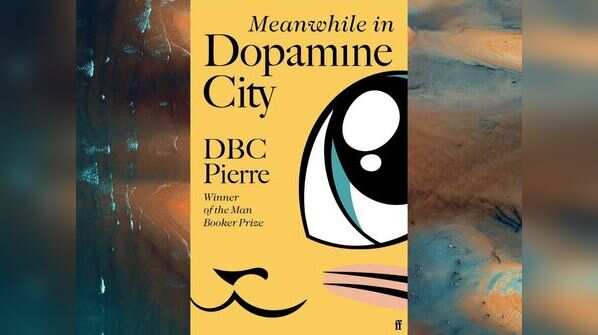
Meanwhile in Dopamine City by DBC Pierre
The book shows the dangers of addictive technology in a funny satire. Member of the jury, Frances Wilson, described it as, "Lon Cush, the hero of DBC Pierre’s turbo-charged satire, is a grieving widower struggling to hold on to his job and his kids. His nine year-old daughter, Shelby, is addicted to her phone and Lon is warring against millennials, vloggers, memes, likes, and allegations of parental abuse. The cacophony of this new binary world is demonstrated by a split page, one half giving us the stream of chatter displayed on Shelby’s screen, the other half the stream of thoughts running through Lon’s head. Furious, despairing, and dizzingly articulate, Meanwhile in Dopamine City shows that the novel is still smarter than the latest smartphone."
Photo: gold.ac.uk/goldsmiths-prize
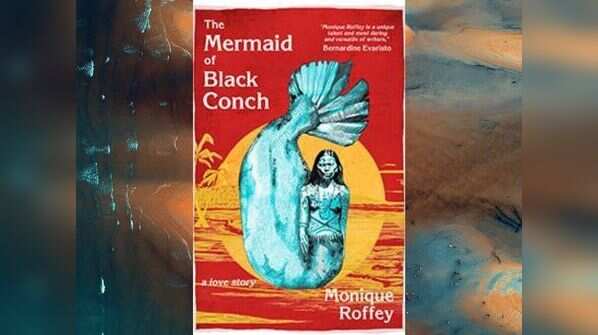
The Mermaid of Black Conch by Monique Roffey
Set in 1976, in a small Caribbean village, we see a story involving, greed, kindness and a mermaid. Sarah Ladipo Manyika from the jury gushed that, "The Mermaid of Black Conch is an extraordinary novel in which myth, fairy tale, adventure and history are combined to produce a magical tale that provokes as much as it delights. This timeless story of an ancient mermaid who captures the heart of a local fisherman is a powerful feminist tale which speaks artfully to the nature of love and possession, race and class, creolization and colonialism. Filled with unforgettable characters and scenes, the story moves effortlessly between prose, poetry, and journal entries with playful interweaving of various Englishes including patois and English Creole. This is one of those rare gems of a novel that can be read and enjoyed on many levels—it’s a whimsical love story, a history of the Caribbean and its indigenous peoples, an ode to Mother Earth, and an allegory for our times. The book sings with warm echoes of Jean Rhys, Ernest Hemingway and Zora Neale Hurston."
Photo: gold.ac.uk/goldsmiths-prize
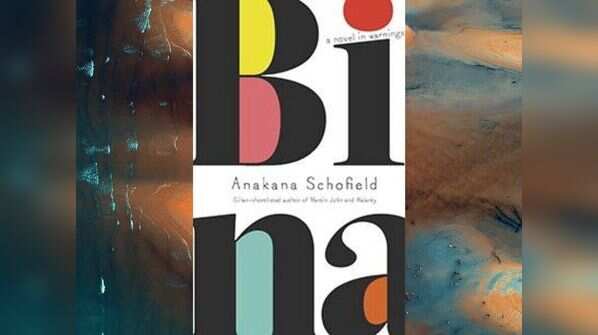
Bina by Anakana Schofield
This book is a dark humour written from the point of view of an old lady who has had enough of her life. Member of the juryFrances Wilson described it as, "Startlingly original and horribly funny, Anakana Schofield’s Bina is that rare thing: a black comedy about euthanasia. Composed as a series of warnings scribbled on the backs of envelopes from the safety of her bed, the narrator is a septuagenarian who has had enough. And we can see why: her front garden is filled with political activists, her back garden with medical waste; her lodger stayed on for an extra ten years and she is suspected of murdering her best friend. In all her despair, and empathy for the despair of others, Bina emerges from her elliptical missives, addressed to everyone but no-one in particular, as an eccentric heroine of monumental moral courage."
Photo: gold.ac.uk/goldsmiths-prize
Featured In lifestyle

