'Brain-eating amoeba'
The invisible killer in Kerala waters


Kerala’s silent health scare
"I cannot believe my daughter is gone," said the mother of a nine-year-old from Kozhikode who recently succumbed to a rare infection.
The mother's grief echoes across families in Kerala. Kerala is facing a scarce but ruthless disease. At least 19 people have died this year from Primary Amoebic Meningoencephalitis (PAM), a devastating brain infection caused by Naegleria fowleri, or the "brain-eating amoeba."
With over 70 confirmed cases this year, health authorities are on high alert, communities are anxious, and experts are racing to contain the threat. But what exactly is this parasite? Why is Kerala vulnerable?
The 'brain-eating amoeba'
Naegleria fowleri is a free-living, single-celled amoeba found mostly in warm, untreated freshwater such as ponds, lakes, rivers, and poorly maintained swimming pools. It thrives in water temperatures between 25°C and 40°C.
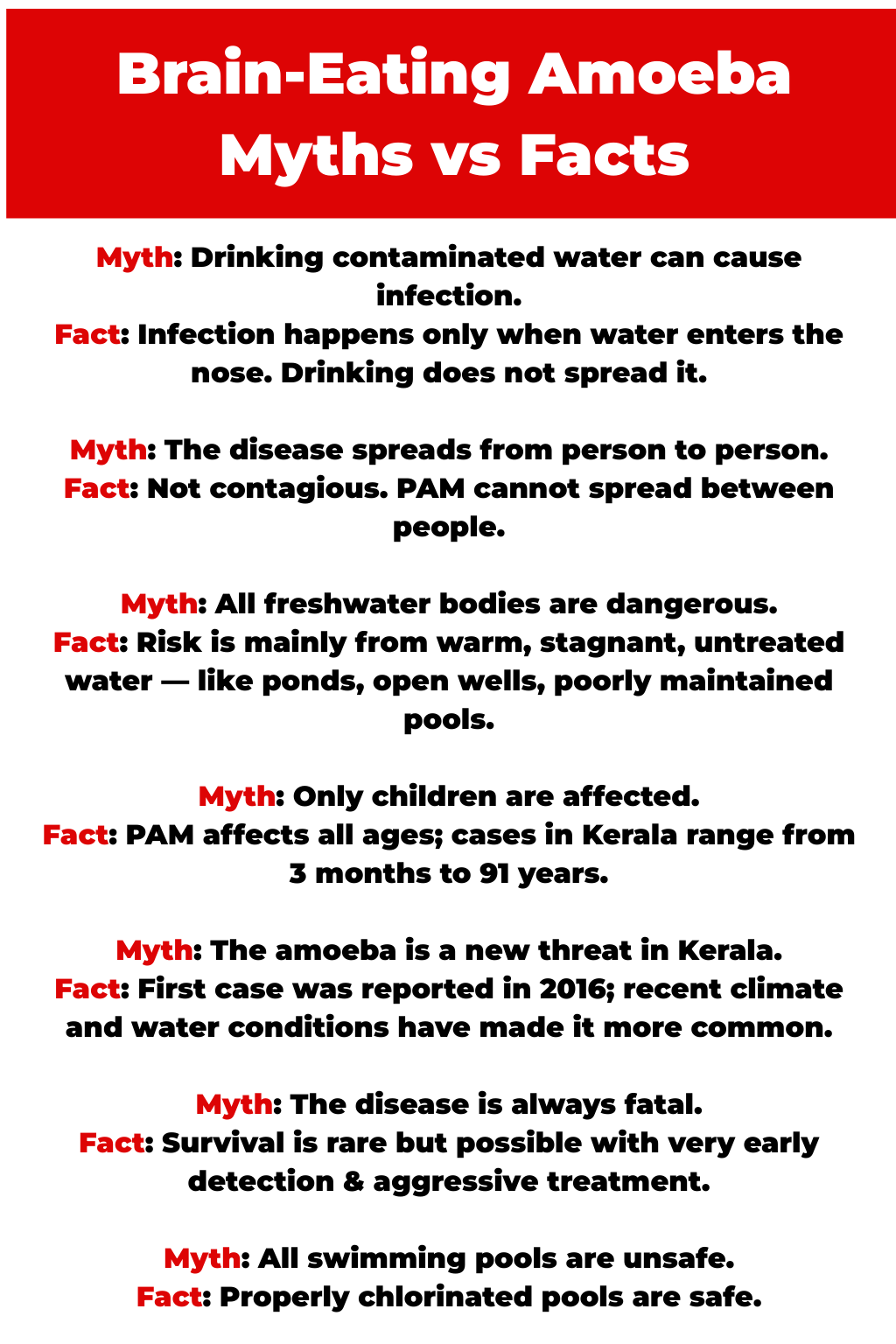
Not harmful if swallowed: Drinking contaminated water does not cause illness.
The danger lies in the nose: When water carrying the amoeba enters the nasal cavity, it travels along the olfactory nerves into the brain, triggering Primary Amoebic Meningoencephalitis (PAM).
The infection destroys brain tissue with frightening speed, causing swelling and inflammation.

How is it transmitted
Infection almost always occurs during activities like swimming, diving, or bathing in warm, untreated freshwater. Household water tanks that aren’t properly chlorinated, open wells, and pools with poor hygiene are also risk sites in Kerala.
- Transmission: Through the nose; never by drinking.
- Not contagious: PAM does not spread from person to person.
- High-risk behaviour: Bathing in stagnant water used to wash cattle, or playing with hoses and sprinklers that push water into the nose.
Symptoms and why speed matters
The disease progresses at breakneck speed.
Early signs (2–7 days after exposure):- Severe headache- Fever
- Nausea and vomiting
- Stiff neck
- Sensitivity to light
Advanced symptoms (within hours to days):- Confusion and hallucinations- Loss of balance- Seizures- Coma
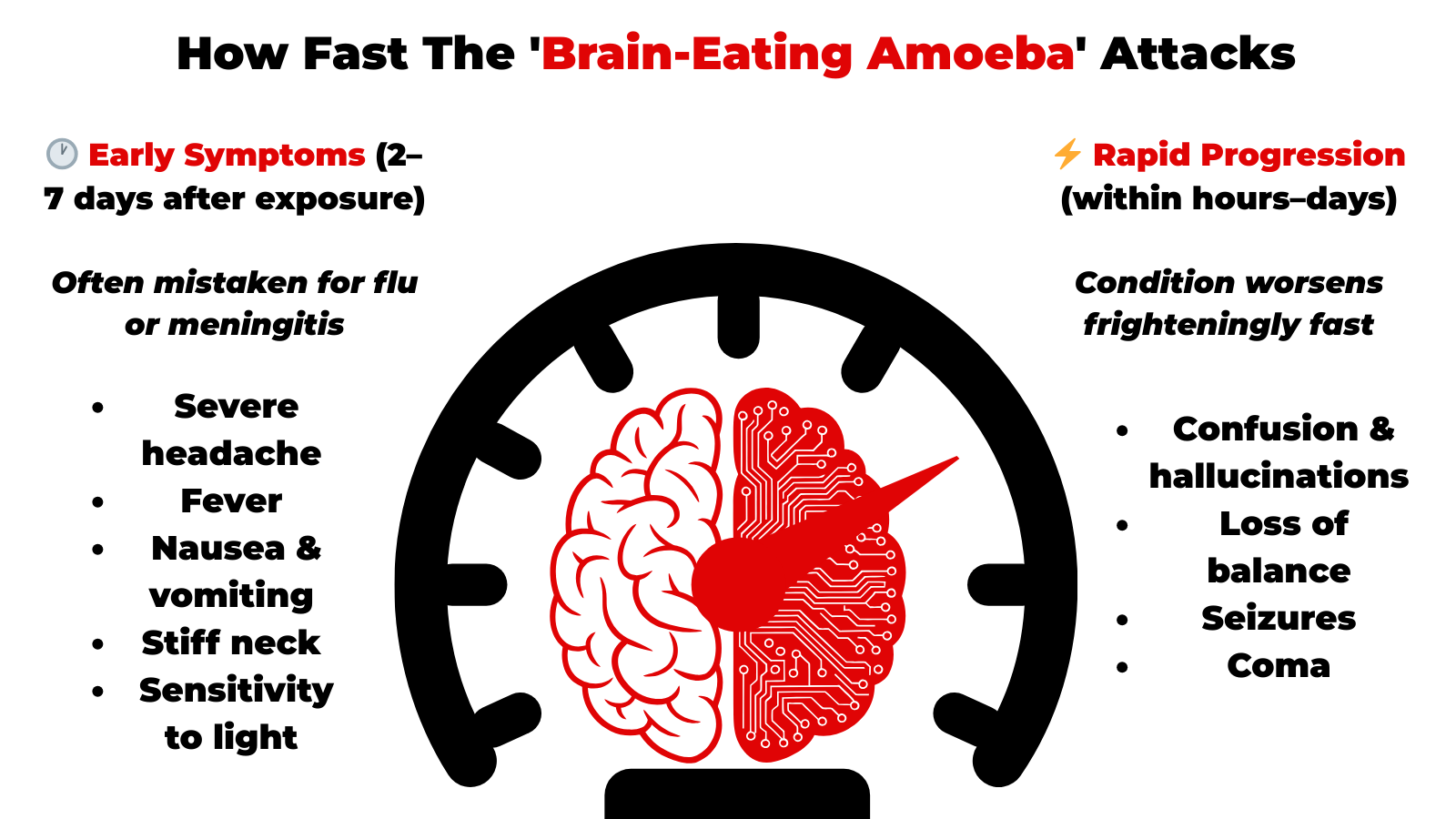
Most patients die within 5–10 days of symptom onset. Doctors warn that PAM is often mistaken for bacterial meningitis, delaying life-saving treatment.
Why Kerala? Understanding the spike
Kerala’s geography and lifestyle explain much of its vulnerability:
- Warm, humid climate with monsoon rains creates ideal breeding grounds.
- Stagnant freshwater bodies often polluted with sewage and cattle waste fuel amoeba growth.
- Cultural habits of swimming in ponds and rivers during festivals or vacations increase exposure.
The surge in 2025 has startled experts. From just a handful of annual cases earlier, dozens are now being reported across districts.
Scientists also warn that climate change may be intensifying the threat: hotter summers expand the amoeba’s range and push more people into freshwater bodies for relief.

Is it a new parasite?
Kerala health minister Veena George told the state assembly on September 17 that amoebae exist in most water sources, though only some types are dangerous.
She pointed out that the first case of PAM in the state was reported in 2016, and since then the government has been working on guidelines to help doctors respond more quickly.
The age range of PAM cases this year is 3 months to 91 years, and cases reported this year are 33 males and 19 females. Kerala has previously reported cases of PAM. In 2024, cases were reported from Kozhikode, Malappuram, and Kannur districts during June-July.

Fighting against the odds
There is no single cure for PAM, but Kerala hospitals are adopting aggressive multi-drug regimens.
Amphotericin B: The mainstay drug, administered intravenously or directly into spinal fluid.Miltefosine: Added as an oral therapy; Kerala began using it after global evidence showed promise.
Rifampicin and Azoles: Supportive antimicrobials.
Critical care: Measures to reduce brain swelling, prevent seizures, and support vital functions.Doctors now form multi-disciplinary teams - neurologists, paediatricians, infectious disease specialists, and critical care experts - to manage cases.
Still, with a mortality rate above 98%, treatment remains a last-ditch fight.

Glimmers of hope
For the first time, Kerala is reporting survivors. In 2025, about 24% of patients have pulled through, thanks to early diagnosis and aggressive therapy.
Among them are two children from Malappuram who lost a sibling but survived themselves. Their recoveries highlight the importance of early intervention and public vigilance.
Public health response
Kerala’s government has taken a multi-pronged approach:
Awareness campaigns: Educating schools, families, and communities.
Chlorination drives: Targeting wells, tanks, and pools. Closure of unsafe pools and systematic water testing.
Guidelines for hospitals: Immediate suspicion of PAM in meningitis-like cases.
Health minister Veena George acknowledged amoebae are widespread but stressed only some types are dangerous. She underlined the government’s commitment to rapid detection and prevention.

Staying safe
Health officials stress that PAM, though deadly, is preventable.