
- News
- Education News
- How Centre, provinces shared finances in British India: Review of B R Ambedkar's doctoral thesis on economic administration under colonial regime
Trending
How Centre, provinces shared finances in British India: Review of B R Ambedkar's doctoral thesis on economic administration under colonial regime
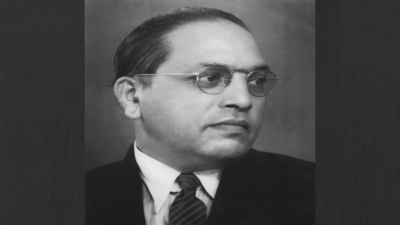
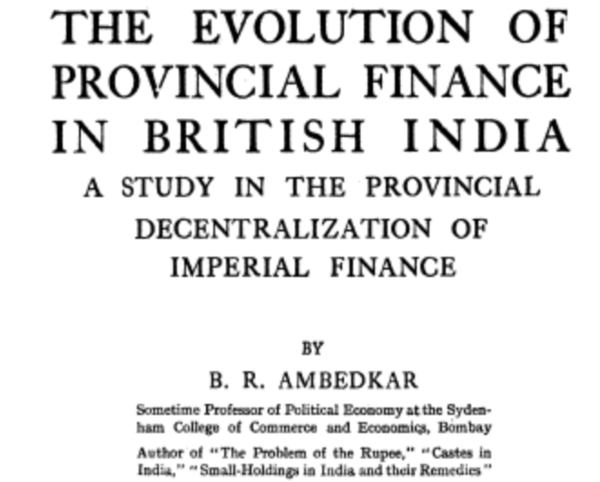
This thesis is an insightful exploration of the financial administration of British India, and it sheds light on the economic and political challenges that shaped the fiscal policies of the colonial regime.
Ambedkar's thesis remains a critical text for understanding how financial devolution from the center to the provinces (which were analogous to today’s states) took place in British India, and how this devolution affected provincial finances. In this article, we delve into the key points of Ambedkar’s thesis, highlighting its context, content, and lasting relevance.
Historical context
The thesis was written at a time when India was still under British rule, and the structure of governance was highly centralized. The Government of India Act of 1919, also known as the Montagu-Chelmsford Reforms, had introduced diarchy, a system that devolved certain powers to provincial governments while retaining key areas of governance like finance and military under British control.

Objective and scope of the thesis
Ambedkar’s objective was to trace the evolution of provincial finance in British India and to understand how financial devolution affected the administration and economy of the provinces. His thesis covered the following key areas:
- The system of financial allocation between the central and provincial governments.
- The methods of revenue generation and expenditure distribution.
- The impact of these financial arrangements on provincial administration.
- The extent of financial autonomy given to provinces and its implications for governance.
Phases of provincial finance evolution
Ambedkar divided the evolution of provincial finance into different phases, each marked by significant changes in the relationship between the central and provincial governments.
Pre-1833 Period: Prior to the Charter Act of 1833, there was no formal division of financial responsibilities between the central and provincial governments. The finances were largely centralized, with the Governor-General in Council having full control over revenues and expenditures.
1833-1870: The Charter Act of 1833 initiated the first steps toward financial decentralization. However, the provinces were still heavily dependent on the central government, and there was little real autonomy. Provincial governments were granted control over minor expenses, but key revenue-generating areas like land revenue, customs, and salt were firmly under central control.
1870-1900: The financial decentralization process accelerated with the financial reforms introduced by Lord Mayo in 1870. Under these reforms, provinces were given control over certain revenues (e.g., excise duties and forest revenues) and were allowed to keep a portion of the revenues they collected. This system, known as the "provincialization" of finances, marked a significant step toward financial autonomy, though the central government retained control over the major sources of revenue.
Post-1900 Period: This period saw further reforms, particularly under the Government of India Act of 1919, which introduced diarchy. Provinces were given greater control over certain areas of governance (such as education and public health), along with limited financial autonomy. However, the central government still retained control over major revenue sources, and provincial finances remained heavily dependent on the center.
Challenges faced by provincial governments
Ambedkar’s thesis also explored the challenges faced by provincial governments due to their limited financial autonomy. Some of the key challenges included:
Inadequate revenue sources: The major sources of revenue, such as land taxes and customs duties, were controlled by the central government. The provinces were left with less lucrative revenue streams, such as excise and forest revenues, which were insufficient to meet their growing expenditure needs.
Fiscal deficits: Many provincial governments ran fiscal deficits, as their expenditures on public administration, health, education, and infrastructure outpaced their revenues. This problem was exacerbated by the fact that the central government often imposed limits on provincial borrowing, forcing provinces to rely on grants from the center to cover their deficits.
Central control over expenditures: Even though provinces had some degree of financial autonomy, their expenditures were often subject to approval by the central government. This limited their ability to implement policies tailored to local needs.
Ambedkar's critique of the fiscal system
Ambedkar was critical of the way the British government managed provincial finances, particularly the imbalance between revenue generation and expenditure responsibilities. He argued that the system of financial devolution was inadequate and placed too many constraints on provincial governments. His key critiques were:
Lack of genuine autonomy: Despite the appearance of financial decentralization, the central government retained significant control over provincial finances. Ambedkar pointed out that the central government’s retention of key revenue sources and its control over provincial borrowing limited the ability of provincial governments to function independently.
Inadequate financial resources: Ambedkar highlighted the inadequacy of the financial resources available to the provinces. He argued that the provinces were given too few revenue-generating powers to meet their growing responsibilities, especially in areas like education, health, and infrastructure development.
Imbalance of power: Ambedkar critiqued the inherent imbalance of power between the central and provincial governments, which he believed was detrimental to the overall governance and development of the country. He emphasized the need for a more equitable distribution of financial powers to ensure effective administration at the provincial level.
Lasting relevance of Ambedkar’s thesis
Ambedkar’s analysis of provincial finance in British India remains relevant even today, particularly in the context of India’s federal structure. The issues he raised regarding the imbalance of financial powers between the center and the provinces (now states) continue to resonate in modern discussions about federalism in India.
The fiscal relationship between the central and state governments is still a contentious issue, with states often complaining about inadequate financial autonomy and the central government’s control over key revenue sources. Ambedkar’s work can be seen as a precursor to contemporary debates about fiscal federalism, the Goods and Services Tax (GST), and the devolution of financial powers.
Conclusion
Dr B R Ambedkar’s doctoral thesis, "The Evolution of Provincial Finance in British India", is a meticulous and critical examination of how financial devolution occurred under British rule. It provides deep insights into the fiscal challenges faced by provincial governments and critiques the limitations imposed by the colonial regime on financial autonomy. Ambedkar’s work continues to be of great relevance, particularly in discussions about fiscal federalism and the relationship between central and state governments in India. His thesis remains a foundational text for anyone interested in the economic history of India and the complexities of governance under colonial rule.
Read full thesis:
('Instant Scholar' is a Times of India initiative to make academic research accessible to a wider audience. If you are a Ph.D. scholar and would like to publish a summary of your research in this section, please share a summary and autherisation to publish it. For submission, and any question on this initiative, write to us at instantscholar@timesgroup.com)
End of Article
FOLLOW US ON SOCIAL MEDIA
Visual Stories










Photostories

Hot Picks
TOP TRENDING
Popular Categories
Hot on the Web
Top Trends
AUS vs SA Live ScoreRohit SharmaLiam PayneUGC Net June ResultSL vs WI Live ScoreIND vs NZ HighlightsUGC NET ResultInfosys Q2 ResultHaryana Cabinet Ministers ListJustin TrudeauFlights Bomb ThreatJharkhand Election ScheduleMaharashtra Election 2024US Presidential Election 2024Maharashtra Election ScheduleJharkhand Election ScheduleLive Cricket Score
Trending Topics
Diwali WishesDhanteras 2024Fake PaneerLiam PayneVettaiyan CollectionVicky Vidya Ka Woh Wala Video CollectionLawrence BishnoiJigra OTT ReleaseCow GheeBigg Boss 18Salman KhanShraddha KapoorRenukaswamys WifeSharad Purnima Moonrise TimeSwatantrya Veer SavarkarSharad Purnima 2024Top Load Washing MachinesBest Premium LaptopsIntel LayoffsWordle Answer
Living and entertainment
Latest News
Injury scare for Team India as Rishabh Pant hobbles off the fieldHappy Dhanteras 2023: Images, Quotes, Wishes, Messages, Cards, Greetings, Pictures and GIFsLiam Payne's final meeting with Argentina fans at hotel goes viral; boy says 'You saved my life' - WATCHDA hike calculator: Dearness allowance & relief hiked by 3% - here’s how much extra salary, pension central government staff & pensioners will getKartikay Agarwal: Decoding how he is playing a role in the AI revolution and entrepreneurship renaissanceRaima Sen on playing iconic Suchitra Sen: It would be an honourTrending couple tattoo ideasBigg Boss Tamil 8 Preview: Emotional turmoil as housemates tease Dharsha Gupta over her cookingSalman Khan’s security beefed up after Baba Siddique’s murder: Arbaaz reacts, Vivek Oberoi's old video goes viral, and all that happenedCitizenship under Assam accord: 4:1 SC verdict upholds validity of Section 6A; dissenting judge says provision 'has become more prone to abuse'Tony Khan hails Shelton Benjamin’s AEW in-ring debut as he sets up clash with Swerve StricklandKartik Maas 2024 Start and End Date: Time, Puja Rituals and Significance7 deadliest reptiles in the world from venomous snakes to turtles'Love Rohit Sharma's honesty': Sanjay Manjrekar calls India captain 'top man'Desi ghee and olive oil mixture: Can it help regrow hair?'Secret service needs reform': Independent probe panel on Trump's assassinationBreast cancer fighter Hina Khan shares a video of people who have inspired her during her journey; watchWWE Superstar Seth Rollins confirms date and occasion for in-ring return
Copyright © 2024 Bennett, Coleman & Co. Ltd. All rights reserved. For reprint rights: Times Syndication Service