Why a group of crows is called a ‘murder’ and the story behind it
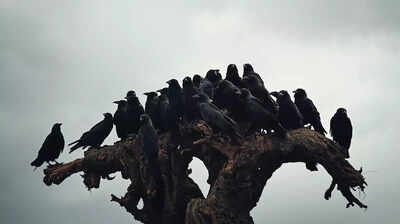
Why a group of crows is called a ‘murder’ and the story behind it (AI-generated)
The reason a group of crows is called a murder
The root of the term 'murder' lies in folklore
Scientists prefer plain language over poetic terms
Mob describes behaviour rather than symbolism
Collective nouns reflect language more than nature
End of Article
Follow Us On Social Media
Tired of too many ads?go ad free now
lifestyle videos
Featured In Lifestyle

Tired of too many ads?go ad free now

Hot on the Web
Jana NayaganWaheeda RahmanBhushan KumarSuniel ShettyJana Nayagan Hearing Live UpdatesAmitabh BachchanAshwagandha BenefitsAbhijit Majumdar Death CauseJana NayaganJaaved JaaferiBorder 2 CollectionFake Sweet PotatoBorder 2 ReviewBorder 2 Movie ReviewDhurandhar OTTRalph Waldo EmersonStephen HawkingBaby NamesTom CruisePalaash MuchhalRimi SenSenecaThe 50 ContestantsDhurandhar OTTRabbi ShergillThe Raja Saab Box Office CollectionDhurandhar Movie CollectionAsia Longest RiverDhurandhar Movie ReviewAnand MahindraWilliam ShakespeareSolar EclipseStonehenge MysteryMoong Dal Popcorn RecipeQuote Of The Day By Richard FeynmanWorld Longest Road TunnelEgypt Lost Golden CityiOS 26.3Pavel DurovChinese Year 2026Range Rover Sentinel
Trending Topics
Latest MoviesBollywood MoviesHollywood MoviesTamil Movies 2026Telugu Movies 2026Malayalam Movies 2026Kannada MoviesMarathi MoviesBengali Movies 2026Top Rated Movies 2026Best Hindi MoviesBest English MoviesBest Telugu MoviesBest Tamil MoviesBest Malayalam MoviesBest Kannada MoviesBest Bengali MoviesUpcoming Hindi MoviesBest Movies Of All TimeBest Hindi Movies of All TimeLatest English MoviesLatest Malayalam MoviesEnglish TV NewsTamil TV NewsTelugu TV NewsMalayalam TV NewsKannada TV NewsMovie ReviewsBhojpuri Cinema NewsGujarati Cinema News
Popular Categories
Viral NewsK Pop NewsWeb Series NewsAnime NewsUpcoming English MoviesUpcoming Tamil MoviesUpcoming Telugu MoviesUpcoming Malayalam MoviesUpcoming Kannada MoviesFashion TipsTravel NewsEntertainment NewsBollywood NewsTollywood NewsKollywood NewsMollywood NewsFood NewsLatest Hindi MoviesLatest Tamil MoviesParenting TipsHome RemediesWeight LossBeauty TipsParenting TipsHindi VideosHindi Video SongsBhojpuri Music VideosLatest Telugu MoviesBhojpuri Music VideoHindi TV News
Latest News
Chinmayi Sripaada reacts to comments made by Chiranjeevi in new social media post: 'Casting couch is rampant'Anil Kapoor's 'Ram Lakhan' clocks 37 years, actor says Lakhan has 'aged' rather wellRonaldo’s 2021 forecast comes true as Carrick starts on a high as Manchester United interim managerThis 'Canadian Marathi Mulgi' took her citizenship oath in a Nauvari saree‘Ranbir Kapoor hails Rani Mukerji’s 30-year legacy ahead of 'Mardaani 3' release: 'One of India's greatest ever actors in India'DJ Snake cancels his India tour: Armaan Malik reacts, 'Musicians and artists silently battle health issues'Endangered caracal cat rescued and fitted with India’s first radio collar in Rajasthan's Jaisalmer‘Just a matter of time’: Scotland confident visas will clear for T20 World Cup in India despite Pakistan-origin player in squad‘The Rip’ star Matt Damon shares that Clint Eastwood was strict on set, telling him, ‘You wanna waste everybody's time?’Angry Nvidia CEO Jensen Huang says: Stop calling all my investments and acquisitions ...Which is the world’s largest flower and where does it grow?Sirai fame Akshay to headline Basil Joseph’s first full-fledged Tamil film'Jana Nayagan': Madras HC quashes order for Vijay starrer's immediate censor certificate; sends case back to single judge - Report‘My gratitude to the Motherland’: Mammootty reflects on Padma Bhushan win'Anupamaa’ January 26 written update: Rajni attempts to bribe Anupama; Rahi and Mahi criticise their motherNipah Virus Alert: Is the UAE at risk following the India outbreak?Kate Winslet says it 'takes time' to let go of troubled characters2026 Renault Duster vs Tata Sierra: Engine specs compared