
- News
- City News
- bhopal News
- AQI ache: Air clogs up with pollutants in year-end
Trending
This story is from December 30, 2022
AQI ache: Air clogs up with pollutants in year-end
The air quality in Bhopal has been poor on many occasions in the past ten days. The air quality ranged from moderate to poor category on five out of the past ten days. The air quality of Bhopal remained poor which means breathing discomfort to most people on prolonged exposure.
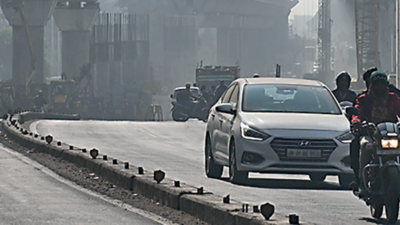
On five out of the past ten days, the air quality of Bhopal remained poor, which means breathing discomfort to most people on prolonged exposure.
On five out of the past ten days, the air quality of Bhopal remained poor, which means breathing discomfort to most people on prolonged exposure.

Madhya Pradesh Pollution Control Board Bhopal officials said, the air quality deteriorated during the night. When its cause was looked into, it came to light that the people burn tyres and plastic during cold nights. It led to pollution levels going up. It was also conveyed to the Bhopal municipal corporation to check the people from doing so, officials added.
There are two online real time air quality monitoring stations in TT Nagar and Paryavaran Parisar while in five places, the air quality is monitored manually. Slum dwellers burn tyres and plastic at night and waste that led to increase in the pollution levels during this time of the year, officials added.
Officials said, damaged roads, flying dust from vehicles and increase in construction activities after showers leads to increase in the pollution levels. Besides, bonfires during winters lead to air pollution. Dust gets heavy in showers and does not fly in the air.
The vehicular pollution also gets down as tyres could not lead to flying of pollutants and dust in air, as it settles down on ground. It is the reason why pollution levels come down during rains, officials added.
Air quality is measured taking into account the levels of sulphur dioxide (SO2), nitrogen oxide (Nox), RSPM10 and fine particulate matter (PM2.5) in the air. Of the four, officials said, PM2.5 is the most harmful to health and causes severe lung diseases.
PM 10 is due to dust, construction, including building of roads while PM2.5 is due to dust, human activity and climatic conditions.
End of Article
FOLLOW US ON SOCIAL MEDIA






Photostories

Hot Picks
TOP TRENDING
Popular Categories
Hot on the Web
Top Trends
Liam PayneCJI ChandrachudIND vs NZ Live ScoreDevon ConwayBen DuckettUGC NET ResultAssam Citizenship ActNayab Singh Saini OathJustin TrudeauMotivational Speaker Munawar ZamaJharkhand Election ScheduleBrandon McmanusMaharashtra Election 2024Ratan TataMaharashtra Election ScheduleJharkhand Election ScheduleLive Cricket Score
Trending Topics
Diwali WishesDhanteras 2024Fake PaneerLiam PayneVettaiyan CollectionVicky Vidya Ka Woh Wala Video CollectionLawrence BishnoiJigra OTT ReleaseCow GheeBigg Boss 18Salman KhanShraddha KapoorRenukaswamys WifeSharad Purnima Moonrise TimeSwatantrya Veer SavarkarSharad Purnima 2024Top Load Washing MachinesBest Premium LaptopsNonstick Cookware SetsWordle Answer
Living and entertainment
Latest News
Delhi BJP decides to go local, focus on roads, water, sanitation in election campaignLiam Payne's final meeting with Argentina fans at hotel goes viral; boy says 'You saved my life' - WATCHDA hike calculator: Dearness allowance & relief hiked by 3% - here’s how much extra salary, pension central government staff & pensioners will getKartikay Agarwal: Decoding how he is playing a role in the AI revolution and entrepreneurship renaissanceTrending couple tattoo ideasSalman Khan’s security beefed up after Baba Siddique’s murder: Arbaaz reacts, Vivek Oberoi's old video goes viral, and all that happenedLong-distance Karwa Chauth? Here’s how to celebrate when you are miles away from your partnerKamala avoiding any interviews that won't post-edit her answers: MuskCol CK Nayudu Trophy Cricket: Himachal Pradesh escape with a draw against RajasthanTony Khan hails Shelton Benjamin’s AEW in-ring debut as he sets up clash with Swerve StricklandKartik Maas 2024 Start and End Date: Time, Puja Rituals and Significance7 deadliest reptiles in the world from venomous snakes to turtlesDesi ghee and olive oil mixture: Can it help regrow hair?Bikers gun down TMC man in BengalBhopal to witness power cuts today; check details hereActivist saves snake with mouth-to-mouth resuscitationKarva Chauth Puja Samagri: List of items for Puja Samagri of Karwa Chauth 2022Kaveri Theerthodbhava 2024: A spiritual gathering at Talakaveri
Copyright © 2024 Bennett, Coleman & Co. Ltd. All rights reserved. For reprint rights: Times Syndication Service