
- News
- Sports News
- Hockey News
- We had a huge fan following among Indians, recalls Pakistan hockey legend Hassan Sardar
Trending
This story is from October 24, 2018
We had a huge fan following among Indians, recalls Pakistan hockey legend Hassan Sardar
Hassan Sardar, Pakistan's marauding centre forward of the 80s, evokes awe and admiration in hockey circles. Sardar, whose raids down the middle cut like a knife, ripping apart defences, has a special India connect.
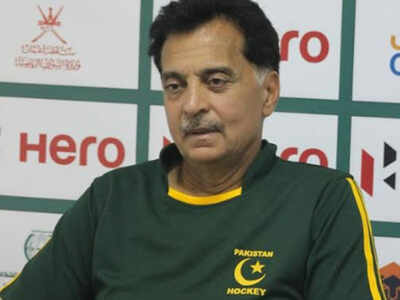
Hassan Sardar
BENGALURU: Hassan Sardar, Pakistan's marauding centre forward of the 80s, evokes awe and admiration in hockey circles. Sardar, whose raids down the middle cut like a knife, ripping apart defences, has a special India connect.
The former Pakistan captain, who turned 61 on Monday, played his first World Cup in Mumbai in 1982 and was adjudged the player of the tournament for his 11-goal effort. Sardar, returned a few months later to help Pakistan to the Asian Games title and again bagged the player of the tournament crown. Sardar, who starred in his country's Olympic Gold in 1984, was at his destructive best in the New Delhi Games final, which Pakistan won 7-1 over India. Watched by a stunned full house, that loss was hard to put away for players and fans.
Rated amongst the best forwards the sport has seen, Sardar holds the unique distinction of having scored in Pakistan's title wins in the Olympics (1984), World Cup and the Asian Games (both 1982). Sardar, who in his playing days was known as much for his tactical acumen as his finesse with the stick, is the manager of the Pakistan team in the ongoing Hero Asian Champions Trophy in Muscat. In a telephone interview with TOI, Sardar spoke of his glory days, Indian hospitality, the current state of Pakistan hockey and the upcoming World Cup in Bhubaneshwar.
Excerpts:
For anyone travelling from across the border playing in India has always been special. We were always excited about traveling to India because we received a lot of warmth from people and the crowd is knowledgeable about the sport. Hopefully it will be the same at the World Cup this year.
It was your exploits at the 1982 World Cup in India that brought you into the limelight, what are your memories of that title triumph?
That World Cup will always be the highlight of my career. It's not often that the stars align the way they did for me in that tournament. It was my first World Cup, I was the player of the tournament and we won the Cup in India. Those are once-in-a lifetime experiences. As a youngster, I couldn't have asked for more. The triumph wasn't easy, but we were confident and were in good form. We faced the Netherlands in the semi-finals and then played and won the final against Germany.
Considering India didn't make it to the knockouts at the World Cup, did you get crowd support?
Of course. We had a huge fan following among Indians. We almost felt like we were playing in front of our home crowd! Players like Samiullah Khan, Akhtar Rasool and Hanif Khan were a huge hit among the spectators. Although India didn't progress to the semi-finals, hockey lovers came to support the Pakistan team in large numbers. That was the beauty of the Indian spectators. They knew their sport and appreciated the skill and talent of players irrespective of the country they represented.
Do you have any off-field memories from Bombay?
Yes, a lot of them. We spent some time in India in the lead-up to the tournament as we played a Test series against them. We loved the food and Bombay is a city which is dear to my heart. Among my best off-field memories of the visit was our meeting with Amitabh Bachchan, Dilip (Kumar) saab and Pran.
Coming to the Asian Games, while the final was a nightmare for India, was it a dream come true for you?
Yes, it was. I think that win in the final against India is one of my best memories. It doesn't happen every day that you win an Asian Games gold beating India 7-1 on their home turf. I still remember that final match like it was yesterday. The atmosphere in the packed stadium was electric. We played in front of a crowd which included the late Indira Gandhi, Rajiv Gandhi and Amitabh Bachchan. The atmosphere was charged. At one point there was an eerie silence in the stadium. The only ones' celebrating was us.
The Indian team faced a backlash after that match, did you face hostility from Indian fans?
Oh no! On the contrary people shared our joy despite the sorrow of their team having lost. We didn't have much time between the victory and our departure to Pakistan, so we made a quick dash to a local market for shopping before we left. To be honest, we were curious about how people would react to us. We were in for a pleasant surprise with the reception we received at the market. They opened their shops and hearts to us. People walked up to us and congratulated us on our win and in many shops they gave us gifts as well! That day, it made us realise what sport meant to Indian fans - it had no boundaries.
Can you talk us through the India-Pakistan rivalry of the 1980s?
It was very intense because both teams had some of the best talents available during those days. Also, hockey during my times was very popular in both the countries. People followed the sport very passionately. In Pakistan, I would say it was more popular than cricket, especially given our success rate. We were a dominant force in world hockey in those days and people on both sides of the border appreciated it.
How was the camaraderie between the teams from either side of the border in your days?
As fierce as the competition was between the two sides on the field, off the field there was great camaraderie. Personally, I had developed a great friendship with the late Surjit Singh. Although he was senior to me, he was a good friend. My rapport with the late Mohd Shahid was similar. As a team we got along very well with players like M M Somaya, Pargat Singh and Mervyn Fernandes as well.
How would you describe the relationship between the present lot of players from India and Pakistan?
I think the rivalry and the sense of competition is still the same. But technology has eaten into the charm of the era gone by. Now the world has become smaller with social media. Back then, we didn't have mobile phones, internet, Facebook or Instagram, which meant we had a lot of catching up to do when we met. But now, they all know what's happening in each other's world. They are well-connected 'virtually'. So, technology, I believe has brought them closer as people.
Likewise, if the diplomatic relationship between the two countries were to improve, then the sport will gain immensely on either side of the border because people love to watch Pakistan play against India in any sport.
Coming to the state of hockey in Pakistan today, how much has chief coach Roelant Oltman's sudden exit impacted the team's World Cup preparation?
He came in just before the Commonwealth Games and there wasn't much he could have done. So, our focus was on the Asian Games and World Cup, but him quitting before the latter has affected our team and its preparations. The boys were comfortable with him and with what they learnt from him. What we are doing now is we are looking to implement and continue to work around what he taught them because they were used to it. We are working hard. We are in a tough pool for the World Cup and the team to beat for us will be Germany. The team is eager to come to India and give its best.
The former Pakistan captain, who turned 61 on Monday, played his first World Cup in Mumbai in 1982 and was adjudged the player of the tournament for his 11-goal effort.
Rated amongst the best forwards the sport has seen, Sardar holds the unique distinction of having scored in Pakistan's title wins in the Olympics (1984), World Cup and the Asian Games (both 1982). Sardar, who in his playing days was known as much for his tactical acumen as his finesse with the stick, is the manager of the Pakistan team in the ongoing Hero Asian Champions Trophy in Muscat. In a telephone interview with TOI, Sardar spoke of his glory days, Indian hospitality, the current state of Pakistan hockey and the upcoming World Cup in Bhubaneshwar.
Excerpts:
Can you talk about the experience of a Pakistani playing in India?
For anyone travelling from across the border playing in India has always been special. We were always excited about traveling to India because we received a lot of warmth from people and the crowd is knowledgeable about the sport. Hopefully it will be the same at the World Cup this year.
It was your exploits at the 1982 World Cup in India that brought you into the limelight, what are your memories of that title triumph?
That World Cup will always be the highlight of my career. It's not often that the stars align the way they did for me in that tournament. It was my first World Cup, I was the player of the tournament and we won the Cup in India. Those are once-in-a lifetime experiences. As a youngster, I couldn't have asked for more. The triumph wasn't easy, but we were confident and were in good form. We faced the Netherlands in the semi-finals and then played and won the final against Germany.
Considering India didn't make it to the knockouts at the World Cup, did you get crowd support?
Of course. We had a huge fan following among Indians. We almost felt like we were playing in front of our home crowd! Players like Samiullah Khan, Akhtar Rasool and Hanif Khan were a huge hit among the spectators. Although India didn't progress to the semi-finals, hockey lovers came to support the Pakistan team in large numbers. That was the beauty of the Indian spectators. They knew their sport and appreciated the skill and talent of players irrespective of the country they represented.
Do you have any off-field memories from Bombay?
Yes, a lot of them. We spent some time in India in the lead-up to the tournament as we played a Test series against them. We loved the food and Bombay is a city which is dear to my heart. Among my best off-field memories of the visit was our meeting with Amitabh Bachchan, Dilip (Kumar) saab and Pran.
Coming to the Asian Games, while the final was a nightmare for India, was it a dream come true for you?
Yes, it was. I think that win in the final against India is one of my best memories. It doesn't happen every day that you win an Asian Games gold beating India 7-1 on their home turf. I still remember that final match like it was yesterday. The atmosphere in the packed stadium was electric. We played in front of a crowd which included the late Indira Gandhi, Rajiv Gandhi and Amitabh Bachchan. The atmosphere was charged. At one point there was an eerie silence in the stadium. The only ones' celebrating was us.
The Indian team faced a backlash after that match, did you face hostility from Indian fans?
Oh no! On the contrary people shared our joy despite the sorrow of their team having lost. We didn't have much time between the victory and our departure to Pakistan, so we made a quick dash to a local market for shopping before we left. To be honest, we were curious about how people would react to us. We were in for a pleasant surprise with the reception we received at the market. They opened their shops and hearts to us. People walked up to us and congratulated us on our win and in many shops they gave us gifts as well! That day, it made us realise what sport meant to Indian fans - it had no boundaries.
Can you talk us through the India-Pakistan rivalry of the 1980s?
It was very intense because both teams had some of the best talents available during those days. Also, hockey during my times was very popular in both the countries. People followed the sport very passionately. In Pakistan, I would say it was more popular than cricket, especially given our success rate. We were a dominant force in world hockey in those days and people on both sides of the border appreciated it.
How was the camaraderie between the teams from either side of the border in your days?
As fierce as the competition was between the two sides on the field, off the field there was great camaraderie. Personally, I had developed a great friendship with the late Surjit Singh. Although he was senior to me, he was a good friend. My rapport with the late Mohd Shahid was similar. As a team we got along very well with players like M M Somaya, Pargat Singh and Mervyn Fernandes as well.
How would you describe the relationship between the present lot of players from India and Pakistan?
I think the rivalry and the sense of competition is still the same. But technology has eaten into the charm of the era gone by. Now the world has become smaller with social media. Back then, we didn't have mobile phones, internet, Facebook or Instagram, which meant we had a lot of catching up to do when we met. But now, they all know what's happening in each other's world. They are well-connected 'virtually'. So, technology, I believe has brought them closer as people.
Likewise, if the diplomatic relationship between the two countries were to improve, then the sport will gain immensely on either side of the border because people love to watch Pakistan play against India in any sport.
Coming to the state of hockey in Pakistan today, how much has chief coach Roelant Oltman's sudden exit impacted the team's World Cup preparation?
He came in just before the Commonwealth Games and there wasn't much he could have done. So, our focus was on the Asian Games and World Cup, but him quitting before the latter has affected our team and its preparations. The boys were comfortable with him and with what they learnt from him. What we are doing now is we are looking to implement and continue to work around what he taught them because they were used to it. We are working hard. We are in a tough pool for the World Cup and the team to beat for us will be Germany. The team is eager to come to India and give its best.
End of Article
FOLLOW US ON SOCIAL MEDIA




Top Sports News
TOP TRENDING
Trending Stories
In Sports
Entire Website
- Drew Mcintyre vs CM Punk Hell In A Cell Match To End in A Shocking Twist: Former World Champion to interfere?
- 5 Most Legendary Wrestling Families in the History of Wrestling
- WWE Hall of Famer reveals what NXT star Giulia needs to improve
- Rumor Has It: Former WWE stars Set to Join AEW
- "The girl has all the qualifications," - Tommy Dreamer gives verdict on NXT star Giulia's debut
- WWE NXT Champion offers his services to "The Original Tribal Chief" Roman Reigns
- WWE NXT News: Two new matches announced for next week's episode
- "I would certainly not turn down the opportunity" - TNA star reveals desire for NXT crossover
- Virat Kohli close to breaking another record set by Sachin Tendulkar
- Batista Reveals Reasons Behind His WWE Exit to Pursue Hollywood Career
- India needs to know why China disturbed peace: EAM Jaishankar
- Putin invites 'great friend' PM Modi for talks on sidelines of BRICS summit
- Why India is now insisting on an immediate ceasefire in Gaza
- 'Deal with it': Oppn vs BJP over PM Modi attending Ganpati Puja at CJI's house
- Patient, 11, raped in Agra medical college, doctor held
- In the (y)ear of conspiracy theories, Trump hears insults galore
- Pictures, videos: Why there is no other beach like this in India
- Planning to buy iPhone 16? How much Apple will give for iPhone 12 & others
- India, China to work urgently for disengagement in Ladakh
- Adani Group rejects Hindenburg claim of $310 mn asset freeze in Swiss banks

Popular Categories
Hot on the Web
Top Trends
Trending Topics
Alia BhattMalaika Arora Father DeathArbaaz KhanNatasa StankovicMr Bachchan OTT ReleaseNational Parks In IndiaSelena GomezGOAT CollectionVikas Sethi DeathMalayalam ProducersIndia's Best Dancer 4Simi GarewalDilli BabuIndian National ParksLaung BenefitsVikas SethiiPhone 16Microsoft 365 OutageCsir Ugc Net 2024Wordle Answer
Living and entertainment
Latest News
India successfully flight tests surface-to-air missileFintech Moneyview turns unicorn, 6th one this yearDigest this: Unhealthy gut may be linked to Parkinson’s diseaseCSIR UGC NET 2024 result declared: Steps to download scorecards at csirnet.nta.ac.inAadhaar card update: Do you have to compulsorily update details on your Aadhaar every 10 years?Single Indians are now choosing slow, meaningful dates over-elaborate outings, reveals an online dating platform’s surveyWho was Illia 'Golem' Yefimchyk, the Belarusian bodybuilder who consumed 2.5 kg of meat and 108 sushi pieces daily before his death at 36?Vijay Varma reveals he was DROPPED from 'Sacred Games' at the last minuteWWE Star Discusses Why Sid Vicious Deserves a Hall of Fame SpotCatching up with sports stars in DelhiSalman Khan surrounded by bodyguards as he arrives at Malaika Arora's mother's house to offer his condolences - WATCHCMF Buds Pro 2 by Nothing review: Big delivery on a budgetMallika Sherawat makes big screen comeback in Rajkummar Rao's 'Vicky Vidya Ka Woh Wala Video'; director reveals why he cast herArbaaz Khan spotted outside Malaika Arora's house along with police after the tragic news of her father's demise by alleged suicide - WATCH VIDEOHarvey Weinstein charged with additional crimes during hearing on rape chargesMitchell Schwartz's Cryptic Tweet Stirs Debate About Mahomes' ContractSiddhant Chaturvedi reveals he rejected Ranbir Kapoor, Alia Bhatt and Amitabh Bachchan starrer Brahmastra after father’s advice: 'He asked me, ‘Tujhe kaun dekhega?''EcoR unloads 100 million tons of goods in just 160 days
Copyright © 2024 Bennett, Coleman & Co. Ltd. All rights reserved. For reprint rights: Times Syndication Service