
- News
- Science News
- How Nasa's Artemis II took shape: From origins to orbiting the Moon
How Nasa's Artemis II took shape: From origins to orbiting the Moon

Mission origin
Artemis II is the first historic voyage to the Moon under the Artemis program, led by Nasa, to return humans to the Moon after the Apollo era. The program was designed to establish sustainable exploration and develop technologies for future deep-space missions, including human exploration of Mars. (Image credit: AP)

Artemis I: Trial run that made it possible
Artemis I was launched in 2022 as an uncrewed test of the Orion spacecraft (space capsule for the crew) and heavy-lift launch rocket, Space Launch System (SLS). It successfully orbited the Moon and returned safely, validating critical systems such as navigation, communication and heat shield performance. (Image credit: Nasa)
Artemis II mission redesign
While Artemis I validated key systems, post-flight analysis revealed heat shield “char loss” during reentry, leading Nasa to implement safety improvements. Engineers upgraded Orion’s heat shield, refined life-support systems and reviewed onboard electronics. These modifications improved reliability and crew safety, though they delayed the original mission timeline. (Image credit: Nasa)
Meet the trailblazing crew
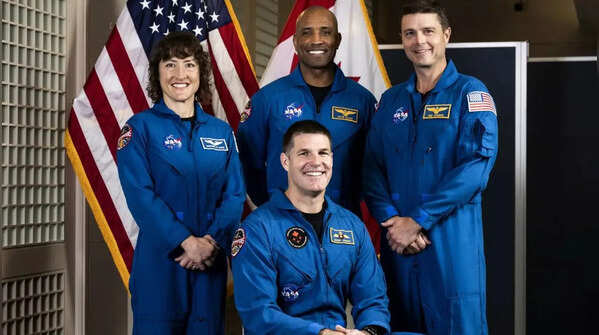
In 2023, Nasa selected the crew: Reid Wiseman, Victor Glover, Christina Koch, and Jeremy Hansen. The mission marked historic diversity as it included the first person of colour, the first woman and international collaboration in lunar exploration. (Image credit: PTI)

Why Artemis II matters
At its core, Artemis II focuses on verifying deep-space capabilities with a human crew, evaluating Orion’s critical systems such as life support, navigation, and communication, while laying the groundwork for upcoming lunar landing missions and long-term human exploration beyond Earth. (Image credit: Nasa)
Back to the Moon after 50 years
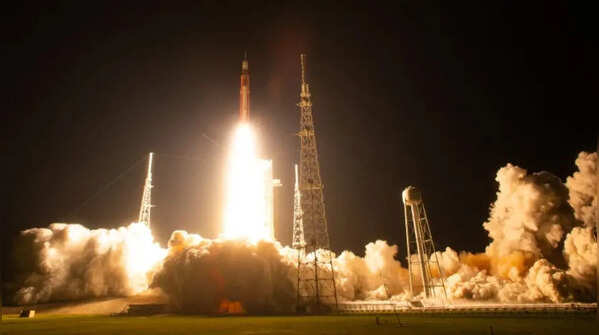
The mission launched aboard the SLS from Kennedy Space Centre on April 1 2026, at 6.35 pm ET (3.35 am, Thursday IST). It marked the first crewed lunar mission in over 50 years and sent four astronauts on a ~10-day journey toward the Moon. (Image credit: Nasa)

Breaking free from Earth
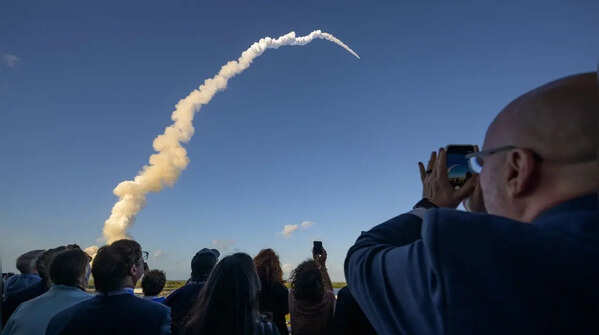
After reaching orbit, the rocket stages separated from Orion. The spacecraft deployed its solar arrays and continued independently. The crew began onboard operations, including navigation checks and system tests, as they travelled on a trajectory toward the Moon. (Image credit: Nasa)
The journey back home
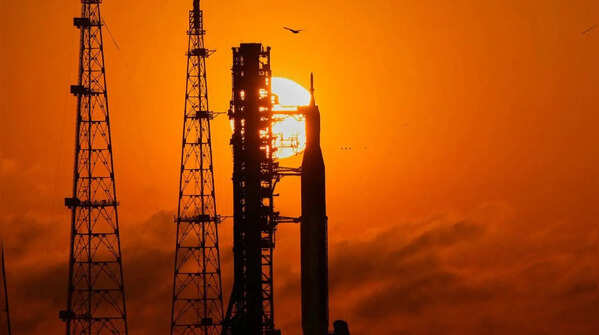
The mission is planned to last about 10 days, with a lunar flyby followed by high-speed re-entry into Earth’s atmosphere. Orion is expected to splash down in the Pacific Ocean, where the US Navy teams will retrieve the crew safely. (Image credit: AP)
Featured In Science

