
- News
- Science News
- 10 mysteries hidden beneath the ocean floor that scientists still can’t explain
10 mysteries hidden beneath the ocean floor that scientists still can’t explain

10 mysteries hidden beneath the ocean floor that scientists still can’t explain
Our oceans encompass over 70 per cent of the Earth's surface area; however, the depths of the oceans represent one of mankind's most mysterious frontiers. Under thousands of meters of water and tremendous pressure are many geological anomalies, biological marvels, and historically mysterious things that defy our existing scientific knowledge. Examples of this are the immortal jellyfish and the unlooted shipwreck of the San José. Various types of research articles from specialised journals and government archives may provide insight into these unknown depths by uncovering the multi-faceted submerged landscape created where nature and history interconnect. Exploring these abyssal plains reveals secrets of evolution and lost civilizations, highlighting that our blue planet still holds vast, uncharted territories awaiting sophisticated modern exploration.
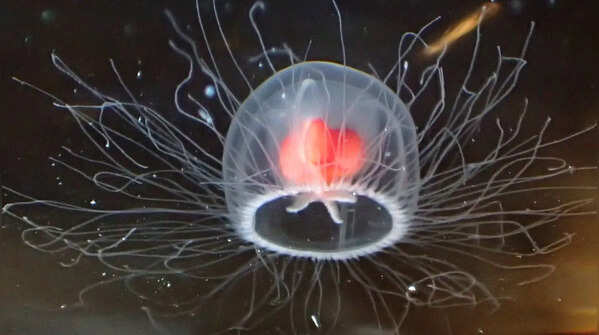
The Immortal Jellyfish
In the International Journal of Research in Engineering and Science, the researchers describe how the Turritopsis dohrnii is biologically immortal. It uses a process of ‘transdifferentiation’ to change from a fully developed adult medusa back to an earlier form, a colonial polyp, when it experiences stress or an injury. By returning to its polyp state, the organism is able to escape death and get an opportunity to continue its life cycle over and over again as long as it's not killed by another animal or has a disease.
PC: Wikipedia

The Fate Of The SS Waratah
According to the State Library of South Australia, the SS Waratah disappeared off the coast of Africa near Durban on July 27th, 1909, while travelling from Durban to Cape Town with a total of 211 people on board. Theories developed through contemporary investigations of the wreck indicate that the ship was likely lost due to capsizing from the effects of rolling (topography) or from an explosion in the coal bunker of the ship; however, despite extensive sonar mapping of the Agulhas Current, no physical wreckage has been verified.
PC: Wikipedia
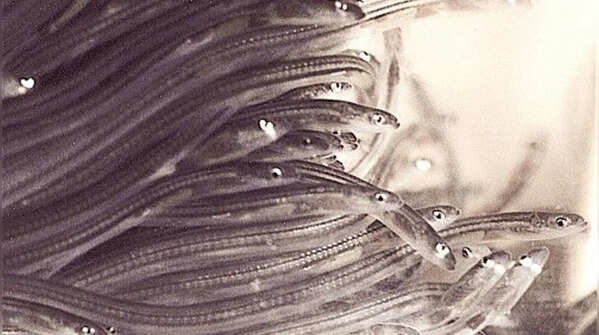
The Migration Of European Eels
During their migration to the Sargasso Sea, the European eel undergoes a complex metamorphosis known as ‘silvering,’ enabling them to navigate the 1,000s of kilometres they must swim from the freshwater rivers to the depths of the open ocean to spawn. Although much is known regarding where and how to get to the Sargasso Sea, it remains a major biological mystery exactly what cues eels use to navigate the deep ocean.
PC: Wikipedia

The Mariana Trench’s Unexplored Depths
Reports from the British Geological Survey show that the Mariana Trench is divided into five distinct hadal zones; separated by contiguous landmasses (topographic high areas) with each zone varying in depth and containing its own unique species of fish not found in other hadal zones; as well as being different geographically, these zones have been isolated from one another through limited genetic flow, which drives high levels of endemism, divergent evolutionary paths, and specialized biogeochemical productivity.
PC: Wikipedia

The Origin Of The Bimini Road
Research conducted by various universities has identified Bimini Road as a natural formation (beachrock). Carbon dating of the carbonate-cemented shell hash indicates that the blocks were formed approximately 2,800 years ago. The geologists who support this view argue that the road-like appearance of the Bimini Road is due to natural processes that occurred over time, such as coastal erosion and the natural jointing of the rocks. Geologists' claims about there being a man-made wall or pier in this area are completely inaccurate.
PC: Wikipedia
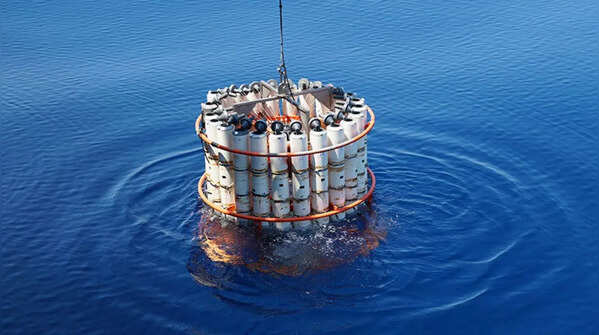
The Oceanic Nitrous Oxide Surges
The Ocean is thought to be an important source of nitrous oxide (a potent greenhouse gas) according to research featured in Biogeosciences. Sea surface microlayer or sea surface microlayer has been shown to contain significantly increased concentrations of nitrous oxide due to microbial nitrification and denitrification processes. Recent findings have suggested that phytoplankton blooms and photochemodenitrification may also contribute to increased nitrogen oxides concentrations; however, the relative contribution of these processes is still not clearly defined.
PC: University of Basil

The Behavior Of Dumbo Octopus
According to The MarineBio Conservation Society (TMCS), Grimpoteuthis or Dumbo octopuses dwell within the ocean at extreme depths between 3,000 meters and 4,000 meters. Unlike other cephalopods, Dumbo octopuses do not possess an ink sac and primarily rely on ear-like fins for movement. Dumbo octopuses utilise ‘pumping’ movement and ‘umbrella style’ for floating and drifting in the water column. The egg-laying of Dumbo octopuses sets them apart from all other cephalopods; they place their eggs on the seabed one at a time.
PC: Wikipedia
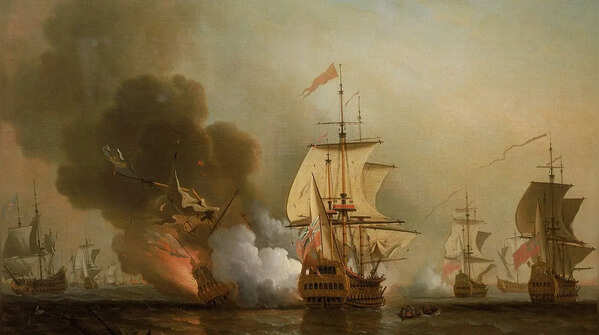
The Location Of San José’s Sunken Treasure
In order to protect the San José galleon from looting, the Colombian Government has kept the location of the wreck, which was submerged near Cartagena in 1708, at a depth of 600 meters, a government secret. There are vast amounts of gold and emeralds aboard the vessel. Additionally, legal disputes continue between Colombia, Spain, and recovery companies over who owns the ‘Holy Grail’ of shipwrecks.
PC: Wikipedia

The Yonaguni Monument’s Purpose
The Yonaguni Monument is a massive submerged sandstone formation under the ocean off the coast of Japan. Some have claimed that the rectangular shapes of the ‘steps’ and ‘pillars’ on the site are evidence of a lost civilisation, while a majority of geologists believe that they were formed naturally from bedding planes. The rectilinear formations may have been formed by tectonic shifting and erosion from sedimentary rock strata over millions of years.
PC: Wikipedia
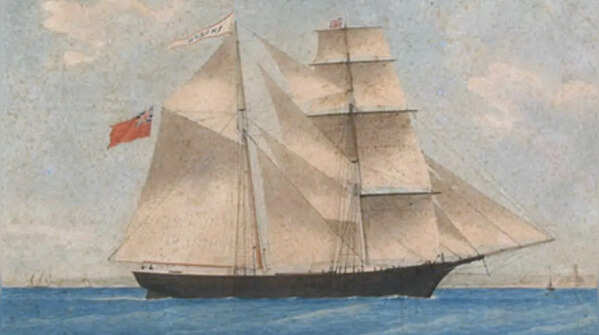
The Disappearance Of The Mary Celeste
In an analysis by EBSCO Research Starters, the Mary Celeste was found in 1872 drifting in the Atlantic Ocean near the Azores with no lifeboat and all of its cargo intact. New theories are being developed to explain why Captain Briggs evacuated into the lifeboat because no evidence of violence was discovered on board. One area of research suggests that vapours leaking from the ship's alcohol supply may have created an environment that Captain Briggs would have perceived as an imminent explosion, which caused a quick, orderly evacuation.
PC: Wikipedia
Featured In Science

