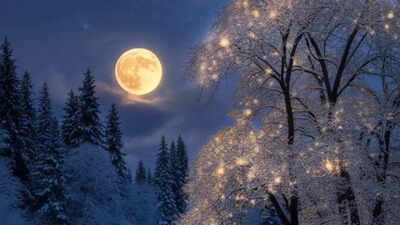
As the Snow Moon or February’s full moon prepares to illuminate the skies again on Sunday, February 1, 2026, experts and skywatchers are revisiting not just its beauty but the grimmer origins of its name. Far from being just a seasonal astronomical event, the Snow Moon traces its roots to Indigenous survival, seasonal scarcity and the harsh realities of life through long northern winters. It is a history that modern stargazers often overlook.
Snow Moon: A name born from hardship
The name “Snow Moon” itself reflects the stark conditions faced by Native American tribes and early winter societies. In the traditional lunar naming system, full moons were named according to seasonal cycles and natural events, serving as functional markers for annual survival strategies. According to lunar historians, the February full moon earned its name because February frequently brought the heaviest snowfalls of the year in the Northern Hemisphere, conditions that made travel difficult and food scarce, especially for hunter-gatherer communities.
Some tribes took this even further. The full moon was also widely known as the “Hunger Moon” because deep snow blanketed the land, making hunting nearly impossible and forcing communities to rely on diminishing food stores.
Other tribes referred to related names like “Bear Moon”, associated with the cautious re-emergence of hibernating bears, a subtle symbol of winter’s precarious balance between survival and renewal.