
Quote of the day by the Dalai Lama: “The training of the mind is an art. If this can be considered art, one’s life is art”
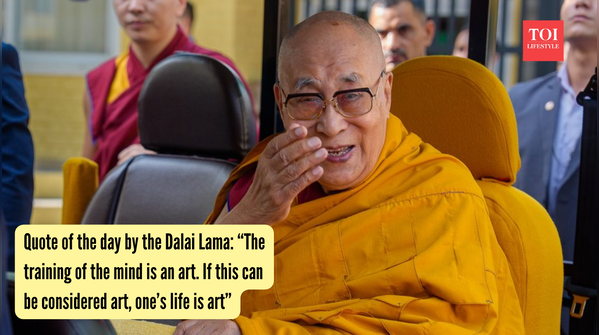
Quote of the day by the Dalai Lama “The training of the mind is an art If this can be considered art, one’s life is art”
We often look for meaning in the things we read, write, or see every day. So much so that sometimes even a single sentence stops us in our tracks and makes us see life differently. His Holiness the Dalai Lama XIV is one of the most respected spiritual leaders of our time. He said, “The training of the mind is an art. If this can be considered art, one’s life is art.”
His words are not just something to be imprinted on a calendar or read complacently. They actually explain one of the most important principles of our lives. It reminds us that our minds can be moulded, refined, and cared for, just like a painter designs a canvas or a potter beautifully shapes his pots and vessels.
The Dalai Lama has spent his life teaching about compassion, inner peace, self-reflection, and the power of a trained mind. His words carry a great impact because they come from decades of practice and wisdom.

Quote of the Day
“The training of the mind is an art. If this can be considered art, one’s life is art.”
— Dalai Lama XIV

What does this quote mean?
The quote tells us that our minds aren’t fixed. But they can be trained, just like any skill. The Dalai Lama compares mind training to art, something that takes time, patience, practice, creativity, and care. Just like an artist, who doesn’t rush, quietly and persistently refines their work over time. The same goes for taking control over our thoughts, emotions, and how quickly and rightly we react to situations.
When the Dalai Lama says “one’s life is art,” he means that once we treat our inner consciousness with this kind of attention, our entire life becomes creative and meaningful. Our wise and mindful choices, relationships, and daily actions start radiating peace, kindness, and purpose instead of confusion or reactivity.

So, how can we train our minds
Even though it takes time and effort, it reaps fruits and results that are effective and worth the wait. Mind training practices like meditation, mindfulness, and self-reflection help not only control our mind, but also help maintain inner peace and quieten the turmoil. Apart from that, regular meditation can reduce stress, improve emotional regulation, and even change the physical structure of the brain.
Featured In lifestyle

