
How often you should replace kitchen sponges and brushes and why leaving them wet is dangerous
Importance of kitchen sponges and brushes
Cleanliness is an integral part of a healthy and hygienic kitchen. While we often pay attention to kitchen platform, gas stoves, utensils, cupboard, fruits, veggies, chimney and all other things, but couple of things which plays a crucial role are always neglected-kitchen sponges and brushes. Kitchen sponges and brushes are the most crucial elements of a kitchen, as they touch utensils, crockery, cookware, the platform, and what not. Have you ever thought about checking their cleanliness? Also, how often do you change them? We answer that question today.
Kitchen sponges and brushes-breeding ground of pathogens
According to Ananya, a nutritionist, research has found that more bacteria live on your kitchen scrubs and sponges. “They are dirtier than your toilet seat. Kitchen scrubs and sponges harbour the largest amount of E.Coli and other fecal bacteria, mostly because they aren’t replaced as often as they should, and never dry up. Most of us use it for at least six months and never replace it,” she mentioned on Instagram, adding that these bacteria can cause mild to severe intestinal and skin infections.
What does the study say
According to a study, where five sponges were analysed, twenty unique bacterial foodborne pathogens were detected across total and viable sponge microbiomes, and three to six viable foodborne pathogens were identified in each sponge. Escherichia coli and Staphylococcus aureus were identified in each viable sponge microbiome, and viable E. coli were recovered from two sponges via targeted selective enrichment. These findings suggest that sponge‐associated bacterial communities are primarily viable and contain multiple viable bacterial foodborne pathogens. The dominating bacterial presence in domestic kitchens is partially driven by the number of bacteria present on dish sponges, which harbour the highest coliform levels of home kitchen contamination sites. Dish sponges can support bacterial survival and growth and transfer bacteria to other surfaces, they are considered bacterial reservoir disseminators.
Why leaving them wet is not a good idea
In India, we have a habit of keeping the sponges soaked in dish-washing liquid, thinking it is easy to use when needed. What we forget is that damp sponges and brushes propagate pathogens and spread them to dishes, utensils, and/or other surfaces increasing the chances of accidentally consuming them. Also, the habit of using the same sponge for utensils and kitchen countertops leads to bacterial growth.
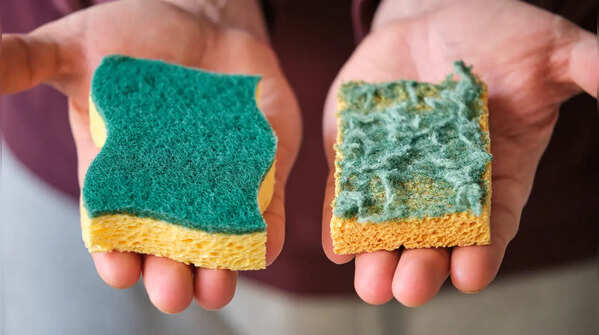
How often you should replace kitchen sponges and brushes
According to experts, here are a few ways to lower or eliminate bacterial growth.
1. Replace your scrubs/ sponges frequently.
2. Replace sponges and brushes between a period of 1-2 weeks and 1-2 months respectively.
3. Clean them daily after every wash.
4. Use hot soapy water to clean them daily.
5. Let them dry in the sun daily.
6. Store them in a dry place, which helps limit harmful bacteria from multiplying as quickly.
7. You can also microwave damp sponges and scrubs for one minute. Putting your scrubs/ sponge in the dishwasher can also help kill off harmful bacteria.
8. Keep separate sponges for utensils and countertops and cupboards.
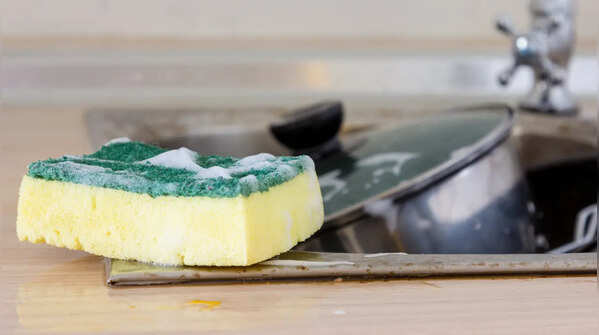
What does the study recommend as a precaution?
Consumers should be educated on the risks of bacterial foodborne pathogen exposure and the potential for cross‐contamination linked to dish sponge use. Elimination of sponges used for dishwashing and cleaning would prevent the associated risks of direct pathogen exposure and cross‐contamination. Also, handwashing before and after handling sponges may reduce the risks of direct pathogen exposure. Frequent dish sponge replacement may also mitigate these risks.
Images Courtesy: istock
Featured In Food

MORE FROM ETIMES
life & style