
- News
- India News
- Slaying fake news, one report at a time
Trending
This story is from May 15, 2017
Slaying fake news, one report at a time
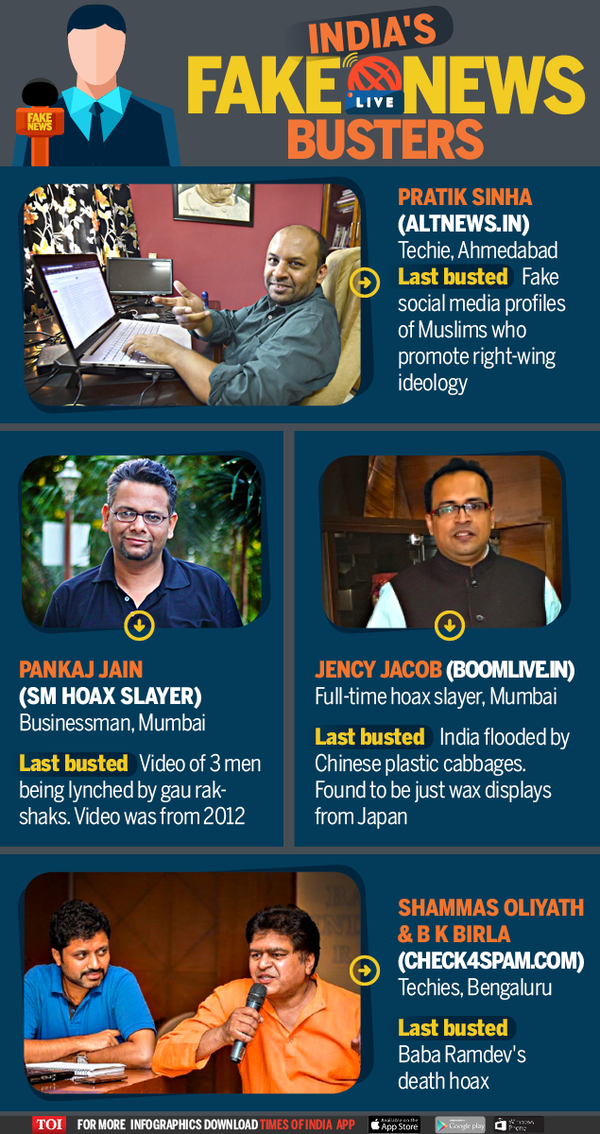
Around the world, fake news spread through social media has been blamed for distorting perceptions and political debate. UN special rapporteur on freedom of opinion and expression David Kaye recently flagged the problem of fake news and the “risk that efforts to counter it could lead to censorship, the suppression of critical thinking and other approaches contrary to human rights law.’’ A University of Oxford study revealed that nearly a quarter of web content shared on Twitter in the battleground state of Michigan, during the final days of the US election campaign, was so-called fake news. Researchers at the Oxford Internet Institute (OII) also found that users shared approximately as many fake news items as “professional news” over the same period. Here's a look at fake news that was busted in India.


Latest infographics More




End of Article
FOLLOW US ON SOCIAL MEDIA








Hot Picks
TOP TRENDING
Trending Stories
In India
Entire Website
- 'Diddy List': Names of celebrities connected to Sean Combs viral
- 10 Daily Habits for Students to Keep Their Minds Young and Sharp
- Kangana in dock again, BJP condemns MP's remarks on farm laws
- Lipstick leads to transfer of Tamil Nadu's woman duffedar
- 'Sir, do hi haath hain': Virat Kohli stumps Kanpur hotel staff - Watch
- "We Have Decided To Part Ways Respectfully": WWE Hall of Famer Announces Separation from Wife Wendy Barlow
- Single bullet mark found on left side of Badlapur Pocso accused's head: Autopsy report
- Massive crowds, unhelpful signage render Majestic interchange chaotic
- Mysuru-based woman’s startup bags top honour
- Chicago Bears Rookie Caleb Williams Under Siege as Girlfriend Alina Thyregod Shows Public Support
- Judges are also fallible, shouldn't shy away from accepting mistakes: Supreme Court
- J&K polls: Omar Abdullah slams govt for inviting foreign delegates to observe voting
- ‘I was molested in ambulance in which my husband was fighting for life’
- Trump says 'big threats on my life by Iran'
- Shiv Sena and MNS jostle to honour cops involved in Badlapur ‘encounter’ killing
- 'Hasn't done much...': Why is Omar Abdullah upset with ally Congress
- Why young people need to worry about that sneaky cholesterol
- Stock broking scam: How 15 men 'scammed' Zerodha of over Rs 2 crore
- Virat, Gambhir, Pant's buggy-ride goes viral; fans say 'teeno tabahi'
- 'Sir, do hi haath hain' - Virat Kohli stumps Kanpur hotel staff

Popular Categories
Hot on the Web
Top Trends
Trending Topics
Living and entertainment
Latest News
Who is Laurene Powell Jobs? Invisible hand behind Kamala Harris's riseGovernment urges these Microsoft users to immediately update their devicesAfter row over judge's Pakistan remark, Karnataka HC curbs on sharing live feedMemeFi daily codes for 25 September 2024: Boost your earnings with daily codes and know how to maximizeThrowback: When Preity Zinta faced backlash for saying Shah Rukh Khan engages in conversation with 'unattractive women'Pisces, Daily Horoscope Today, September 2, 2024: Financial growth is likelySilent killer who left no telltale signs of his late-night visitWWE RAW Suffers Lowest Viewership of 2024 Amidst Competition from Two Monday Night Football Games on September 23Why you should avoid falling for your best friendJasmine Bhasin pens a heartfelt note for beau Aly Goni on staying away from 11 days, writes 'For the first time in around 6.5 years'Alia Bhatt reveals she and Ranbir Kapoor chose Raha's name at Jr NTR's house: 'He wished to pick the same name for his daughter'Devi Sri Prasad receives overwhelming reactions from fans for performing 'Pushpa: The Rise' song 'Srivalli' at the ModiandUS event-WATCHEY Pune employee Anna Sebastian's death: Probe finds it lacked labour welfare permitSingle bullet mark found on left side of Badlapur Pocso accused's head: Autopsy report‘Ajayante Randam Moshanam’ box office collections day 13: Tovino starrer crosses Rs 70 crores'Hasn't done much...': Why Omar Abdullah is upset with ally Congress's Jammu campaignArtem Chigvintsev will not Face charges after domestic violence arrestHere’s what ChatGPT maker Open AI CEO has to say on taking psychedelic drugs that made 8 tech CEOs quit
Copyright © 2024 Bennett, Coleman & Co. Ltd. All rights reserved. For reprint rights: Times Syndication Service