
- News
- Health News
- Your glucometer says ‘normal,’ but your HbA1c tells a different story: Doctors on the three-month blood test and how often it should be taken
Your glucometer says ‘normal,’ but your HbA1c tells a different story: Doctors on the three-month blood test and how often it should be taken

HbA1c, or glycated hemoglobin measures the percentage of hemoglobin coated with sugar
If you’ve ever had a blood test for sugar, you’ve probably seen this term on your report—HbA1c. And for many people, it’s confusing. It doesn’t feel as straightforward as a fasting or post-meal sugar number. HbA1c, also called glycated hemoglobin, is a measure of how much sugar has been sticking to your red blood cells over time. When glucose moves through your blood, some of it naturally attaches to hemoglobin, the protein that carries oxygen. And once it sticks, it stays there for the life of that red blood cell, which is about three months.
So instead of telling you what your blood sugar is at one moment, HbA1c gives you an average of your sugar levels over the past 8 to 12 weeks. That’s why doctors often rely on it more. For most people, an HbA1c below 5.7% is considered normal. Between 5.7% and 6.4% fall into prediabetes. And anything 6.5% or higher usually points towards diabetes.
Why does it matter so much? TOI Health connected with Dr. Vrinda Agrawal, Consultant Endocrinology at CARE Hospitals, Banjara Hills, Hyderabad and Dr. Prudwiraj Sanamandra, Consultant - Endocrinologist and Diabetologist, Arete hospitals. Hyderabad to discuss this.
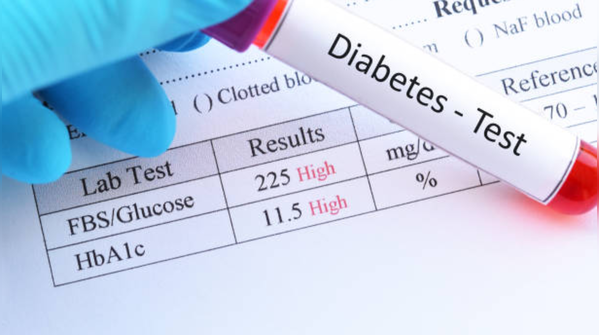
Why is HbA1c considered a more reliable indicator of diabetes control than daily blood sugar readings?
Dr. Vrinda Agrawal: As doctors, we look at HbA1c as the bigger picture. Daily blood sugar readings are like snapshots—they tell you what your glucose level is at that exact moment. That’s useful, of course, especially for day-to-day decisions. But HbA1c is more like a three-month report card. It gives you a sense of how sugars have been running over a period of time, not just what they are on a single day.
This matters because blood sugar doesn’t stay steady, it can go up and down with meals, stress, sleep, or even a minor illness. So it’s quite possible for someone to see a few good readings here and there, but still not have their diabetes as well controlled as it seems. HbA1c smooths out those ups and downs and gives us a more reliable sense of how well diabetes is being managed consistently. That’s why we depend on it so much when making treatment decisions.
How often should someone get their HbA1c tested, especially if their daily sugar levels seem normal?
Dr. Vrinda Agrawal: If someone has diabetes, even if their daily readings look perfectly fine, I usually recommend checking HbA1c every three months if we’re still adjusting treatment, and about every six months once things are stable.
The important thing to understand is that normal-looking daily sugars don’t always tell the full story. Often, people tend to test at the same time every day, usually first thing in the morning and those readings can look perfectly fine. But that doesn’t really tell you what’s happening the rest of the day, especially after meals, when sugars often go up.
HbA1c helps us catch those hidden patterns. So even if everything seems under control on the surface, regular testing ensures we’re not overlooking anything. It’s really about staying one step ahead rather than reacting later.

Can a person have normal fasting and post-meal sugar levels but still have a high HbA1c? What does that mean?
Dr. Vrinda Agrawal: Yes, and it’s something we do see in practice. A person might have normal fasting and even post-meal readings when they check, but still end up with a higher HbA1c. This usually means there are blood sugar spikes happening at times they’re not monitoring.
For example, sugars might be rising after certain meals, late at night, or even due to stress or poor sleep. If those spikes aren’t being captured, the daily readings can look reassuring, but the HbA1c tells us the average is actually higher than expected.
In simple terms, HbA1c can uncover what we call ‘hidden highs.’ When that happens, we take a closer look at patterns—sometimes using more frequent monitoring or continuous glucose sensors—to understand where those elevations are coming from. It’s a reminder that diabetes control isn’t just about a few good numbers, but about consistency throughout the day.
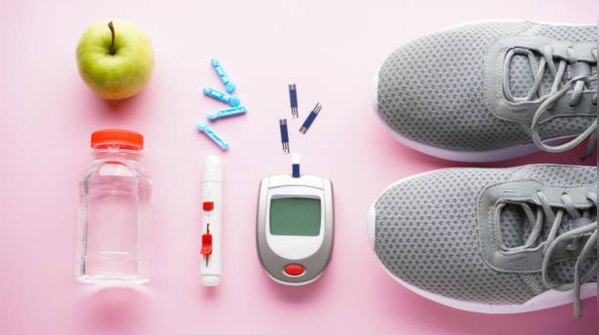
What lifestyle changes have the biggest impact on lowering HbA1c over time?
Dr. Prudwiraj Sanamandra: If I had to narrow it down, I’d say three things move the needle the most—what you eat, how much you move, and how consistent you are with both. Diet is usually the starting point. It’s not just about cutting sugar; it’s about overall carbohydrate quality and quantity. A lot of people underestimate how much refined carbs—like white rice, breads, and packaged snacks—can push sugars up through the day.
Then comes physical activity. You don’t need anything fancy, but you do need regularity. Even a brisk walk after meals can help bring down post-meal spikes, which in turn brings HbA1c down over time. Strength training also helps because it improves insulin sensitivity.
And finally, consistency. People often do very well for a few weeks and then slip back into old patterns. HbA1c reflects habits over months, so it responds best to steady, realistic changes—not extremes. Sleep, weight management, and even meal timing all add up, but only if they’re sustained.
At what HbA1c level should someone start worrying, and when is medication usually recommended?
Dr. Prudwiraj Sanamandra: In general terms, an HbA1c below 5.7% is considered normal. Between 5.7 and 6.4%, we’re looking at prediabetes, which is really a warning zone. Once it hits 6.5% or higher, that meets the criteria for diabetes.
But I wouldn’t look at it as a number that suddenly becomes ‘dangerous’ overnight. The concern rises as HbA1c goes up and stays up. The longer it remains elevated, the higher the risk of complications—eye, kidney, nerve, and heart problems.
As for medication, it depends on the overall picture. If someone is just over the threshold and motivated, we may give lifestyle changes a fair trial. But if HbA1c is significantly elevated—say closer to 7% or above—or if there are symptoms, then medication is usually started earlier rather than later.
The key is not to delay unnecessarily. Early control, whether through lifestyle, medication, or both, makes a big difference in the long run.
Medical experts consulted
This article includes expert inputs shared with TOI Health by:
Dr. Vrinda Agrawal, Consultant Endocrinology at CARE Hospitals, Banjara Hills, Hyderabad
Dr. Prudwiraj Sanamandra, Consultant - Endocrinologist and Diabetologist, Arete hospitals
Inputs were used to explain why is HbA1c is more reliable than daily blood sugar readings and how frequently individuals should take it.
Featured In Health

