
- News
- etimes
- animals-pets
- What do elephants and hyraxes have in common? Science reveals a stunning truth
What do elephants and hyraxes have in common? Science reveals a stunning truth
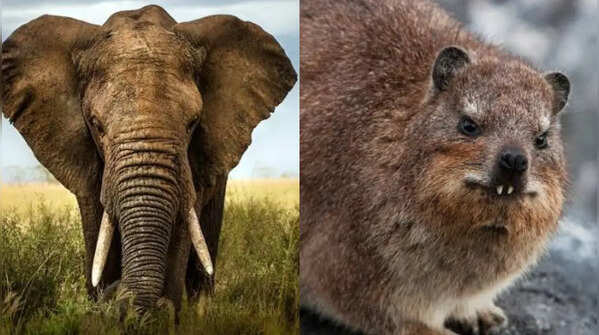
What do elephants and hyraxes have in common? Science reveals a stunning truth
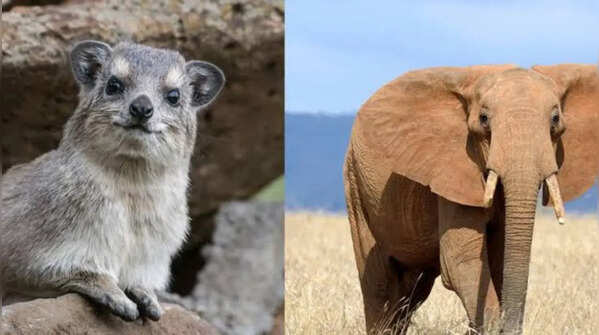
At first glance, elephants and hyraxes seem to have absolutely nothing in common. One is the largest land animal on Earth, capable of weighing several tons, while the other is a small, rabbit-like mammal that quietly lives among rocky cliffs in Africa and the Middle East. For decades, naturalists unsuccessfully tried to establish a taxonomic position for hyraxes. It was believed that these animals belonged to the rodent family due to their appearance. Modern research revealed one of the most intriguing discoveries made by evolution science. Elephants are genetically connected to hyraxes.
The animal that was not understood for centuries
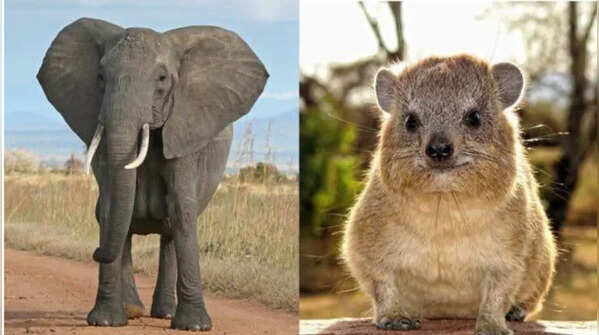
The hyrax is a herbivorous rodent-like animal having rounded ears, a short tail, and thick hair covering its body. Hiding from possible predators, this tiny creature spends most of its time either basking in the sun or scaling steep rock faces. Even though these mammals may remind humans of rodents, there are many peculiarities in their bodies that puzzled naturalists. As opposed to rats and rabbits, hyraxes' feet have rubber-like pads that provide a strong grip on stones similar to suction cups. The four front teeth of hyraxes emerge as if tusks and the nails seem hoof-like, rather than claw-like. Such an array of unusual characteristics indicated that hyraxes were not common small mammals.
Connection to elephants
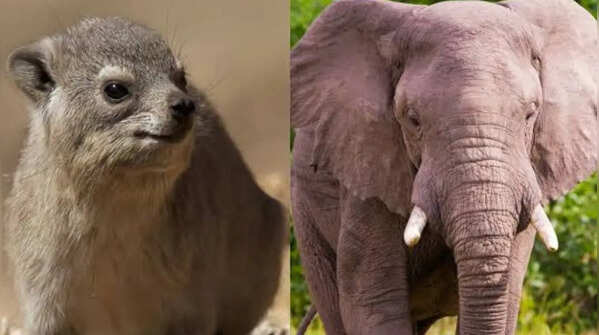
The mystery surrounding hyraxes was partially revealed after a more detailed analysis of anatomical and genetic information. Despite their significant dissimilarity in sizes, elephants and hyraxes have many unusual biological similarities.
They have very similar toenails and cushion-like feet, and hyrax tooth formation is similar to the development of elephant tusks. The biggest discovery was made via genetic analysis. It turned out that the the the hyrax is more genetically similar to elephants than it is to rodents. Moreover, both species are considered Afrotherians – representatives of mammals that appeared in Africa millions of years ago. In addition to that, the same group of mammals includes marine mammals like sea cows.
Millions of years of evolution
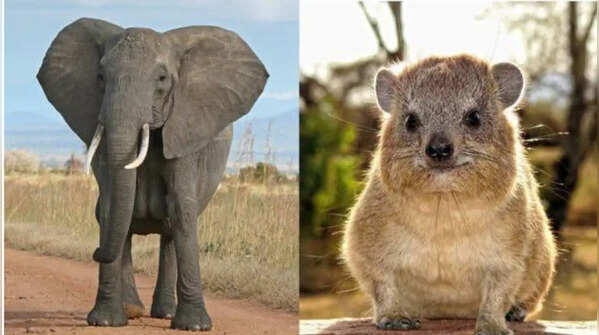
It is thought that the common ancestor of these species existed around 60 million years ago and looked quite different from both animals. However, over millions of years, evolution forced these creatures to develop in unique ways. The elephant acquired immense body weight, a trunk for grasping, and long, hard tusks for protection against enemies and harsh environmental conditions. Hyraxes, in turn, were forced to become smaller and more agile due to their rocky habitat.
The surprising family tree of nature
The connection between elephants and hyraxes has totally revolutionized the way we think about the evolution of mammals. It proved that surface appearances may not reflect reality, since genetics often reveal similarities our naked eyes cannot see. In fact, elephants and hyraxes represent one of the most unusual pairs of cousins in the whole of nature. While one is big enough to cause tremors when it moves, the other can hide in plain sight behind rocks.
Featured In etimes

