
- News
- etimes
- animals-pets
- 9 animals living in the wettest place on Earth: From a venomous snake and a creature that smells like popcorn
9 animals living in the wettest place on Earth: From a venomous snake and a creature that smells like popcorn

9 animals living in the wettest place on Earth: From a venomous snake and a creature that smells like popcorn
Mawsynram, a small village located in the state of Meghalaya, has the distinction of being the wettest place on Earth, with an enormous amount of rainfall occurring there each year. For most of us, this might sound like a rather unpleasant, even unlivable, condition. Despite the extreme rainfall, this region supports a surprisingly rich and diverse range of wildlife. The constant moisture and dense vegetation create ideal conditions for species that are specially adapted to thrive in such a unique environment.Yet, this extreme rainfall does more than shape the landscape—it constantly renews ecosystems, supports dense vegetation, and creates ideal conditions for specialised wildlife that depend on moisture-rich habitats to survive and evolve.
But as we see with many things, with nature, what might seem like an extreme condition might just provide an opportunity. The constant rain has created a rich, dense environment, full of life. The rain has created a forest, a misty landscape, and a rich soil that has made this region a biodiversity hotspot.
From rare mammals, through striking birds, to reptiles, the fauna of this region reflects its intensity. While some of them are well-known, others are not, but they are all uniquely suited to survive, even thrive, in one of the wettest climates on Earth.
PC: AI-Generated
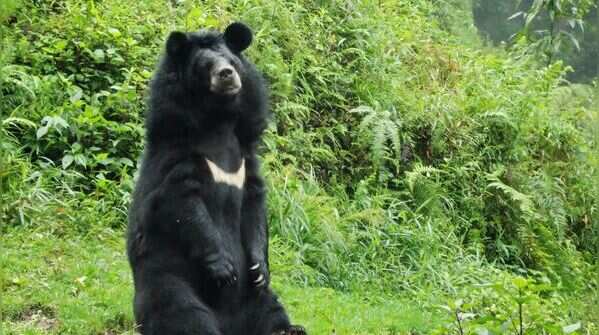
Asiatic black bear and its forest life
The Asiatic black bear, also called the moon bear, has a pale crescent-shaped mark on its chest. It has powerful claws, which enable it to climb well, as well as a strong sense of smell.
It uses these skills to search for food, especially in the forest. Although it is a shy creature, it might prove harmful if threatened, especially in its natural environment.
PC: Wikipedia
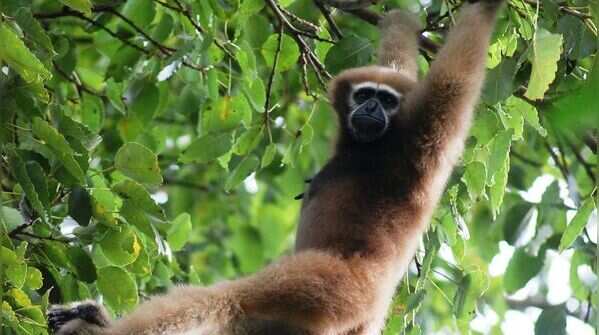
Hoolock gibbon and India’s only ape
The western hoolock gibbon is the only ape found in India. They are well adapted to life in the forests of Meghalaya. They swing through the trees with their long arms. They are seldom found on the ground.
The western hoolock gibbon is known for its loud, melodious calls, which are usually given in pairs.
PC: Wikipedia
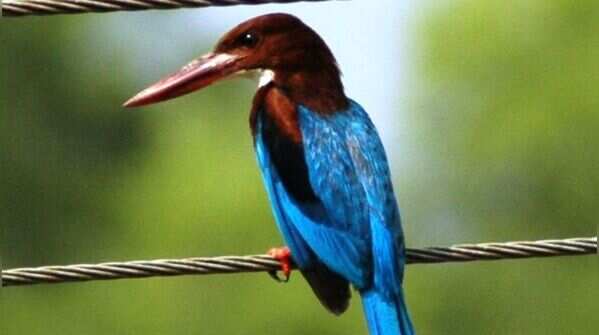
White-throated kingfisher and its varied diet
The white-throated kingfisher is identified by its bright blue wing colours and white throat. However, it is not restricted to water-borne hunting.
The white-throated kingfisher consumes a variety of foods, including reptiles, amphibians, rodents, and even other birds. This flexibility helps it to prosper in different conditions in the region.
PC: Wikipedia

Asian palm civet and its unusual diet
The Asian palm civet is a nocturnal mammal that spends most of its time in the trees. It is mainly a fruit-eating animal, which helps to spread fruit seeds in the forest.
It is also known for being the source of civet coffee. While this has made the animal quite famous, there are some concerns that have been raised regarding its welfare.
PC: Wikipedia

Clouded leopard and its life in the trees
Clouded leopards are one of the most elusive predators in the Meghalaya forest. The clouded leopard can be easily identified due to the cloud-like spots on its fur. Therefore, they are perfectly adapted to stay in dense forest habitats.
Unlike other big cats, clouded leopards are excellent climbers. They spend most of their time in trees while hunting. They are perfectly adapted to climb trees due to their flexible bodies and strong limbs. However, they are in danger due to the destruction of their habitats and human interference.
PC: Wikipedia
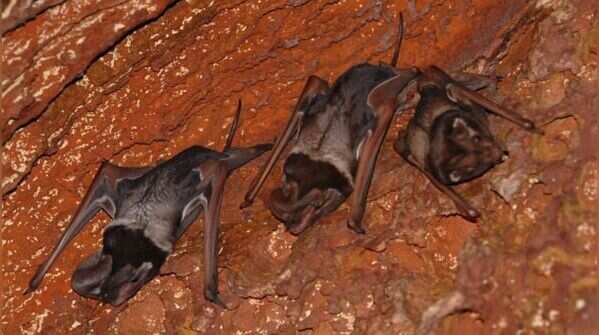
Wroughton’s free-tailed bat and its mystery
Hiding in dark caves and dense forest regions, Wroughton’s free-tailed bat is one of India’s least understood mammals. While it was thought to exist only in the Western Ghats till now, the recent discovery in Meghalaya has come as a surprise.
Till today, very little is known about the behaviour, population, and migration patterns of this rare species. The elusive nature of the species makes it difficult to study, adding to the enigma surrounding this rare creature.
PC: Wikipedia
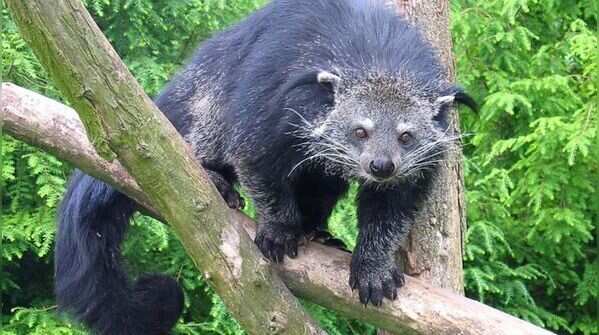
Binturong: The animal that smells like popcorn
Some of the more unusual animals in Meghalaya include the binturong, which is also called the bearcat. This animal spends most of its life in trees and uses its prehensile tail to climb through trees with ease.
The most interesting part of this animal is its smell. The smell that this animal emits is similar to buttered popcorn due to a chemical in its urine. While this may sound weird, this smell actually helps this animal mark its territory and communicate with its own kind.
PC: Wikipedia

King cobra and its surprising behaviour
The king cobra is perhaps the most popular reptile in this region, and for a very good reason. It is the longest venomous snake in the world and can reach lengths of more than five metres. Its ability to lift its body and confront potential threats at eye level is perhaps what makes it so intimidating.
The king cobra, despite its very potent venom, is not an aggressive snake. It avoids human contact as much as possible and only strikes if it feels threatened. What is perhaps most surprising is that it is also the only species of snake that builds nests to protect its eggs.
PC: Wikipedia
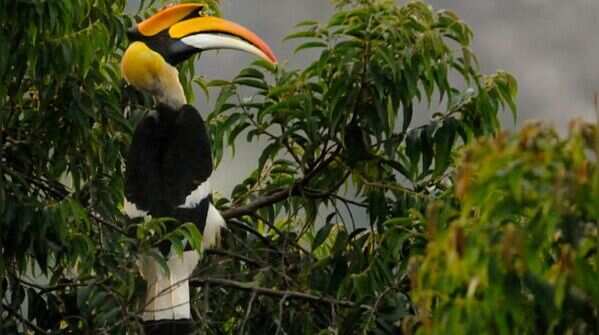
Great hornbill and its role in the forest
One of the most striking birds that can be spotted in Meghalaya is the great hornbill. While it is quite impossible to miss this bird due to its large size and the casque that it sports, there is much more to this bird than meets the eye.
The hornbill is a fruit-eating bird that travels quite long distances to search for food. In doing so, it helps to spread the seeds of the plants across the forest, ensuring that more plants are grown in other areas of the forest too. Without birds such as this one, it would be impossible for the forest to sustain itself.PC: Wikipedia
Featured In etimes

