
- News
- City News
- bengaluru News
- Fuel switch cuts off again: Safety safeguard failure on Air India’s London–Bengaluru 787; what it reveals
Fuel switch cuts off again: Safety safeguard failure on Air India’s London–Bengaluru 787; what it reveals

Fuel Control Switch Moves Unexpectedly
During a February 1 engine start at London Heathrow, an Air India B787 fuel control switch moved from “run” to “cut-off” without the required lift action, suggesting a technical safeguard failure. (PHOTO CREDIT: AI)

Incident During Routine Lock Check
A crew member lightly pressed the left fuel control switch to verify its lock mechanism, revealing that it moved even though the safety feature was not engaged. (PHOTO CREDIT: AI)

Safety Feature Partially Fails
The aircraft’s two-step fuel switch system is designed to prevent inadvertent fuel shutoff. The switch failed to lock on two attempts, only functioning correctly on the third try. (PHOTO CREDIT: AI)

Flight Proceeded to Bengaluru
After testing the fuel switch and observing its inconsistent behavior, the B787 (VT-ANX) departed London at 9:40 pm for Bengaluru, where it is currently grounded for safety checks. (PHOTO CREDIT: AI)

Raises Questions About Switch Design
The London incident highlights a potential design flaw in the B787 fuel control switch, specifically regarding locking integrity and the possibility of inadvertent activation during routine handling. (PHOTO CREDIT: AI)

Challenges Pilot Error Narrative
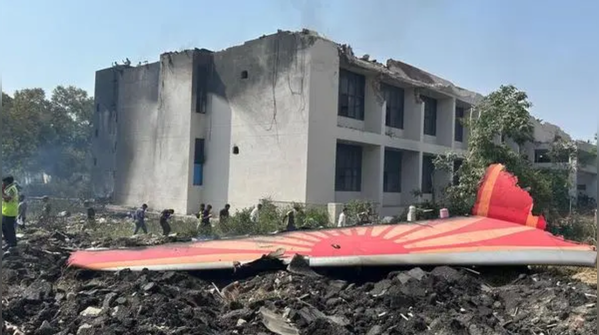
The event challenges the assumption that the June 12 Ahmedabad crash was caused by deliberate pilot action, pointing instead to a possible technical issue in the aircraft’s fuel switch system. ( Photo Credit: Ahmedabad crash/ TOI)

Suggests Fleet-Level Implications
The incident underscores that fuel cutoff could occur due to mechanical detent failure or signal issues, implying the need for fleet-wide investigation rather than focusing solely on pilot actions. (PHOTO CREDIT: AI)

Regulatory Oversight Under Scrutiny
The occurrence questions earlier DGCA fleet clearance, as a defect appearing months later suggests prior inspections may have been visual, non-diagnostic, or incomplete. (File Photo of Ahmedabad plane crash/TOI)
Implications for AAIB Investigation
The Air Accident Investigation Bureau must now broaden the probe to include component-level and fleet-level analysis, rather than assuming fuel cutoff equals pilot intent. (File photo of Ahmedabad plane crash/TOI)

Technical, Not Intentional, Failure Possible
Sources conclude that uncommanded switch behavior, whether mechanical or signal-related, is a credible failure mode, emphasizing the need for a detailed technical examination of the aircraft’s fuel control systems. (PHOTO CREDIT: AI)
Featured In City

