
- News
- World News
- US News
- ‘Nato must be stronger’: US Defense Secretary Hegseth seeks more support to Ukraine
Trending
‘Nato must be stronger’: US Defense Secretary Hegseth seeks more support to Ukraine
US secretary of defense Pete Hegseth urged European Nato allies to increase military spending and support Ukraine, emphasizing the need for Nato to be a more formidable military force. He called for more equitable burden-sharing in defense, suggesting a target of 'north of 3%' of GDP. Discussions also focused on the war in Ukraine, with Trump administration's position on military aid under scrutiny.
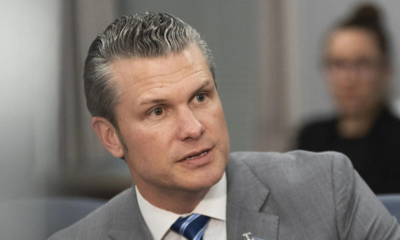
File pic US Secretary of Defense Pete Hegseth (Photo credit - AP)
Hegseth emphasized the need for Nato to evolve from a "diplomatic club" to a more formidable military force, AP reported.
"Arrived at Nato HQ. Our commitment is clear: Nato must be a stronger, more lethal force -- not a diplomatic club," Hegseth wrote on X. "Time for allies to meet the moment."
This visit comes as Nato members anxiously await clarity from the Trump administration on its defense priorities.
The high-level visits will culminate with Vice President JD Vance meeting Ukrainian President Volodymyr Zelensky at a security conference in Munich on Friday.
The Pentagon chief Hegseth on Wednesday will sit down with an international coalition of Ukraine's backers before huddling with the 31 other defence ministers from Nato on Thursday.
Speaking before his meeting, Hegseth reaffirmed the US position, stating that European nations must invest more in their own security and contribute more to collective defense.
"The European continent deserves to be free from any aggression, but it ought to be those in the neighborhood investing the most in that individual and collective defense," he said.
Trump has long accused NATO allies of underfunding the alliance and has suggested increasing defense spending to 5% of GDP, a target far beyond the reach of most member nations.
Nato Secretary General Mark Rutte indicated that a more achievable target might be set at "north of 3%.”
In 2024, Nato allies in Europe and Canada contributed $485 billion to defense, marking a nearly 20% increase compared to 2023, said Rutte.
"But we need to do a lot more so we have what we need to deter and defend. And so that there is more equitable burden sharing," he said.
Another key topic of Hegseth’s discussions is the war in Ukraine, which is nearing its third year. Trump has promised to negotiate a quick resolution to the conflict, but little has been revealed about the specifics of his plan.
For now, the focus is on urging European nations to increase their military aid to Ukraine, a shift that has been endorsed by Trump’s national security advisor, Mike Waltz, who stated that "the Europeans have to own this conflict going forward."
Under former President Joe Biden, the US provided tens of billions in military assistance to Ukraine. Trump’s administration has yet to offer new support, even though there are still several billion dollars in military aid budgeted under Biden that have not been allocated.
Rutte acknowledged the efforts made by Nato allies, stating that they had surpassed their pledge of 40 billion euros in military aid to Ukraine, with more than half of that coming from Europe and Canada.
"It also takes a big step in the direction of what President Trump has called for. I agree with him that we must equalise security assistance to Ukraine," Rutte said.
The meeting of Ukraine’s supporters will be chaired by Britain, marking the first time the US has not led the gathering. Several Nato members, including Britain, are expected to announce new military support for Ukraine at the event.

About the Author
TOI News DeskEnd of Article
FOLLOW US ON SOCIAL MEDIA








Photostories

Hot Picks
TOP TRENDING
Explore Every Corner
Across The Globe
Anna HorfordBronny JamesIbrahim ZadranElon MuskAuston MatthewsTaylor Swift Dinner ConversationTallest WWE SuperstarLebron JamesWho is Jeff Hardys WifeLuka DoncicJoel EmbiidTravis KelcePascal SiakamElon Musk Canadian CitizenshipCUET PG Exam ScheduleGold Card vs Green CardMike TroutAuston MatthewsThe Great KhaliCade CunninghamWhere is Rickey HendersonHowie RosemanTrump Gold CardWho is Jade Cargills HusbandBank HolidaysChampions Trophy Live Streaming in USAChampions Trophy Points TableChamopions Trophy Live Streaming in CanadaChampions Trophy ScheduleICC Champions Trophy Live Streaming
Hot on the Web
Ranveer AllahbadiaNikki TamboliCelebrity MasterchefGold Card US VisaRamadan 2025Maha shivratri WishesRamadan 2025Maha Shivratri Dos and Don'tsPankaj ParasharTanmay BhatBaba Vanga PredictionsIbuprofen GuideChhaava Box Office CollectionYuzvendra ChahalCloves BenefitsChia Seeds BenefitsDibyendu BhattacharyaSuperstar RajinikanthMemory Weaken HabitsWeight LossUnique AnimalsJade PlantsIconic Tiger ReservesInspiring Motivational LinesNew Animal SpeciesChhaava Movie ReviewUnderrated Tiger ReservesDeer Wildlife ParksGobhi Dinner IdeasJade Plants
Trending Topics
Luka DoncicJoe BurrowAuston MathewsTaylor SwiftAaron RodgerLuka Doncic DramaTyrese HaliburtonCody BellingerCam NewtonTravis KelceAaron JonesMatthew TkachukTulsi GabbardLebron JamesMax ScherzerMikko RantanenNyt StrandsNyt ConnectionsVille HussoKing Legacy CodesDa Hood CodesWordle HintsDonald TrumpBruce BoudreauChris WebberBill BelichickChampions Trophy 2025 Points TableNitish Kumar CabinetJujutsu Infinite CodesICC Champions Trophy 2025 Live Streaming
Popular Categories
HeadlinesSports NewsBusiness NewsIndia NewsWorld NewsBollywood NewsHealth+ TipsIndian TV ShowsTechnologyICC Champions TrophyIPLTravelEtimesHealth & FitnessHollywood NewsWeb SeriesWWEUS NewsNFLHow to watch IPL 2025How to watch IPL in CanadaHow to watch IPL in USACBSETechnology NewsInternational SportsAstrologyPublic HolidaysBank HolidaysIndia vs New ZealandEducation Boards
Latest News
Celebrity MasterChef: Tejasswi Prakash’s recreates the Poo moment on “Kaun Hai Jisne Mujhe Mudke Nahi Dekha?”Donald Trump administration slashes 90% of USAID foreign aid contracts, documents revealWhy Did Los Angeles Lakers Tribute Video Hit Anthony Davis So Hard? His Reaction Says It All48hr deadline set to trace missing SLBC workers in collapsed tunnelCabinet clears decks for tabling of Waqf billEU to be slapped with 25% tariff: US president Donald TrumpMilitary plane crash in Sudan kills 46Israel, Hamas resolve delay in Palestinians release, 4 hostage bodies to be returnedUN chief to visit Bangladesh in MarchTrump administration creates registry for immigrants who are in the US illegallyMusk takes centrestage at Trump's first cabinet meet as prez backs layoff spreeTrump says Ukraine could 'forget about' joining NATO as he prepares to host Zelenskyy for talksDonald Trump says Ukrainian leader Volodymyr Zelensky to sign minerals deal in USIllinois Governor Pritzker compares Trump administration to Nazi Germany, warns 'end of constitutional republic''Cognizant no longer at bottom of stack''India needs 1.2-1.5 tax buoyancy for 7% growth'Space sector to grow 5x in next decade, says Union minister Jitendra SinghUltraviolette plans 3 electric bikes & long-range scooter
Copyright © 2025 Bennett, Coleman & Co. Ltd. All rights reserved. For reprint rights: Times Syndication Service