
- News
- World News
- Middle East News
- Israel targets Syria: 480 strikes in 48 hours after Assad’s ouster
Trending
Israel targets Syria: 480 strikes in 48 hours after Assad’s ouster
Israel launched approximately 480 airstrikes in Syria over two days, targeting military installations after the removal of President Assad. The IDF aimed to prevent strategic weapons from reaching terrorist groups, striking airfields, naval vessels, and weapons production sites. Israeli leaders view Assad's ouster as a regional turning point but express concern about potential extremist threats.
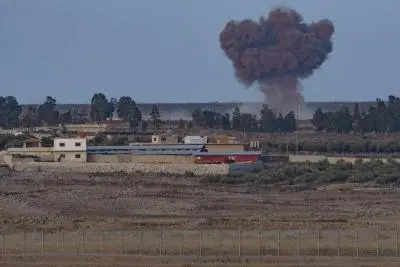
Israel has ramped up airstrikes across Syria and carried out significant ground operations, targeting critical military infrastructure in the wake of President Bashar al-Assad's government collapse, according to a war monitor on Tuesday.
"Within the last 48 hours, the IDF (Israel Defense Forces) struck most of the strategic weapons stockpiles in Syria, preventing them from falling into the hands of terrorist elements," the Israeli military said.
The strikes reportedly destroyed naval vessels, anti-aircraft systems, and weapons production sites across major cities, including Damascus, Homs, Tartus, Latakia, and Palmyra.
For more information, follow: Syria civil war live updates
The strikes come amidst a broader regional shift, with Israeli Prime Minister Benjamin Netanyahu describing Assad's ouster as a turning point. “The collapse of the Syrian regime is a direct result of the severe blows with which we have struck Hamas, Hezbollah, and Iran,” Netanyahu said during a press conference on Monday. “As I promised, we are changing the face of the Middle East.”
Israeli leaders have expressed concern about the uncertainty following Assad’s downfall. While celebrating the removal of an ally of Iran and Hezbollah, officials worry about the potential rise of radical Islamist factions governing Syria.
Foreign minister Gideon Sa’ar emphasized the importance of immediate action to safeguard Israel’s security. "We are targeting military facilities housing chemical weapons and long-range missiles to prevent them from falling into the hands of extremists," he said on Monday.

About the Author
TOI World DeskEnd of Article
FOLLOW US ON SOCIAL MEDIA










Photostories

Hot Picks
TOP TRENDING
Popular Categories
Hot on the Web
Top Trends
Bengaluru Techie SuicideIndia vs AustraliaCSJMU Admit CardTravis Hunter FianceRohit SharmaCISF Constable Fire Admit CardZomato GST Demand NoticeGautam GambhirVirat KohliIsha GuhaD GukeshBrisbane Weather UpdateNTA ApplicationUS CollegesAIBE 19 Admit CardWBCHSE Class 11 12 SyllabusJEE NEET QuestionsLive Cricket Score
Trending Topics
Pushpa 2 America Box Office CollectionPushpa 2 ReviewZakir Hussain Death NewsOptical illusionTaylor SwiftBaba VangaThe Christmas Chronicles 3Diabetes Type 2Weight LossIndia’s Got LatentTabla Maestro Zakir HussainShahid AfridiFull Cold Moon December 2024Skincare Tips for WinterWeight Loss TipsHair FallNYT ConnectionsNarayana MurthyElon Musk
Living and entertainment
Latest News
Prem Sagar reveals how Raj Kapoor's father Prithviraj Kapoor helped Ramanand Sagar: 'Raj Kapoor was moved to tears after Papaji narrated the story of Barsaat' - ExclusiveWhat Christmas lights can do to your sleep cycle?Sharmila Tagore reveals Shatrughan Sinha was 'notoriously' late during the shoot of 'Dostana': 'He is biologically incapable of being on time'Will Donald Trump Jr and Kimberly Guilfoyle now sell their $14 million Florida house?Kareena Kapoor Khan, Karisma Kapoor and Amrita Arora join Malaika Arora for a fun-filled night at her new restaurantBigg Boss 18: Eisha Singh changes Avinash Mishra’s ‘Single’ status to ‘With Eisha’ in the nominations taskMyanmar's war has forced doctors, teachers and nurses into prostitutionLiv Morgan and Rhea Ripley Go Head-to-Head on X Before WWE RAW“‘I didn’t even know how to get into a 3-point stance’: Gable Steveson Reflects on His Short Bills Career”Tory peer faces suspension for 'Lord Poppadom' jibeJagmeet Singh calls for Justin Trudeau's resignation after Freeland's exit: 'He has to go'12-year-old girl in UK booked for killing 80-year-old Indian-origin manTrump: Deal needed to end war, will talk to Putin and ZelenskyyAkshay Kumar's funny reaction to reporter about his eye injury on the set of 'Housefull 5' goes viral: 'I can see you'Bangladesh to hold elections in late 2025 or early 2026: Muhammad YunusVijay Sethupathi gets annoyed on being asked about Thalapathy Vijay's 'The GOAT' and Suriya's 'Kanguva' failure: 'Why should I talk about them?'Madhuri Dixit rents her office space in Mumbai for Rs 3 lakh per month: ReportSonakshi Sinha slams Mukesh Khanna for his remarks on her father Shatrughan Sinha and her upbringing: 'The next time you decide to comment on the values...'
Copyright © 2024 Bennett, Coleman & Co. Ltd. All rights reserved. For reprint rights: Times Syndication Service