
- News
- World News
- Europe News
- In maps: The latest on Russia's invasion of Ukraine
Trending
This story is from March 22, 2022
In maps: The latest on Russia's invasion of Ukraine
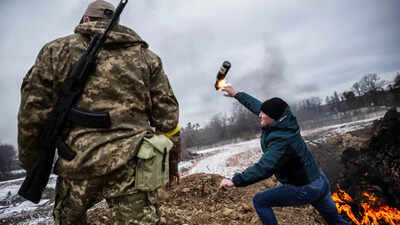
NEW DELHI: Nearly a month into its invasion, Russia's initial aim of an easy change in government in Kyiv is long gone. While the Russian military still has a strong hand, President Vladimir Putin's forces are now resorting to long-range missiles and other weapons to bombard cities from afar.
Here's what you need to know about the invasion ...
The four axes of war

— Kharkiv axis: Although under siege, Kharkiv has not yet fallen to Russian forces because of successful local Ukrainian counterattacks.
— Donbas axis: Russian forces and pro-Russian separatists have been advancing for complete control of Luhansk and Donetsk oblasts, but have not yet succeeded.
— Crimea axis: Russian forces appear to be encircling Mykolayiv from the east. If secured, Russia’s next strategic move may be towards the historic city of Odessa.
The refugee crisis
About 3.3 million Ukrainians have fled to various EU countries since the start of the war. The European Union estimates that about half of them are children.
The ongoing struggle in Mariupol has become a focal point of Russia's assault on Ukraine.
Hundreds of thousands of civilians are suffering through Russian bombardments laying waste to their besieged city.
Mariupol authorities have said only about 10% of the city's population of 430,000 has managed to flee over the past week. The Mariupol City Council has asserted that several thousand residents were taken into Russia against their will.
Atomic worries
Earlier this month, Russian forces seized the Zaporizhzhia nuclear power plant in eastern Ukraine, the largest nuclear plant in Europe, after a building at the complex was set ablaze during intense fighting with Ukrainian defenders.
Fears of a potential nuclear disaster at the plant had spread alarm across world capitals before authorities said the fire in a building identified as a training centre had been extinguished.
The US Embassy in Ukraine called the Russian assault on the Zaporizhzhia plant a “war crime.” Pentagon spokesperson John Kirby said it showed how reckless the Russian invasion has been.
In another worrying development, Ukraine's nuclear regulatory agency said radiation monitors around the decommissioned Chernobyl power plant, the site in 1986 of the world's worst nuclear meltdown, have stopped working. Russian forces had captured the plant at the beginning of their invasion.
David vs Goliath
Ukraine started bolstering its defence spending since the annexation of Crimea in 2014. Western military aid, including supplies of US Javelin anti-tank missiles and Turkish drones, further boosted its armed forces.
Despite this, Ukraine is no way near as powerful militarily as its neighbour.
According to SIPRI Military Expenditure Database, Russia is the 8th largest military spender in the world while Ukraine is at the 40th position.
Ukraine’s armed forces of more than 200,000 service members, not including the paramilitary, are less than a quarter the size of Russia’s.
Breakaway regions
On February 21, Russian President Vladimir Putin signed a decree recognising two breakaway regions of Ukraine as independent entities, the self-proclaimed Donetsk People’s Republic (DPR) and the Luhansk People’s Republic (LPR).
Russian-backed separatists in the Donetsk and Luhansk regions - collectively known as the Donbass - broke away from Ukrainian government control in 2014 and proclaimed themselves independent “people’s republics,” until now unrecognised. It was the same year Russia took over an area in southern Ukraine called Crimea.
Ukraine has said it will never recognise Russia's control over Crimea, the independence of the Russian-backed rebel regions of Luhansk and Donetsk or the vast additional territory taken by Russia.
(Maps credit: Reuters)
Here's what you need to know about the invasion ...
The four axes of war
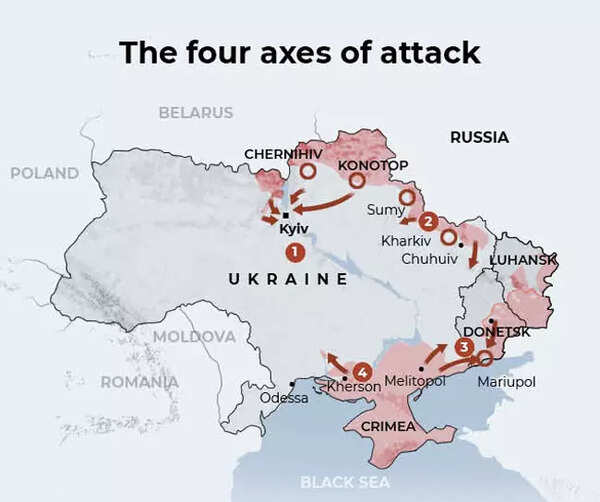
— Kyiv axis: Russia's advance aims to encircle the capital from the northwest, west and east.
The Russian military is slowly closing in on the city and the shelling has intensified.
— Kharkiv axis: Although under siege, Kharkiv has not yet fallen to Russian forces because of successful local Ukrainian counterattacks.
— Donbas axis: Russian forces and pro-Russian separatists have been advancing for complete control of Luhansk and Donetsk oblasts, but have not yet succeeded.
— Crimea axis: Russian forces appear to be encircling Mykolayiv from the east. If secured, Russia’s next strategic move may be towards the historic city of Odessa.
The refugee crisis
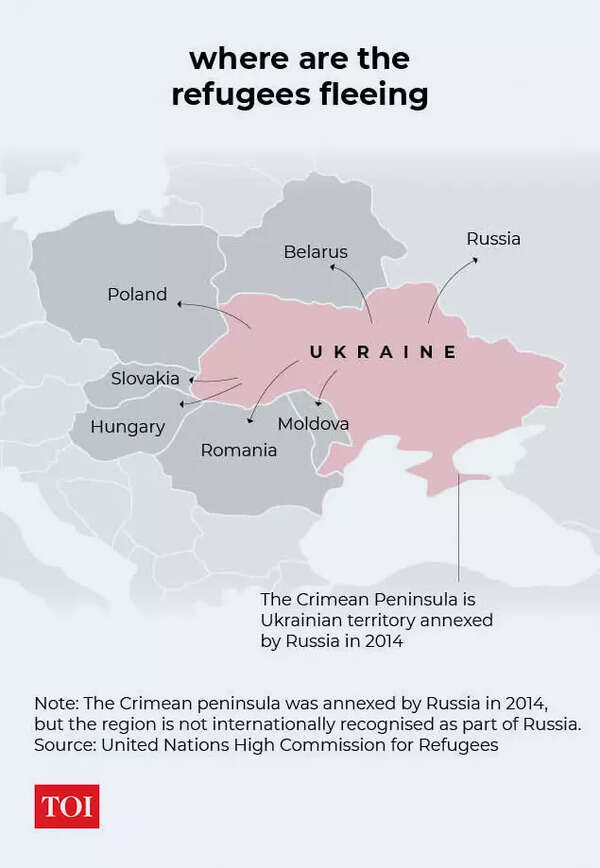
About 3.3 million Ukrainians have fled to various EU countries since the start of the war. The European Union estimates that about half of them are children.
The ongoing struggle in Mariupol has become a focal point of Russia's assault on Ukraine.
Hundreds of thousands of civilians are suffering through Russian bombardments laying waste to their besieged city.
Mariupol authorities have said only about 10% of the city's population of 430,000 has managed to flee over the past week. The Mariupol City Council has asserted that several thousand residents were taken into Russia against their will.
Atomic worries
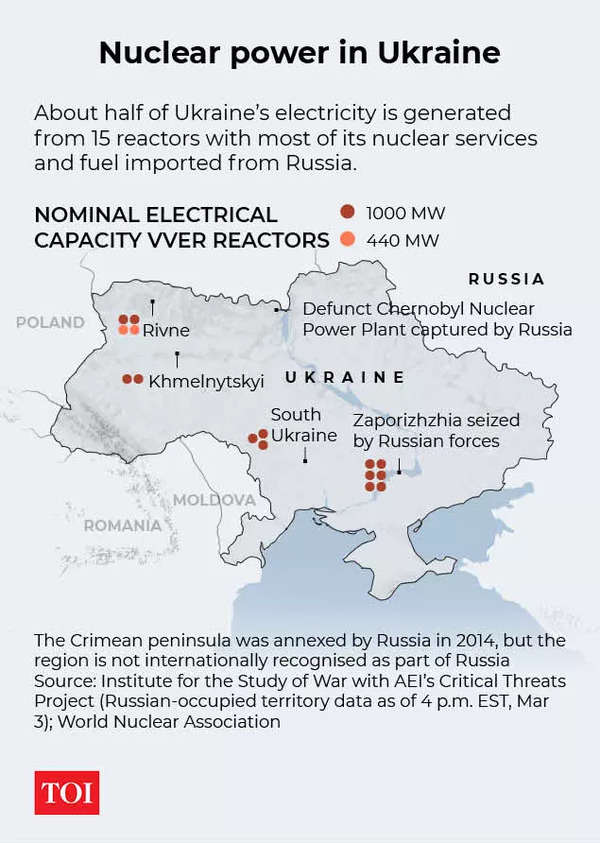
Earlier this month, Russian forces seized the Zaporizhzhia nuclear power plant in eastern Ukraine, the largest nuclear plant in Europe, after a building at the complex was set ablaze during intense fighting with Ukrainian defenders.
Fears of a potential nuclear disaster at the plant had spread alarm across world capitals before authorities said the fire in a building identified as a training centre had been extinguished.
The US Embassy in Ukraine called the Russian assault on the Zaporizhzhia plant a “war crime.” Pentagon spokesperson John Kirby said it showed how reckless the Russian invasion has been.
In another worrying development, Ukraine's nuclear regulatory agency said radiation monitors around the decommissioned Chernobyl power plant, the site in 1986 of the world's worst nuclear meltdown, have stopped working. Russian forces had captured the plant at the beginning of their invasion.
David vs Goliath
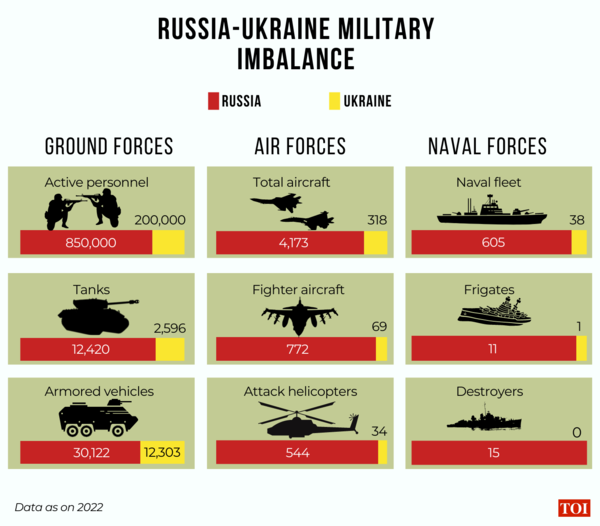
Ukraine started bolstering its defence spending since the annexation of Crimea in 2014. Western military aid, including supplies of US Javelin anti-tank missiles and Turkish drones, further boosted its armed forces.
Despite this, Ukraine is no way near as powerful militarily as its neighbour.

According to SIPRI Military Expenditure Database, Russia is the 8th largest military spender in the world while Ukraine is at the 40th position.
Ukraine’s armed forces of more than 200,000 service members, not including the paramilitary, are less than a quarter the size of Russia’s.
Breakaway regions
On February 21, Russian President Vladimir Putin signed a decree recognising two breakaway regions of Ukraine as independent entities, the self-proclaimed Donetsk People’s Republic (DPR) and the Luhansk People’s Republic (LPR).
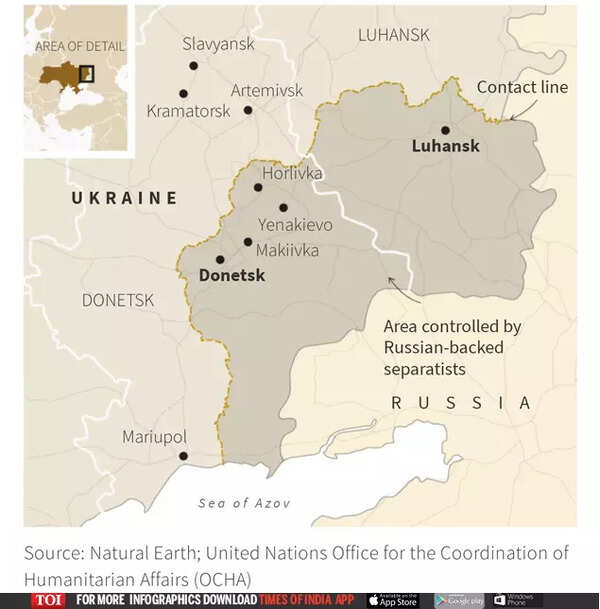
Russian-backed separatists in the Donetsk and Luhansk regions - collectively known as the Donbass - broke away from Ukrainian government control in 2014 and proclaimed themselves independent “people’s republics,” until now unrecognised. It was the same year Russia took over an area in southern Ukraine called Crimea.
Ukraine has said it will never recognise Russia's control over Crimea, the independence of the Russian-backed rebel regions of Luhansk and Donetsk or the vast additional territory taken by Russia.
(Maps credit: Reuters)
End of Article
FOLLOW US ON SOCIAL MEDIA






Hot Picks
TOP TRENDING
Trending Stories
In World
Entire Website
- 'Osama's 'dead son' is alive, leading al-Qaida in Afghanistan and has terrifying plans'
- Diljit Dosanjh’s Dil-Luminati India Tour: Check dates, venue, how to book concert tickets online
- Hamster Kombat Daily Cipher Codes and Combo Cards for September 13, 2024: Unlock up to 1 million coins
- Narayana Murthy faces backlash for parenting remarks on social media; users say, "after working 72 hours a week, there’s barely time left to have babies…”
- Shreyas Iyer comes out to bat wearing sunglasses, falls for a duck in Duleep Trophy
- iPhone 16 will be available for Rs 54,900 on Apple website; here's how you can grab the deal
- iPhone 16 to go on pre-order today: Pre-booking details, time, sale date and more
- Vande Metro launch date, schedule: PM Modi to flag off Bhuj-Ahmedabad Vande Metro train; check timings, stoppages of new Indian Railways train
- Why around 40,000 TCS employees have received tax demand notices for Rs 50,000 to over Rs 1 lakh
- Bill meant to usurp Waqf land, JPC told
- Assam CM reveals how his 'doubt' unearthed multi-crore trading scam
- Ahead of PM Modi's Doda rally, 2 soldiers killed, as many injured in operation to smoke out terrorists
- 'I was molested in ambulance in which my husband was fighting for life'
- Despite debate win, Kamala Harris makes no dent in battleground states
- 'Osama's 'dead son' is alive, leading al-Qaida and has terrifying plans'
- Sunita Williams, Butch Wilmore to vote for US election from Space: 'Very important duty'
- Are drone and rocket attacks the new normal in Manipur?
- Jhumka Gira Re ...: American woman's Instagram post on India goes viral
- PM Modi condoles Gujarat Meshwo river drowning incident
- Vande Metro first look: Top 10 features of new train for common man

Popular Categories
Hot on the Web
Top Trends
Shannon Sharpes Net WorthVande MetroAadhaar Card UpdateTech LayoffsArvind Kejriwal BailShannon SharpeUPSC Mains Admit CardKristina JoksimovicTCS Employee Tax NoticesWay Chatgpt can be your Study PartnerAir Taxi IndiaAyushman Bharat SchemeKolkata Doctor Rape CaseDonald TrumpShreyas IyerDiljit DosanjhLive Cricket Score
Trending Topics
Alia BhattMalaika Arora Father DeathArbaaz KhanNatasa StankovicMr Bachchan OTT ReleaseNational Parks In IndiaSelena GomezGOAT CollectionVikas Sethi DeathMalayalam ProducersIndia's Best Dancer 4Simi GarewalDilli BabuIndian National ParksLaung BenefitsVikas SethiApple iPhone 16SpaceXAadhar Card Update By Sept 14Wordle Answer
Living and entertainment
Latest News
Regina Cassandra calls herself a 'serial dater,' had many relationships :'But I’m taking a break now'7. Hindi becomes officialKaun Banega Crorepati 16: Can you guess the answer for this Rs 3,20,000 question on Navy, which contestant Naman Jain incorrectly answered?Kitchen Tips: How to elevate home cooking to Michelin levelTragic road accident on Mogili ghat road claims seven lives in Chittoor districtRaveena Tandon apologizes to fans for not photo snub in London: "It was not my intention to offend"Preschools turn nursing homes, retirement age raised: China's demographic crisis explodesBest Phones Under 35000 To Smoothly Carry Out Multiple Tasks On A BudgetTovino Thomas praises Prithviraj Sukumaran as director: "One of the brilliant directors I have ever worked with"'Cops stood as mute spectators': Protesting doctors write to President over RG Kar impasseFatal crash in Australia's Netherby claims life of ToddlerNASA to establish New Lunar Time Standard with Coordinated Lunar Time (LTC) initiativeWWE Superstar Cody Rhodes and his Wife Brandi Rhodes Share Special Messages on Their 11th AnniversaryAnupamaa: Anuj and Anu to go legal against Ankush and Barkha'Dead cat hanging from a tree': Origin of Haitian immigrants row. Everyone heard itTop 5 least private zodiac signsPerfect comfort foods for every zodiac signWWE Hall of Famer sheds light on major difference between Jacob Fatu and the rest of the Bloodline
Copyright © 2024 Bennett, Coleman & Co. Ltd. All rights reserved. For reprint rights: Times Syndication Service