
- News
- How the American President is elected
This story is from October 26, 2016
How the American President is elected
The Americans don’t directly elect their President. On November 8, they will vote for a presidential candidate. The one who wins the majority of this popular vote in a state wins that state’s electors. The electors are the ones who go on to directly elect the president.
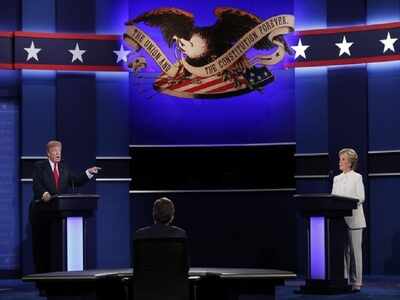
Donald Trump and Hillary Clinton during their third presidential debate (Reuters photo)
Here’s how it works:
Electors make up the Electoral College:
A 538-member body that directly elects the president & VP every four years.
Electors are apportioned to each of the 50 states and to the District of Columbia.
Who is an elector?
*Electors are party members who directly elect the president
*No senator or representative, or person holding an office/trust of profit in the US can be appointed an elector.
*Each party chooses its own set of electors for each state. So, in Illinois for instance, Democrats have 20 electors, the GOP 20, & so on.
How is an elector chosen?
*Each party in each state chooses lists of potential electors before the election.
*Process of choosing each state’s electors varies. For the bigger parties, GOP & the Democrats, the electors are either nominated in their state party conventions or by central party committee vote.
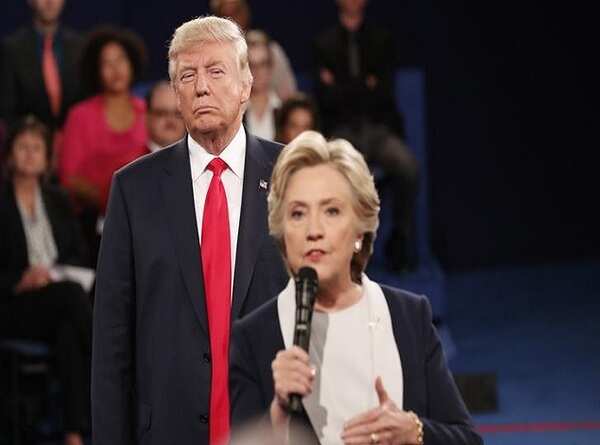
HOW IT WORKS:
*In each state, whichever candidate wins the majority popular vote, wins all of that state’s electors in a winner-takes-all approach.
*The nominee who has more than half of the total of 538 electors on his side wins.
*Once the popular vote is over, it is clear how many electors each presidential nominee has on his/ her side.
POPULAR VS ELECTORAL VOTE:
*Nationwide total votes cast for candidates is the popular vote
*Since this doesn’t directly decide the outcome of a presidential election, and it is the electoral college that determines the winner, it is possible for a candidate to win more popular votes and still lose the election
*For example, all 55 electoral votes in California will go to the candidate who wins the state even if the margin is very small. The other candidate may win
smaller states with huge margins, but losing California will cost him/her 55 electoral votes. Hence the final winner may have got fewer popular votes.
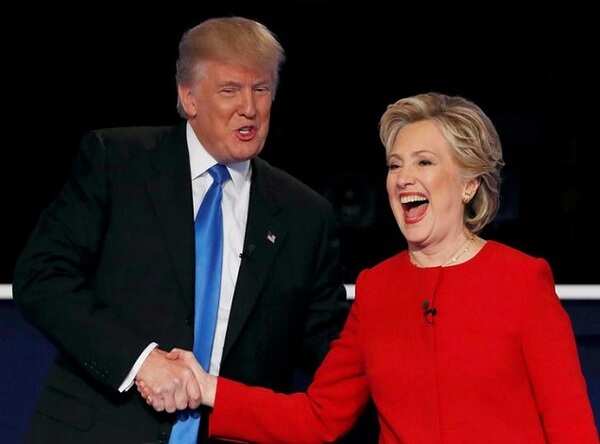
IF NO CLEAR WINNER:
If no candidate gets a majority, the House of Representatives votes to elect the President (from the top three candidates). The Senate chooses the Vice President (from the top two candidates).
End of Article
FOLLOW US ON SOCIAL MEDIA
Photostories

Hot Picks
TOP TRENDING
Popular Categories
Hot on the Web
Top Trends
Exit Poll ResultsJ&K Election Exit Poll ResultHaryana Election Exit Poll ResultTravis KelceAUS vs SL Live ScoreWomen T20 World Cup ScenarioAmethi Murder CaseIsrael Iran WarJ&K Exit PollHulk HoganUGC NET ResultDiddyWomen's T20 World CupTop MBA Colleges of IndiaT20 WC ScheduleWomen T20 World Cup Points TableLive Cricket Score
Trending Topics
Bigg Boss 18 House PhotoNavratri Colours 2024Navratri Day 2 ColourTMKOC New SonuNaga ChaitanyaDevara CollectionGOAT OTT ReleaseRajinikanthDeepika PadukoneGovindaDevaraGovinda NewsDevara Movie ReviewHealthy RaitasSwatantrya Veer SavarkarColdplay India tour 2025Maa Durga 108 NamesNavratri JewellerySony Bravia 55 inch 4k Ultra HD TVWordle Answer
Living and entertainment
Latest News
ICC Women’s T20 World Cup India schedule: Key players, where to watch, match details, and other information5 must follow rules of Ayurveda to lose 5kg in 30 daysBigg Boss Tamil 8: Sunitha Gogoi to dazzle with dance performance from Vijay’s film 'GOAT'IIT-JEE aspirant dies by suicide after jumping from 8th floor of high-rise in LucknowYeh Rishta Kya Kehlata Hai: Ruhi Discovers Abhira’s True Identity, Family Feud IntensifiesHaryana assembly elections: BJP MP Naveen Jindal reaches polling station on horseInd vs Ban T20I: New Gwalior stadium set to alternate hosting India matches with Indore says MPCA chiefWWE Unveils Bad Blood 2024 Opening Video Package, Featuring Triple H, Cody Rhodes, and Metro BoominNaga Chaitanya looks dashing in an ethnic outfit as he attends Navratri festivitiesHaryana assembly polls: 61 per cent voter turnout recorded till 5 pmSamantha Ruth Prabhu showers praise on Ananya Panday's 'CTRL'; calls her 'outstanding'Venus In Aries: What Does It Mean For Your RelationshipCR Park street food vendors gear up for Durga Puja rushMadhya Pradesh high court dismisses man's petition over 'objectionable' post on Lord Rama, HinduismAfter Defmation case, Nagarjuna to pursue another Rs 100 crore lawsuit against Konda SurekhaExclusive - Omung Kumar on Bigg Boss 18 house: My inspiration came from staying in cave hotels abroad, especially in Turkey, but this set reflects our India, with its carvings, sculptures5 Greatest matches of the “Phenomenal One” AJ Styles in WWE‘Hamas and Hezbollah part of global Left’: American philosopher Judith Butler's comment resurfaces on social media
Copyright © 2024 Bennett, Coleman & Co. Ltd. All rights reserved. For reprint rights: Times Syndication Service