Archaeologists discover a 7000-year-old road at the bottom of Mediterranean Sea!
Archaeologists discover a 7000-year-old road at the bottom of Mediterranean Sea!
You're Reading

Archaeologists discover a 7000-year-old road at the bottom of Mediterranean Sea! Border Tourism: 17 villages along China border to be developed as tourist destinations Odisha’s Kapilesvara Temple declared an ancient monument of national importance Additional wildlife sanctuaries identified as possible second homes for the cheetahs in India


Synopsis
Experts from the University of Zadar in Croatia informed that the radiocarbon dating of preserved wood indicated that the settlement was likely around 4,900 years before Christ, and that people had been using these paths for trave … Read more
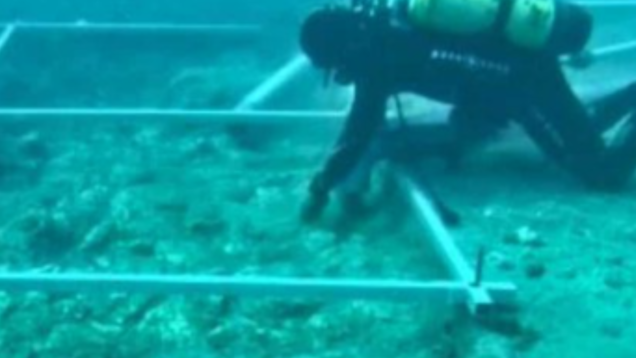
If reports are to go by, the route likely linked the Croatian island of Korcula's coast with the submerged prehistoric town of the Hvar culture. Experts from the University of Zadar in Croatia informed that the radiocarbon dating of preserved wood indicated that the settlement was likely around 4,900 years before Christ, and that people had been using these paths for travel as far back as 7000 years.


The Hvar civilization, who were supposedly herders and expert farmers and used to reside in small, remote villages along the coast and on adjacent islands, first settled in the area in the Neolithic period approximately 5000 BC. The Neolithic settlement also included the road. Reportedly, one of the best-preserved Hvar culture sites in the area is Soline, which have provided important details about the social structures and routines of these early farming settlements.
Although the finding was made at the bottom of the sea, investigation was carried out close to Gradina Bay at Vela Luka on the island of Korcula. There Neolithic artifacts like flint blades, millstone fragments, and stone axes were additionally discovered.
What is striking about the Soline site is its vast system of terraced fields, which were employed for agriculture in addition to the concrete building. Reports suggest that the fields were thoughtfully planned to make use of the island's rocky, hilly terrain, which were reinforced by stone walls and irrigation systems, thereby increasing the land's production.

closecomments

Be the first one to review.
We have sent you a verification email. To verify, just follow the link in the message
end of article

Visual Stories

10 pretty Indian villages to visit this year-end

8 castles in Germany straight out of a fairy-tale

8 tiger reserves every wildlife enthusiast should visit in India

10 animals that are easily spotted in Ranthambore National Park

How to prepare for a night safari in India?

9 rare animals to spot in the Western Ghats and where to find them


Trending Stories
5 unique national parks in South America where waterfalls, wildlife and wilderness come alive
This mountain range is the oldest in India—and older than dinosaurs: 5 stunning facts
How train tracking apps in India work even without the internet? What travellers need to know
The ‘Big Four’ snakes of India and where travellers can spot them in the wild
Which are the most common surnames around the world? Things travellers should know



Comments (0)