2,000-year-old skeletons and 'Holy Grail' cup unearthed in secret Petra tomb
2,000-year-old skeletons and 'Holy Grail' cup unearthed in secret Petra tomb
You're Reading

2,000-year-old skeletons and 'Holy Grail' cup unearthed in secret Petra tomb Facts to know about Goa’s new four-lane road: Connecting Panaji, Ponda and Karnataka Gandhi Sagar Sanctuary set to become India’s next Cheetah haven after Kuno! All about Maharashtra’s latest Seven Creek Bridges: Connecting Raigad to Sindhudurg


Synopsis
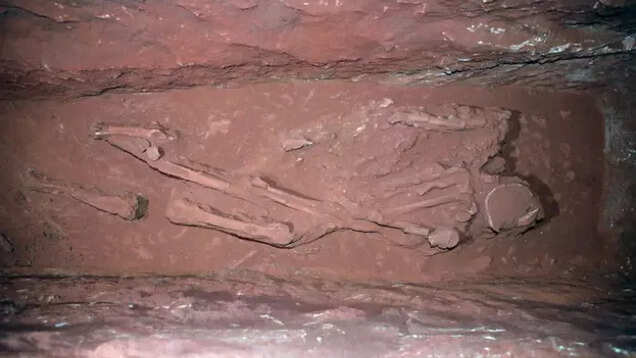
Archaeologists have uncovered a secret tomb in Petra, Jordan, revealing 2000-year-old skeletons and a chalice resembling the Holy Grail. The find offers new insights into the ancient Nabataean culture. The excavation, led by Dr. P … Read more

12 oldest cities in the world; know which Indian city is on the list
Twelve bodies were discovered in the tomb during the excavation, which was led by Dr. Pearce Paul Creasman of the American Centre of Research. One of the skeletons was discovered holding a chalice that had a striking resemblance to the legendary Holy Grail, which is believed to have been the cup that Jesus drank from during the Last Supper.


Read more: India's rich heritage: Must-visit 5 iconic UNESCO World Heritage Sites
In addition to the bones, archaeologists also found ceramic, iron, and bronze artefacts that provided important clues about the ancient Nabataean culture.
This discovery holds immense importance as it provides a rare glimpse into the life of the Nabataeans, an ancient Arab nomadic society that influenced regions like the Sinai Desert, Yemen, Syria, and Iraq. The archaeological findings are especially valuable for understanding Nabataean culture and history, as despite their known literacy, they left behind very few written records.
Read more: Gandhi Sagar Sanctuary set to become India’s next Cheetah haven after Kuno!
Dr. Creasman stressed about the uniqueness of the find, particularly because intact human remains are rarely found in Petra. He further noted that the skeletons that were found were in a fragile state, since the region is primarily humid and features porous sandstone, which traps moisture. But the fact that these remnants have survived will offer ample opportunities to experts to learn more about the ancient society. To ascertain whether the bones were related, the team intends to extract DNA from them in the hopes of learning more about their food and way of life.


closecomments

Be the first one to review.
We have sent you a verification email. To verify, just follow the link in the message
end of article

Visual Stories

10 pretty Indian villages to visit this year-end

8 castles in Germany straight out of a fairy-tale

8 tiger reserves every wildlife enthusiast should visit in India

10 animals that are easily spotted in Ranthambore National Park

How to prepare for a night safari in India?

9 rare animals to spot in the Western Ghats and where to find them



Trending Stories
Is this the most unique temple ‘darshan’ in India?
Hantavirus Alert: India’s Union Health Ministry activates precautionary surveillance; what travellers need to know
Flying abroad with medicines? What travellers need to know before packing prescription drugs
From women-only night beach to floating walkway: What can travellers expect from Dubai's brand new tourist attraction?
Oldest fires in the world that are still burning, and why they deserve to be on your travel-wishlist




Comments (0)