The Great Stupa
The Great Stupa
You're Reading


Synopsis
Crowds of carved Indo-Greek figures cluster around these many facets of Buddha, dancing, singing, praying and celebrating as they watch him leaving home, walking on water, overcoming his enemies and providing divine inspiration at … Read more
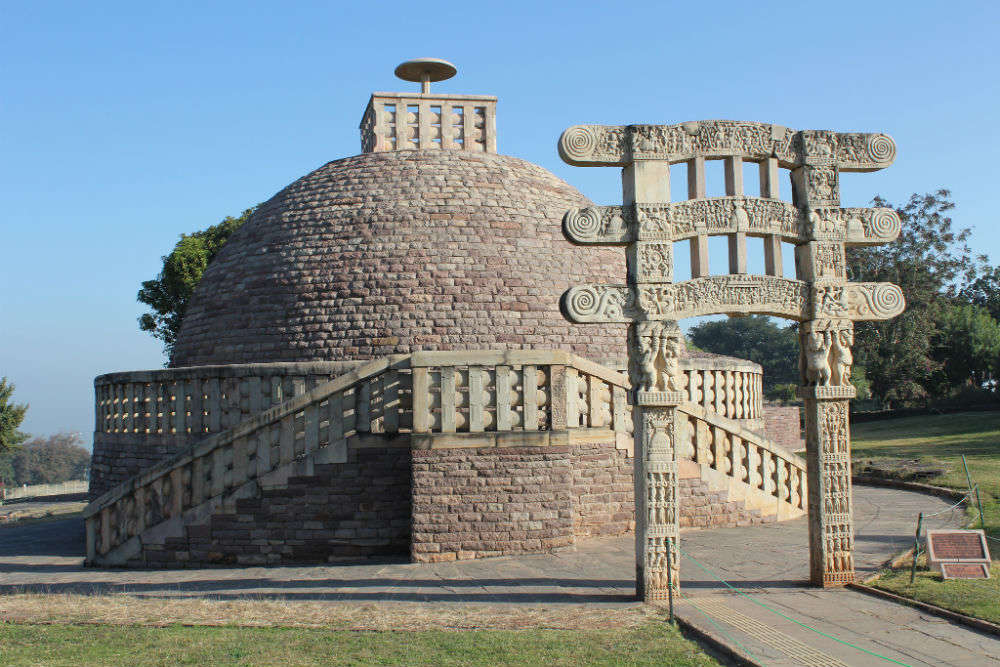
Between the 3rd and 12th centuries, during the rule of the Satavahna and Sunga dynasties, a number of Buddhist monuments were built at Sanchi to form a place of holy pilgrimage, near what is now nothing more than a tiny village near Bhopal in India. The most complex and impressive of all these is a giant stupa or Buddhist burial mound, which is guarded by four finely-detailed, carved stone gates. The life and attributes of the Buddha are represented in them with all the artistic perfection that religious fervour can bring; the lotus, which represents his birth, Bodhi tree, signifying his enlightenment, the wheel of nirvana and even his footprints are revealed in the greatest detail and held up for worship by all who visit the site. Crowds of carved Indo-Greek figures cluster around these many facets of Buddha, dancing, singing, praying and celebrating as they watch him leaving home, walking on water, overcoming his enemies and providing divine inspiration at different periods in his life. The gates are, unsurprisingly, regarded as key pieces in the foundation of all Indian art which followed.

closecomments

Be the first one to review.
We have sent you a verification email. To verify, just follow the link in the message
end of article

Visual Stories
10 pretty Indian villages to visit this year-end

8 castles in Germany straight out of a fairy-tale

8 tiger reserves every wildlife enthusiast should visit in India

10 animals that are easily spotted in Ranthambore National Park

How to prepare for a night safari in India?

9 rare animals to spot in the Western Ghats and where to find them


Trending Stories
5 unique national parks in South America where waterfalls, wildlife and wilderness come alive
This mountain range is the oldest in India—and older than dinosaurs: 5 stunning facts
How train tracking apps in India work even without the internet? What travellers need to know
The ‘Big Four’ snakes of India and where travellers can spot them in the wild
Which are the most common surnames around the world? Things travellers should know



Comments (0)