The holy town of Ujjain
The holy town of Ujjain
You're Reading


Synopsis
Located around 55 km away from Indore, Ujjain is one of the India’s holiest cities. Famed for temples, it is thronged by pilgrims every year who also take ritual baths at the ghats on the Shipra River. It is revered by followers o … Read more
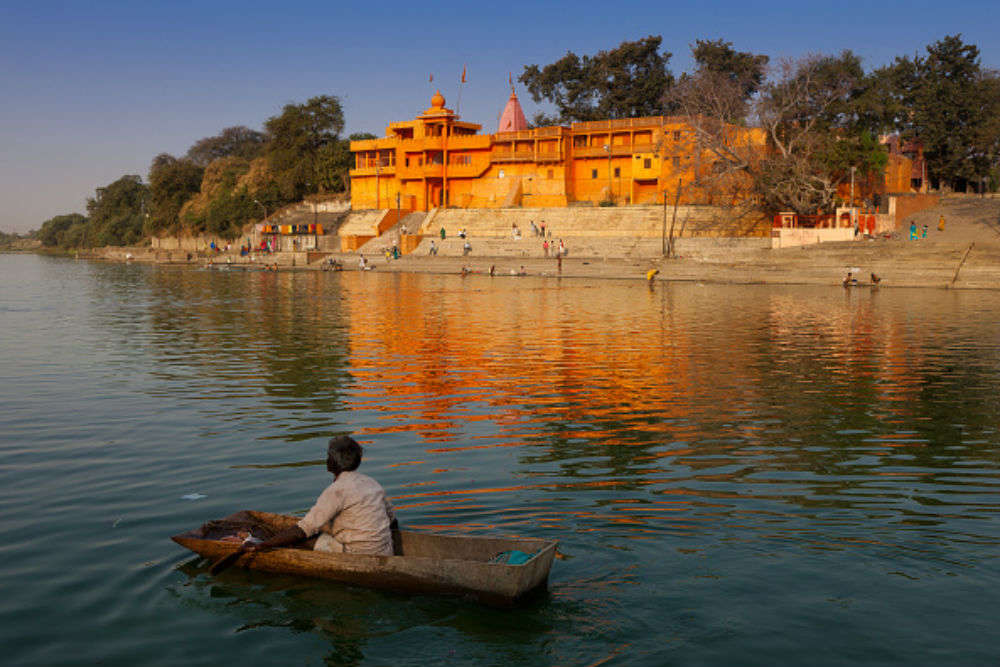 Located around 55 km away from Indore, Ujjain is one of the India’s holiest cities. Famed for temples, it is thronged by pilgrims every year who also take ritual baths at the ghats on the Shipra River. It is revered by followers of Shiva, Vaishanavism and Shakti. An important city from the days of the Maghada kingdoms and Mauryan Empire, Ujjain was plundered by Iltutmish of Delhi Sultanate who destroyed the temples. The city was revived by the Marathas with many of the temples rebuilt by the Scindias of Gwalior.
Start your tour at the Mahakaleshwar Mandir, set on a height above the river. The temple soars over its crowded surroundings with a gigantic saffron-painted sanctuary tower. The temple is entered through marble courtyards, with water tanks and fountains, leading to the main shrine which has one of the one of India’s twelve jyotrilingas. It is considered to be one of the most powerful Shivalingas by Tantric followers. From here, take the road to the Rudra Sagar tank and the Harsiddhi Mandir, erected by the Marathas in the eighteenth century. The temple features Marathi lamp towers and the sanctuary has images of Mahalakshmi, Annapurna and Saraswati. From here, you can continue to Chattri Chowk and Gopal Mandir, erected by Scindia queens in the early 19th century with Moghul domes, moorish arches and a Hindu sanctuary tower. The sanctum has silver doors that are said to have been rescued from looters in Lahore by the Scindia rulers leading to the shrine room with marble, silver and mother-of-pearl decorations. The principal deity Gopal or Ganesh is shown together with his parents, Shiva and Parvati. Another important temple is the Chintaman/Ganesh Temple. There are scores of Hindu shrines along the banks of the river Shipra.
Apart from the temples, the principal attraction of Ujjain is the observatory built in 1725, called the Vedha Shala. Though smaller than the Jantar Mantars of Delhi and Jaipur, the Vedha Shala is unique in being still used by the astronomers – the instruments, called yantras, are used to formulate charts predicting the positions of the planets.

closecomments

Be the first one to review.
We have sent you a verification email. To verify, just follow the link in the message
end of article
Next story
Shree Uma Maheshwara Temple
Visual Stories

10 pretty Indian villages to visit this year-end

8 castles in Germany straight out of a fairy-tale

8 tiger reserves every wildlife enthusiast should visit in India

10 animals that are easily spotted in Ranthambore National Park

How to prepare for a night safari in India?

9 rare animals to spot in the Western Ghats and where to find them



Trending Stories
An American tourist pleads with PM Narendra Modi for an Adhaar Card and the reason is....
Delhi gets barrier-less toll system: What this means for travellers on highways
Vande Bharat train journeys across Kerala, Tamil Nadu, Karnataka And Andhra Pradesh every traveller should experience
Rakul Preet Singh's controversy at Gir National Park: 5 things travellers should know about rules for visiting national parks and wildlife sanctuaries
Travelling abroad for summer vacation? Here’s what PM Narenda Modi appeals to travellers and why this is important




Comments (0)