
- News
- Sports News
- Chandela claimed that her mind had gone 'blank'
Trending
This story is from August 10, 2016
Chandela claimed that her mind had gone 'blank'
Apurvi Chandela, a medal-hopeful in women's 10m air rifle, finished way off the mark, a dismal 34th, and claimed that her mind had gone 'blank'. The Commonwealth Games gold-medallist appeared physically primed, but mentally unprepared.
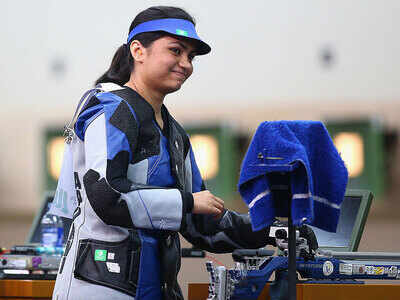
Apurvi Chandela. (Getty Images)
Little wonder then that psychologists rank 'panicking or blanking and choking' among toughest opponents an athlete can face. Bengaluru-based sports psychologist Dr Chaithanya Sridhar explained that when one performs below his or her optimum level, the result could be tagged to panicking or choking.

Olympic TOI Promo
There's pressure in every competition and at an event like the Olympics, which comes around once every four years, it is even more so. Dr Sridhar, who has worked with sportspersons from a number of disciplines, noted that when the pressure is so great, the mind goes blank.
"Panic triggers blanking," she said. "The stress levels are so high that it erases short-term memory because of which you are unable to revert to routine motions and find your way back."
She added that choking, on the other hand, is "when one is over-focused on the outcome, the result, rather than the process. You're over-thinking and that interferes with how your brain processes what needs to be done. It eventually results in slow, laboured movements or rushing, and overreaching which is bound to affect the result negatively."
Panicking is more common with first timers. On the other hand, choking can let down any one, any time. Like when Czech Jana Novotna cracked in the 1993 Wimbledon final. She led 4-1, 40-30 in the deciding set against German Steffi Graf before coming apart spectacularly.
Novotna, a mere five points from the title, would later say she remembered very little of that final. "When you're choking, if you can channelize and figure out what's happening to you, you can come back," Dr Sridhar said.
In his study 'The art of failure' Malcolm Gladwell said, "Panic is the opposite of choking. Choking is about thinking too much. Panic is about thinking too little. Choking is about loss of instinct. Panic is reversion to instinct. They may look the same, but they are worlds apart."
Aparna Popat, a two-time Olympian and former world No. 16 in badminton, said that athletes are almost always mindful of these situations, panicking or blanking and choking.
"It's very important to think through," she said, adding, that in the more physical of disciplines it was better to let muscle memory take over. "My sense of it has always been that the reason why you do a thousand repetitions in practice is that in these of situations you let the body take over, rely on muscle memory. No amount of preparation can simulate a match situation, but you can prepare to such an extent physically, that it could cover for a mental lapse."
Coach Sunny Thomas said shooting at the highest level was about managing nerves. "I always tell shooters not to fight nerves, but to channelize it instead," he said. "Don't hold on to a bad round, let go and focus on the next round or shot. Don't brood, just get on with it."
End of Article
FOLLOW US ON SOCIAL MEDIA
Visual Stories








Photostories

Top Sports News
TOP TRENDING
Popular Categories
Hot on the Web
Top Trends
Trending Topics
Devara CollectionNavya Naveli NandaPawan KalyanJungle SafariStree 2 OTT ReleaseRose GardenDevara CollectionOTT Release MovieMasala OmeletteEmergencyDevaraTaaza Khabar 2 Twitter ReviewDevara Movie ReviewHealthy RaitasSwatantrya Veer SavarkarColdplay India tour 2025Smartphone DealsApple Macbook Air M1Amazon SaleWordle Answer
Living and entertainment
Latest News
TN: Sri Lankan Navy apprehends 17 fishermen off Rameswaram coast, seizes 2 boatsIndia vs Australia: Can Akash Deep make the difference Down Under?Historic North Carolina village submerged under water after Hurricane Helene brings heavy rainIndia shooter reports late for final, misses potential medal at Junior World ChampionshipsExclusive - A sneak peek into Zain Imam aka Teerth’s makeup room on the set of Suman IndoriTop 5 Zodiac Signs Likely to Have Trust IssuesIndia vs Bangladesh 2nd Test Highlights: Day 3 washed out due to wet outfield in KanpurThree killed, four injured after bus collides with truck in Bihar's KaimurSivakarthikeyan imitates Kamal Haasan at the 'Amaran' promotional event, gets praisesWhen Shah Rukh Khan, Aamir Khan, grooved with Dharmendra at the 'Yamla Pagla Deewana 2' event‘Devara’ stars Jr. NTR and Saif Ali Khan try their hand at Punjabi and BhojpuriAir Canada fined for breaching restricted Iraqi airspaceStress could be your heart's worst enemyI Say ‘Khamosh’ to Sonakshi: Zaheer Iqbal - ExclusiveJudge ‘warns’ Apple: Your Homework deadline is Monday, September 30, no matter whatAnanya Panday calls new mom Deepika Padukone 'the most beautiful woman ever'Government unveils draft rules to take terminally ill off life support'When Zelenskyy comes to US, he should ...': Vance criticises Ukraine President a day after he meets Trump
Copyright © 2024 Bennett, Coleman & Co. Ltd. All rights reserved. For reprint rights: Times Syndication Service