
- News
- Relationships News
- Success quote of the day by Ratan Tata: "Success is not measured by the position you hold, but..."
Success quote of the day by Ratan Tata: "Success is not measured by the position you hold, but..."
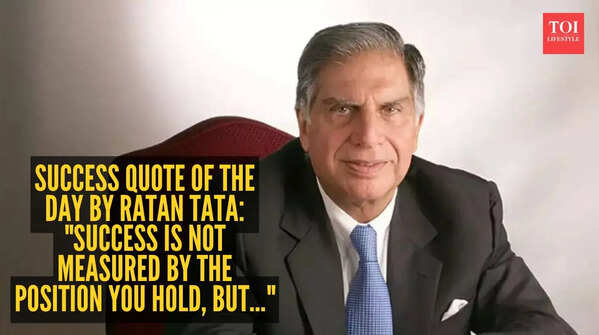
Ratan Tata’s motivational quote on the real meaning of success
We’ve all been there — scrolling through LinkedIn, seeing people announce their “New Position” or their “Honoured to be included in the Top 30 under 30” lists. It’s easy to begin thinking our worth is tied to the size of our job title or how many people we manage.
But the late Ratan Tata gave us a much-needed reality check: “Success is not determined by the position you hold, but by the impact you have on others.”

Ratan Tata's wise words
It’s a simple line that turns the script on what it means to actually “make it.” In a culture obsessed with trophies and corner offices, this is an invitation to look at a deeper, more durable metric: meaningful contribution.

Why titles are "tidy" and impact is "messy"
Let’s be honest: Titles are easy to track.They’re visible. They fit neatly on a business card or a resume. But a position is just a label; it doesn't tell us if a leader actually inspired their team, if a teacher changed a student’s trajectory, or if a neighbor’s small act of kindness saved someone’s day.
Status is about you.It’s about salary bands, org charts, and ego.
Impact is about "us."It’s relational and generative.
Psychology actually backs this up. Research shows that "prosocial behaviour"—basically, being a helpful human—is a much stronger predictor of long-term life satisfaction than material gain.link: https://www.worldhappiness.report/ed/2019/happiness-and-prosocial-behavior-an-evaluation-of-the-evidence/
Prestige might give you a temporary high, but impact provides a lasting sense of purpose.

What "impact" looks like in the wild
We often think impact has to be some grand, cinematic gesture, but it’s usually much quieter than that. It’s the cumulative effect of how you show up every day.
- The Manager who doesn't just delegate, but actively sponsors a junior employee’s growth.
- The Colleague who gives you honest, constructive feedback that helps you grow.- The Friend who listens without judging or interrupting.- The Founder who builds a company to solve a real problem, not just to exit with a check.The difference is clear: A position evaporates the moment you leave the job. Your impact stays behind in the people you’ve influenced.

Leadership: A platform, not a pedestal
A good leader does not look down from their position. Rather, they use their stature to lift others. Ratan Tata’s own legacy was built on this principle. He was celebrated for his ethical entrepreneurship and philanthropy, focusing on long-term community benefit instead of quick gains.

How to be more impactful
- Instead of counting your followers, look at the people you’ve mentored. How many of them have moved up or mastered a new skill because of your help?
- Share your “success mantra” with others.Document your processes, teach your tricks, and make yourself redundant. That’s how your influence scales.
- Volunteer Your Hard Skills: Pro bono work isn't just "nice"—it’s a way to convert your professional expertise into tangible good for a cause you actually care about.
- The Nightly Gut Check: Before you go to sleep, ask yourself one question: "Who did I help today?" If you can answer that, you had a successful day, regardless of your job title.

A lesson to learn...
It’s tempting to equate our worth with our rank.But chasing a title is like chasing a shadow—it doesn't actually provide any substance.
This week, try to aim less for the "corner office" and more for the corner of someone’s life that you can brighten or equip. Success measured this way is bulletproof. It survives market crashes, career changes, and public opinion because it’s rooted in human transformation.
Featured In Relationships

