
- News
- Relationships News
- Love quote of the day by Aristotle: "Love is composed of a single soul inhabiting two bodies"
Love quote of the day by Aristotle: "Love is composed of a single soul inhabiting two bodies"

Best love quote by Aristotle
"Love is composed of a single soul inhabiting two bodies." — Aristotle
If you’ve spent any time scrolling through Instagram, curated a Pinterest wedding board, or simply sat through a sappy anniversary toast, you’ve almost certainly heard it.
That perfectly aesthetic post featuring the words: "Love is composed of a single soul inhabiting two bodies."
It’s proudly credited to the legendary ancient Greek philosopher Aristotle, and people absolutely eat it up.
It sounds incredibly romantic, right?
The ultimate, timeless declaration of finding your one true soulmate in a world of billions.
Well, hold on to your heartstrings, because the internet has been lying to you.
Aristotle never actually said that about romantic love.
He was talking about something entirely different: your best friend.

The Real Story Behind the Viral Words
To get to the bottom of this, we have to look back at a 3rd-century biographer named Diogenes Laërtius.
In his famous text, Lives of Eminent Philosophers, he recorded a specific moment where someone straight-up asked Aristotle a simple question:
“What is a friend?”
Aristotle’s response was brief, poetic, and struck a chord:
"A single soul dwelling in two bodies."
Yep, you read that right.
Over the centuries, as the quote got passed around history like a massive, endless game of telephone, modern pop culture decided to swap out the word "friend" for "love."
Just like that, a profound statement about the beauty of friendship was hijacked to sell Valentine’s Day cards and fuel couple hashtags.

Philia vs. Eros: Decoding the Greeks
To really understand why a logical philosopher would describe friendship with such intense devotion, we have to look at how the ancient Greeks actually viewed human relationships.
Let's just say they didn't lump all kinds of affection under one umbrella like we tend to do today.
While they used the word eros to describe romantic and sexual desire, Aristotle was specifically talking about philia—a deeply profound, fiercely loyal bond between equals.
In his famous work, Nicomachean Ethics, Aristotle actually broke friendship down into three specific tiers.
First, there are friendships of utility.
Think of your reliable coworkers or business partners where the bond is based on mutual benefit.
Then, there are friendships of pleasure—the buddies you grab a drink with, go shopping with, or play weekend sports alongside.
But the top tier?
Aristotle called that "Friendships of the Good."
This is the rarest, most magical kind of connection.
It happens when two people genuinely admire each other's moral character and virtues.
It isn't about what you can get from them, but who they are.
In this ultimate bond, Aristotle argued that your friend essentially becomes "another self."
You care about their happiness and well-being just as fiercely as your own.
That’s exactly why he described it as two physical bodies sharing the exact same spirit and moral compass.
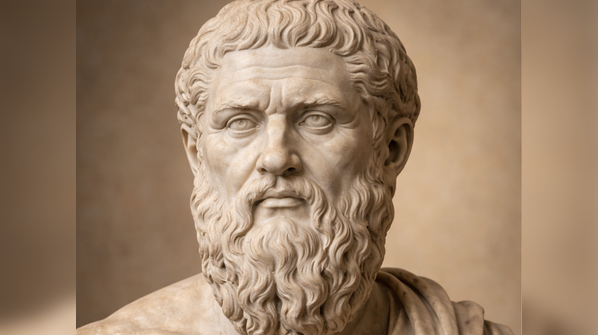
Blame Plato for the ‘Soulmate’ Confusion
If you’re suddenly feeling a bit cheated out of a romantic origin story for soulmates, don't worry.
You are just looking at the wrong Greek philosopher.
You actually want Aristotle's teacher: Plato.
In Plato’s text The Symposium, he tells a wild, incredibly dramatic mythological story about the origins of human beings.
According to the myth, humans originally had four arms, four legs, and two faces.
The gods grew terrified of how powerful these creatures were, so Zeus literally sliced them in half.
Ever since that moment, humans were condemned to wander the earth, desperately searching for their literal "other half" to finally feel whole again.
Because Plato and Aristotle are the two biggest heavyweights of ancient philosophy, internet quote boards essentially mashed their ideas together.
They took Plato’s dramatic romantic myth and slapped it onto Aristotle’s beautiful definition of a bestie.
So, the next time you see that quote popping up on your feed, you'll know the real story.
It might ruin a few romantic Instagram captions, but honestly?
It makes for a much better text to send to your absolute best friend.
Featured In Relationships

