
- News
- NRI News
- Citizen Journalists News
- Tips for making South Indian food more nutritious
This story is from April 22, 2014
Tips for making South Indian food more nutritious
Most south Asian vegetarian dishes lack many vital nutrients.

What I find it most interesting in the parties given by Indian households in the US is that most of them stick to same food preparations that they have acquired over the generations. There is no lack of information regarding healthy food preparation; however, the perceived notion that Indian food is healthy by so-called pundits from the western world makes Indians lackadaisical in preparing foods that can be Indian as well as healthier.
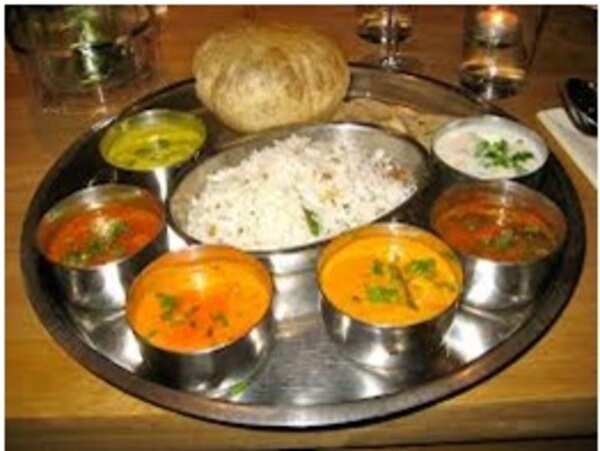
A typical vegetarian south Indian thali

Most south Asian vegetarian dishes lack many vital nutrients. The nutrients are Vitamin B12, calcium, Vitamin D, iron, omega 3 fatty acids, not enough protein and lack of good quality protein. But they also contain excess of Sodium, saturated fat in the form of ghee or butter, spices that can be harmful to the stomach and intestine (too spicy and hot), fiber and oxalates that affect nutrient absorption, etc. The vegetarian diet requires simple modifications to make it suitable as a balanced meal.
Reduce overall intake of starches rice, wheat. Rice has a high Glycemic Index. The Glycemic Index is essentially a tool for measuring the rate at which the carbohydrates in a particular food are absorbed into your bloodstream. The more rapid a rise in blood sugar, the higher the Glycemic Index number. For diabetics and people prone to diabetes it is better to keep the blood glucose level under control through low glycemic foods.
Reduce basmati and other white forms of rice in the diet and if possible, replace it with brown rice. Brown rice has a lower Glycemic Index.
If possible, substitute rice with whole wheat chapati.
Reduce salt addition.
Include soy nuggets and chick peas. They provide better quality protein than plain vegetables and white rice and wheat.
Include nuts such as almonds, cashew, walnuts, etc. They are not only good sources of essential fatty acids and protein but they provide taste and crunch to the food.
Include lassi or yoghurt in the meal which helps with digestion.
Reduce hot spices in the meal. They cause bloating, gas, and smelly flatulence.
Sauté the vegetables in a teaspoonful of olive oil instead of frying.
You can keep the great taste without sacrificing nutrition by proper selection of legumes, grains, vegetables, cooking techniques and spices.
A typical vegetarian south Indian thali
Most south Asian vegetarian dishes lack many vital nutrients. The nutrients are Vitamin B12, calcium, Vitamin D, iron, omega 3 fatty acids, not enough protein and lack of good quality protein. But they also contain excess of Sodium, saturated fat in the form of ghee or butter, spices that can be harmful to the stomach and intestine (too spicy and hot), fiber and oxalates that affect nutrient absorption, etc. The vegetarian diet requires simple modifications to make it suitable as a balanced meal.
Here are some simple suggestions
Reduce overall intake of starches rice, wheat. Rice has a high Glycemic Index. The Glycemic Index is essentially a tool for measuring the rate at which the carbohydrates in a particular food are absorbed into your bloodstream. The more rapid a rise in blood sugar, the higher the Glycemic Index number. For diabetics and people prone to diabetes it is better to keep the blood glucose level under control through low glycemic foods.
Reduce basmati and other white forms of rice in the diet and if possible, replace it with brown rice. Brown rice has a lower Glycemic Index.
If possible, substitute rice with whole wheat chapati.
Reduce salt addition.
Include soy nuggets and chick peas. They provide better quality protein than plain vegetables and white rice and wheat.
Include nuts such as almonds, cashew, walnuts, etc. They are not only good sources of essential fatty acids and protein but they provide taste and crunch to the food.
Include lassi or yoghurt in the meal which helps with digestion.
Reduce hot spices in the meal. They cause bloating, gas, and smelly flatulence.
Sauté the vegetables in a teaspoonful of olive oil instead of frying.
You can keep the great taste without sacrificing nutrition by proper selection of legumes, grains, vegetables, cooking techniques and spices.
End of Article
FOLLOW US ON SOCIAL MEDIA
Hot Picks
TOP TRENDING
Trending Stories
In NRI
Entire Website
- Arvind Kejriwal Resignation News Live Updates: 'I don't have lust for power' Arvind Kejriwal to resign from the post of Delhi CM in two days
- Arvind Kejriwal Resign Live Updates: 'I don't have lust for power' Arvind Kejriwal to resign from the post of Delhi CM in two days
- Famous NFL Superstars Who Are Friends Of Taylor Swift
- GK for Students: Why is International Day Of Democracy celebrated on September 15?
- Kolkata rape-murder case: Ex-principal Sandip Ghosh, policeman arrested for destruction of evidence
- Bengaluru woman sparks controversy with comments about Swiggy delivery executive, internet reacts
- 'Nafrat ki dukaan pe ...': PM Modi attacks Congress over 'brutality' in US
- Top 10 sports stars turned power couples: From Agassi-Graf to Conner-Comaneci
- Hamster Kombat Daily Cipher Codes and Combo Cards for September 15, 2024: Unlock up to 1 million coins
- Neeraj Chopra finishes second, misses out on title by 0.01 meters at Brussels Diamond League Final
- AAP demands Delhi polls by November; BJP asks Kejriwal 'why not resign today?'
- 'Message for Modi': Oppn takes jab at BJP over Gadkari's 'PM post' claim
- Why it is so easy to quench ‘sadiyon ki pyaas’ in dry Bihar
- 'Never asked anything from party but ...': BJP's Anil Vij eyes Haryana CM post
- Rahul drops major hint on joining RCB ahead of IPL 2025
- 'Anti-constitutional mindset': VP targets Rahul over quota remark, Cong hits back
- Hum do hamare chaar: Why is south India junking population control?
- Melinda Gates reveals the 'best part' of not working with ex-husband Bill Gates
- Infiltration from Bangladesh changing Jharkhand's demography: PM Modi
- Hindus should only engage with Hindus in property deals: BJP MLA Nitesh Rane

Popular Categories
Hot on the Web
Top Trends
Trending Topics
World Largest HorseEID WishesOnam WishesPriyanka Chopra TattooKottukkaali OTT ReleaseEngineers Day WishesGoat CollectionHair LossSudha MurtyMalayalam ProducersIndia's Best Dancer 4Simi GarewalDilli BabuIndian National ParksLaung BenefitsVikas SethiApple iPhone 16Donald TrumpAadhar Card UpdateWordle Answer
Living and entertainment
Latest News
PM Modi's Sunday roadshow in Jamshedpur cancelled due to heavy rain4 types of tea to improve gut health and ease digestive issuesNetflix denies filmmaker Soham Shah’s plagiarism allegations over Squid Games, says claim holds 'no merit'Weekly Career Horoscope, September 15 to September 21, 2024: Read your weekly astrological work predictions for all zodiac signsZodiac Signs That Crave a Luxurious Lifestyle"Miami Dolphins Owner Stephen Ross Eyes Multi-Billion Dollar Deal: The $7 Billion Power Play"Rajkummar Rao hails Kareena Kapoor Khan's The Buckingham Murders as a 'gripping thriller'Coin Master free spins and coins for 15 September, 2024: Earn 7 million coins using today’s linksHow to set up partner sharing in Google PhotosNoida authority fraud: 2 arrested in Rs 3.9 crore scam linked to fake bank accountsCouncillor's bro, 4 others held for hurling stones at Vande BharatCancer, Weekly Horoscope, September 15 to September 21, 2024: Encounter a busy week filled with unexpected challengesDoctor posts morphed clip of med classmate, held in Tamil NaduWeekly love Horoscope, September 15 to September 21, 2024: Read your weekly astrological romantic predictions for all zodiac signsCBI arrests Ghosh, police station in-charge in rape-murder case7 benefits of drinking lemon water with black salt dailyWeekly Horoscope, September 15 to September 21, 2024: Read weekly astrological predictionsWants wife Sunita Kejriwal as CM: BJP on Arvind Kejriwal's resignation talk
Copyright © 2024 Bennett, Coleman & Co. Ltd. All rights reserved. For reprint rights: Times Syndication Service